Exhibition documentation
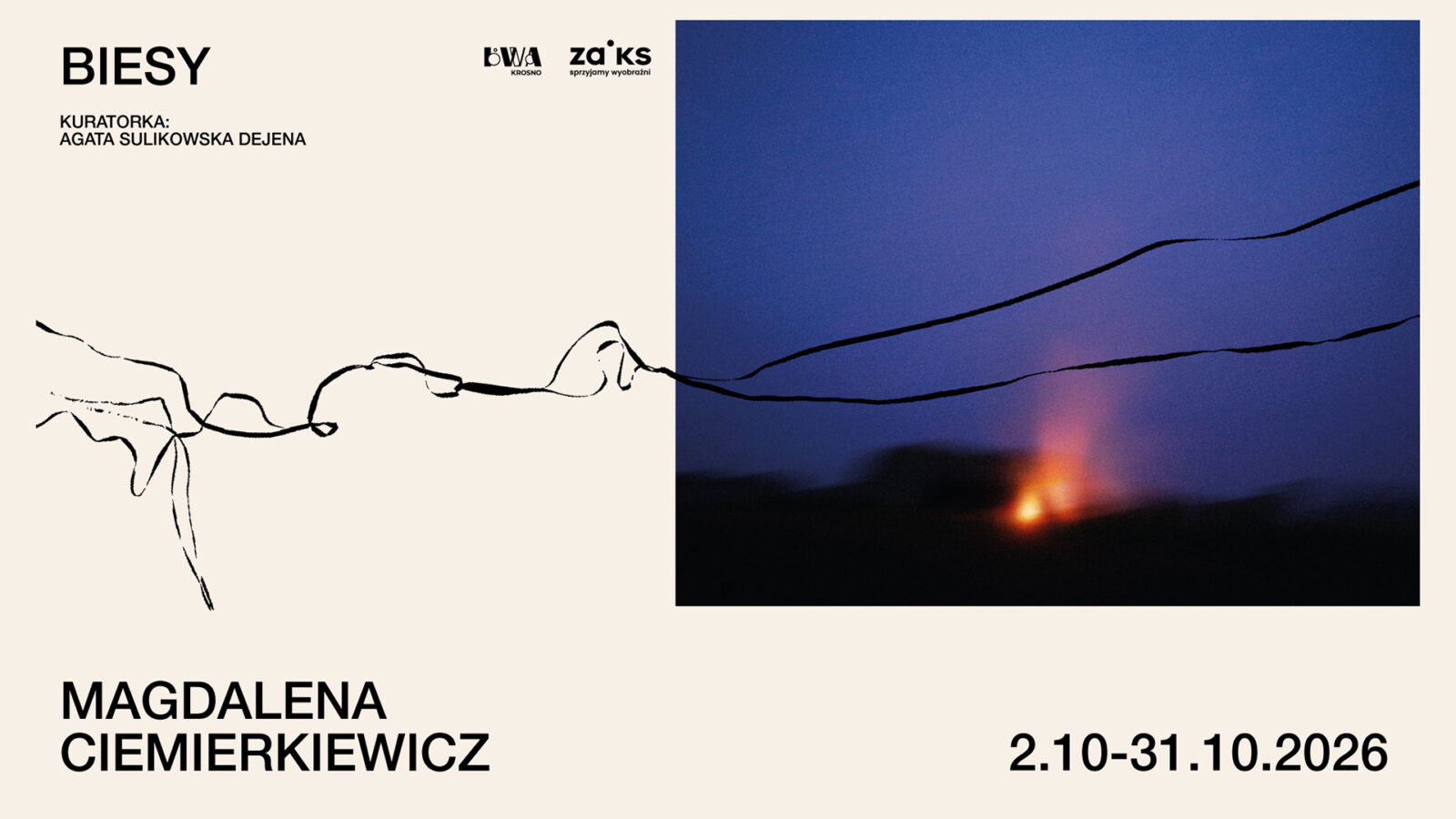
Biesy, BWA Krosno
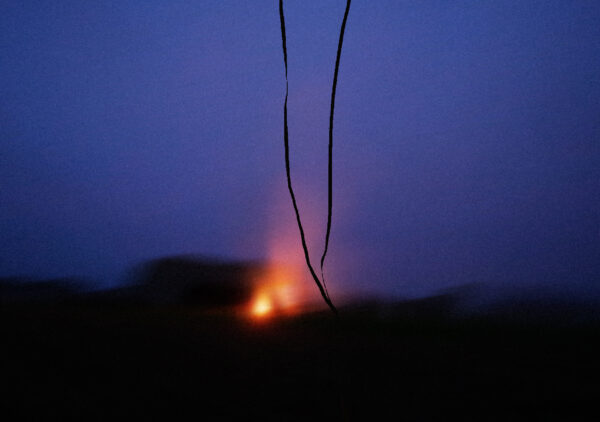
Long, long ago in folk belief, crime was always followed by punishment—all the more severe and enduring the greater the harm inflicted. The souls of people damned for the evil and cruelty they committed were denied entry into the realm of the dead. Unable to enter the underworld to find peace there, they returned to earth in the form of fiends (biesy) and wandered through fields, forests, and swamps, striking terror into the living. With ignes fatui—will-o’-the-wisps—they lured people at night into trackless wastes and marshes. Mysterious, phosphorescent flames hovered over places that ought to be avoided, places that nature itself marked as cursed. In this way, from generation to generation, knowledge was remembered and passed down on how to read and interpret the signs given by nature.
Later, in the age of reason and modernity, “the world was disenchanted”; biesy disappeared from the collective imagination, along with the belief that the earth eternally “remembers” crimes, and that the blood of the innocent permanently taints it, attracting demons and evil spirits. The cosmic dimension of retribution for wrongs committed vanished as well. Instead, crimes occurred so extreme that our language lacks concepts to describe them. “And new deserts arose: the sands of Majdanek, Sobibór, the dunes of Treblinka and Bełżec, where the wind lays to eternal rest not flint, mica, sandstone—ground in the millstones of ancient seas—but the limestone and carbon of the human race razed to the ground… In the darkness, ashes flow through colander hourglasses. And it is in the air as if one were breathing their last breath,” wrote Jerzy Ficowski—”He—a human, he—a son of this earth, he—their unburned brother”. Right beside them rose other hills of ash—the graves of people forever nameless, faceless, and without names, eternally stripped of the right to memory. Paradoxically, after such a cataclysm, the earth did not remain barren.
“The cultivated fields behind my native village are a mass grave. When I was a child, I helped my parents with field work. Our crops grew in the place where the scattered remains of people burned in crematoria lay. Over the years, they must have merged into the surrounding nature, as well as into our bodies,” says Magdalena Ciemierkiewicz in her project Formy-Duchy (Ghost-Forms). The artist and her art become depositories of family memory, constantly revisiting the theme of the Holocaust, the impact of its proximity on family and social relations of post-war generations, and the repression of uncomfortable facts.
This is one of those places that Martin Pollack calls “contaminated landscapes” (skażone krajobrazy) and Claude Lanzmann calls “non-sites of memory” (nie-miejsca pamięci), having fallen victim to mass amnesia because people’s natural need is to live in a “healthy, intact landscape”. In cultural anthropology, the metaphor of the open grave emerges to describe them. If a ritual working-through (przepracowanie) of the genocide committed there does not occur, and the past is swept under the rug without a just accounting, then instead of becoming history, it will remain constantly present as a spectre destabilizing the present. The community will go on living above an open grave—an unhealed wound of the earth.
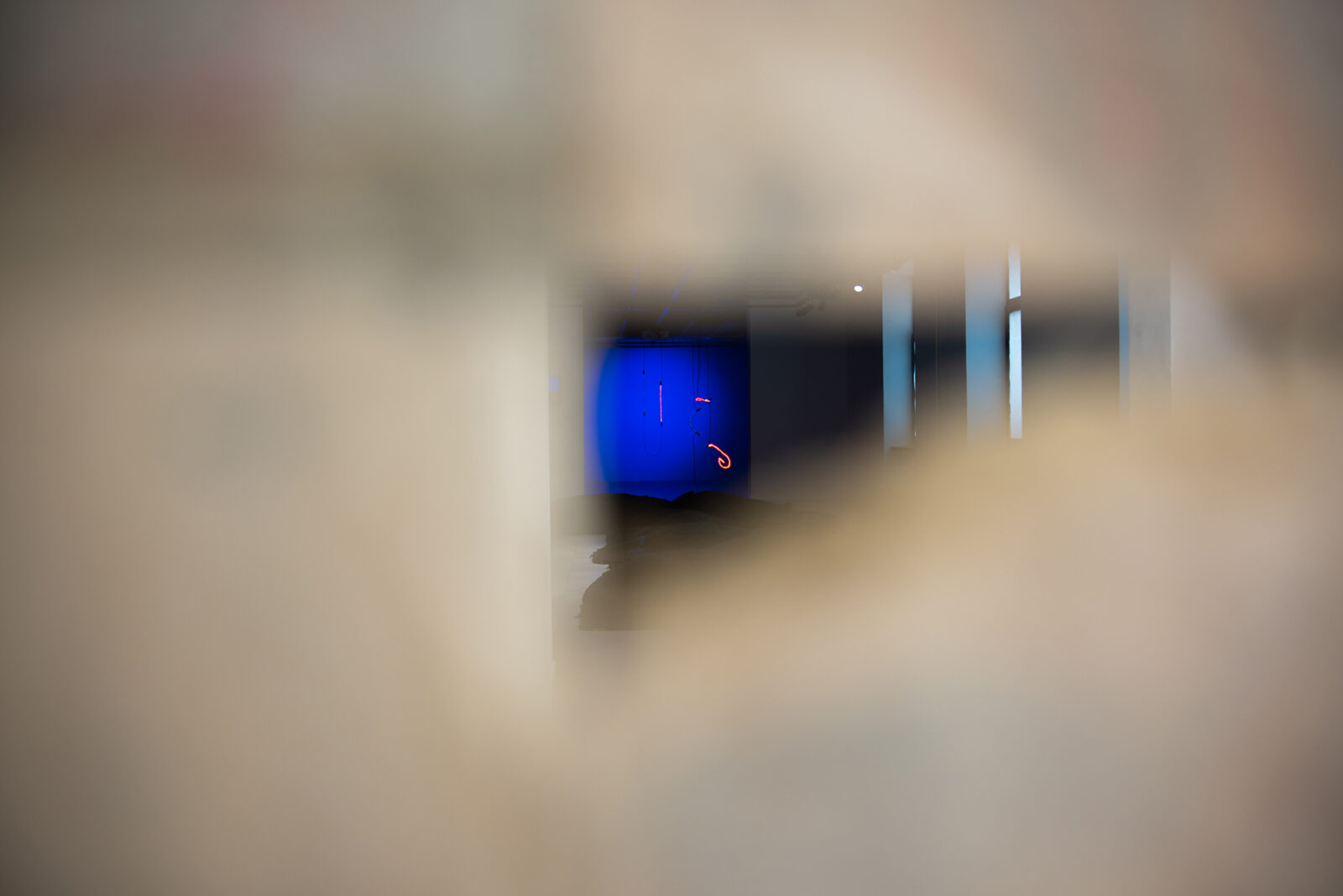
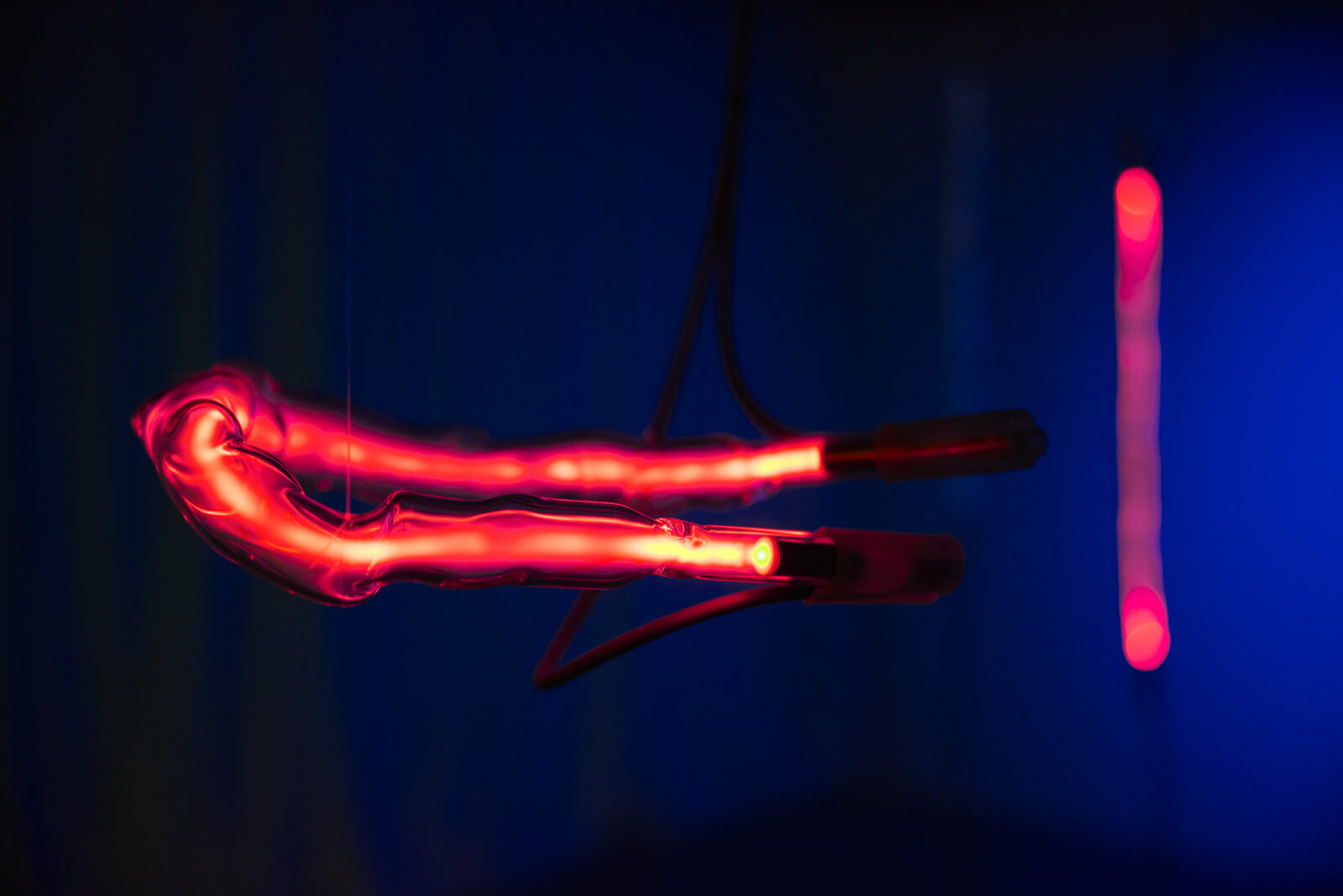
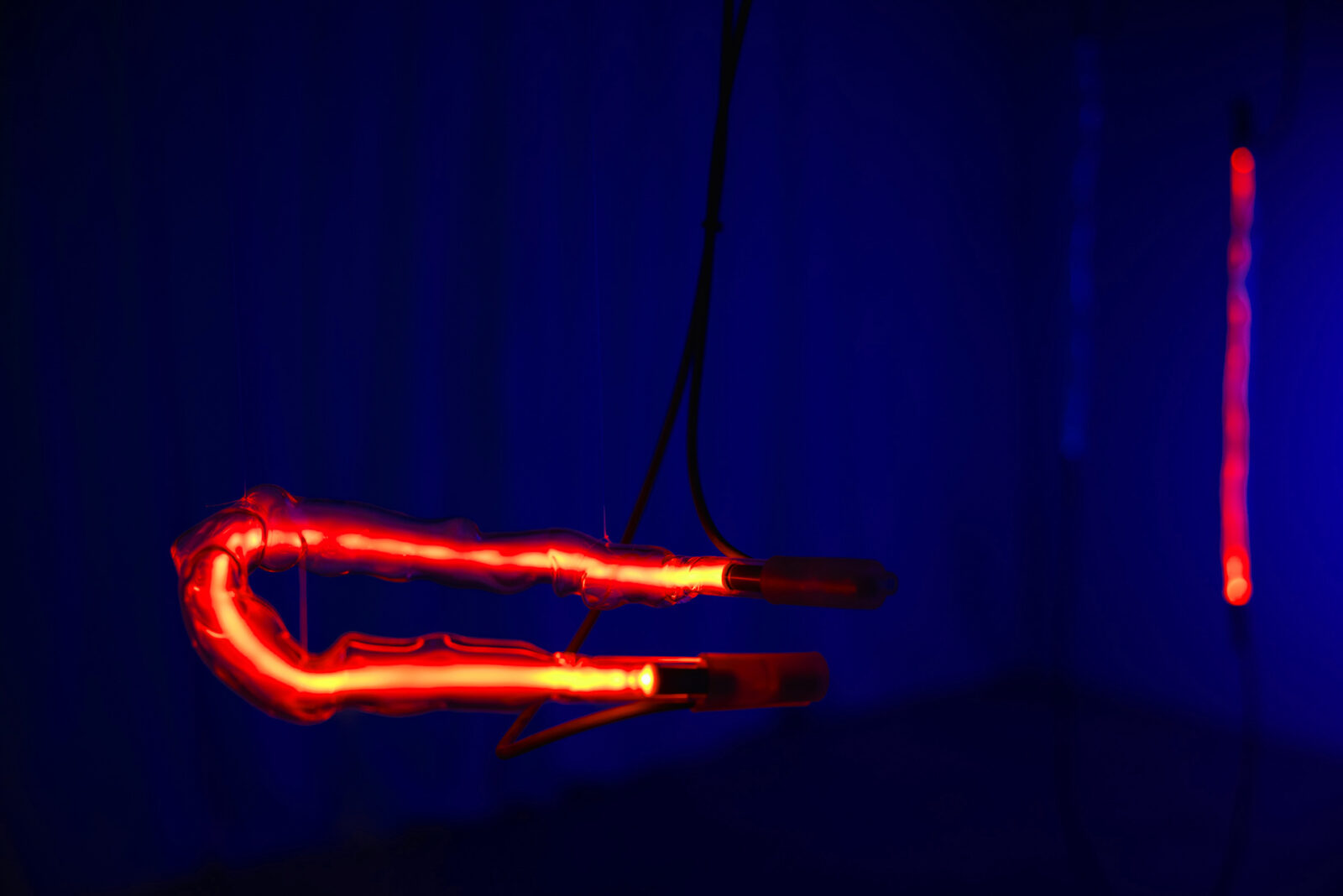
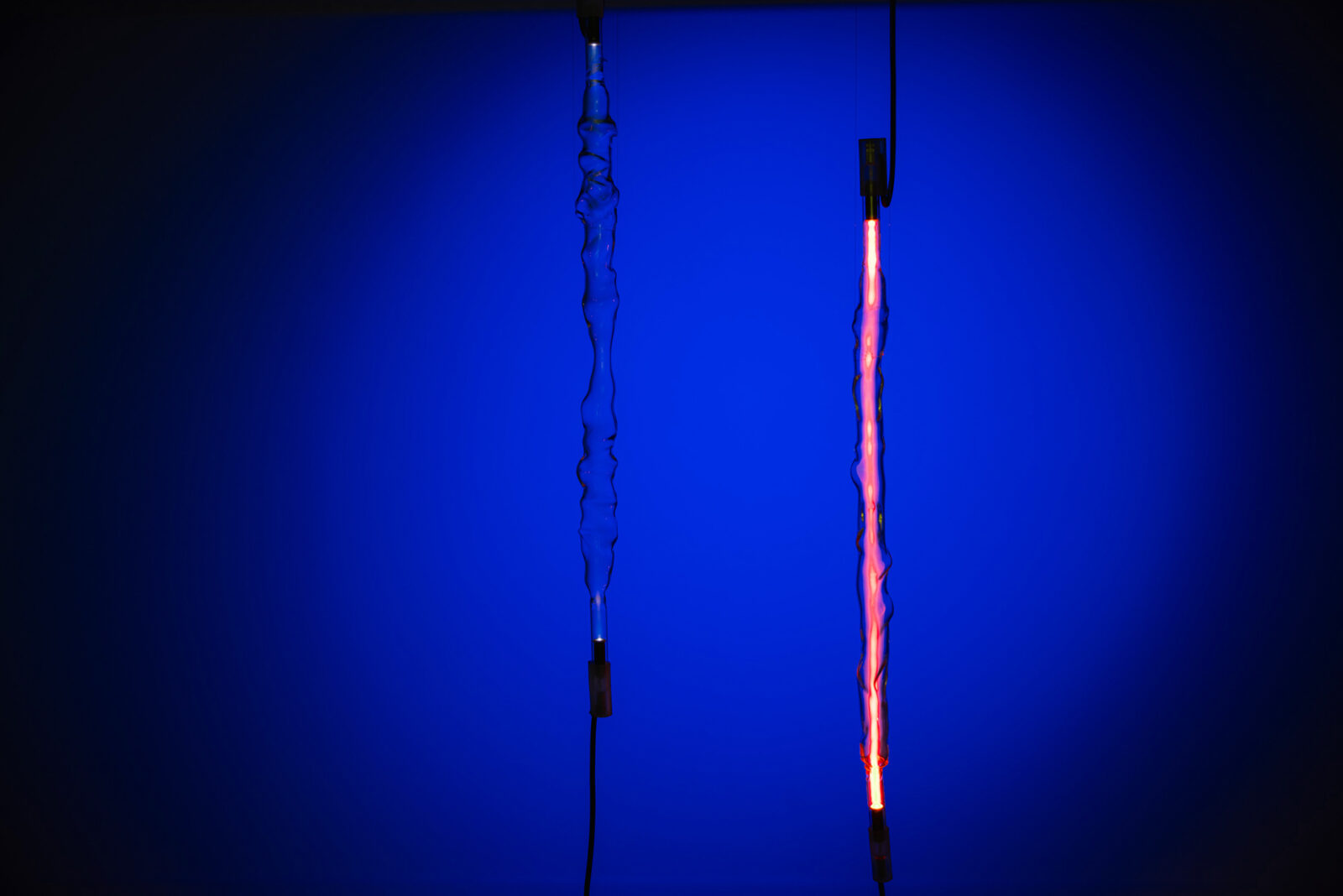
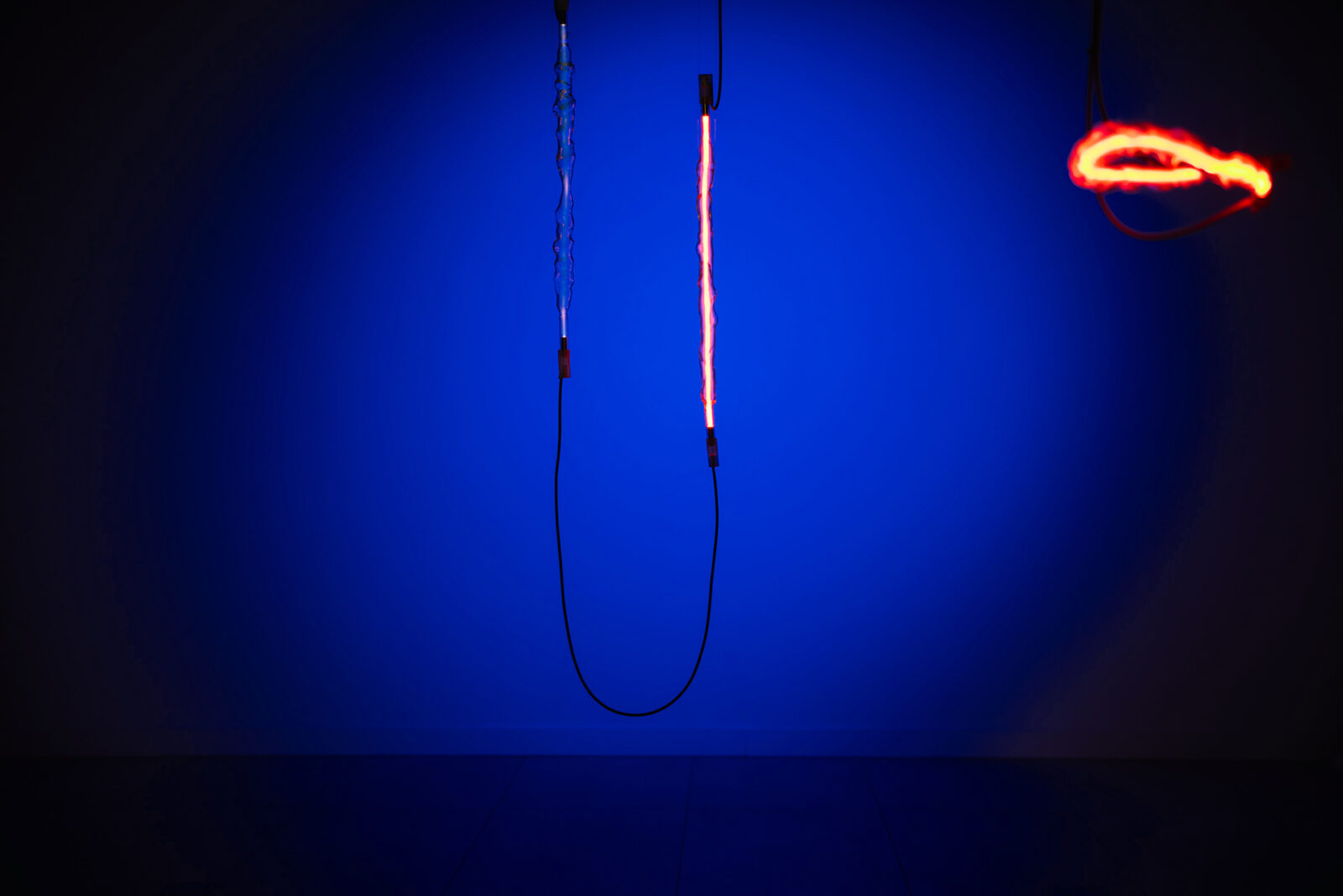
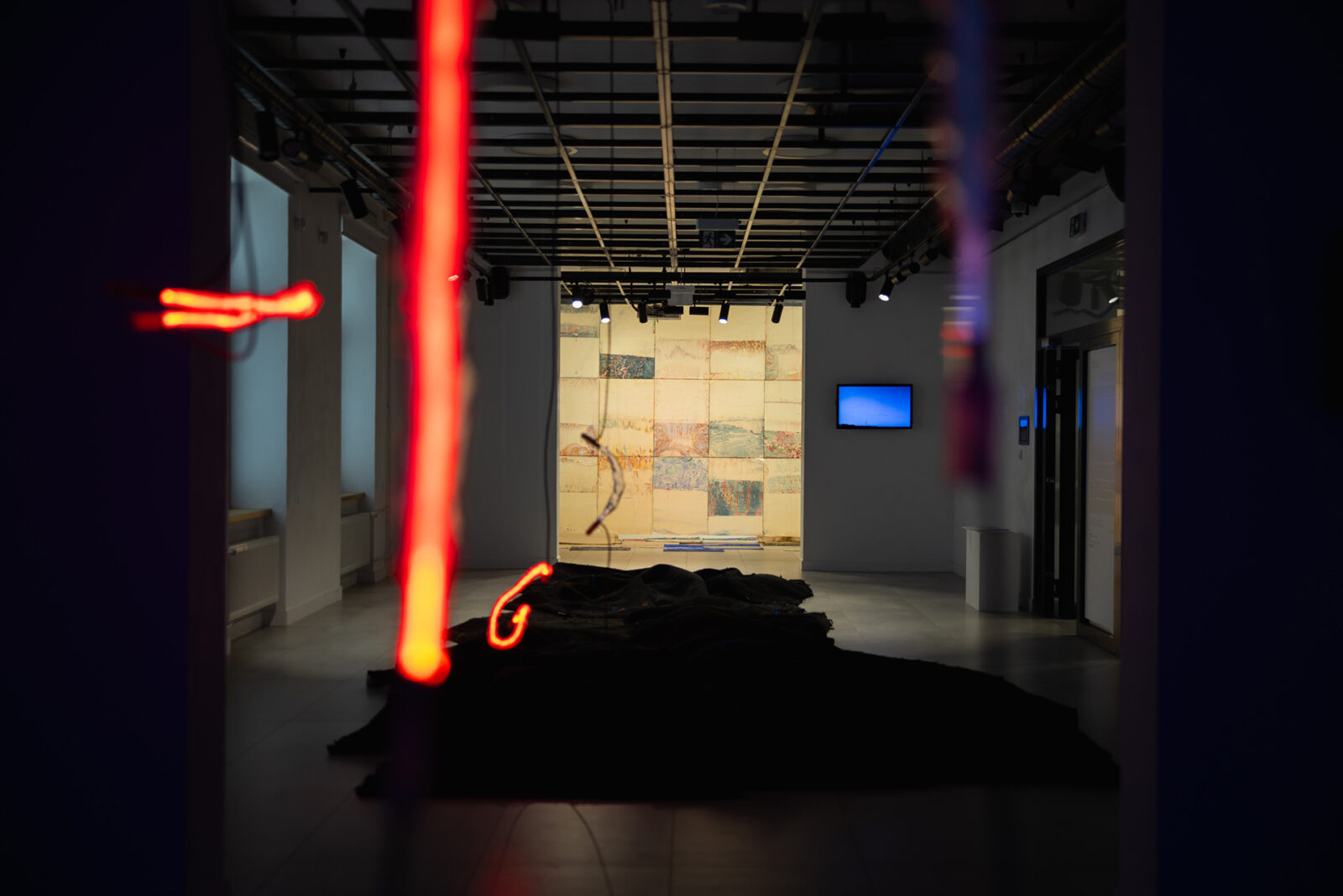
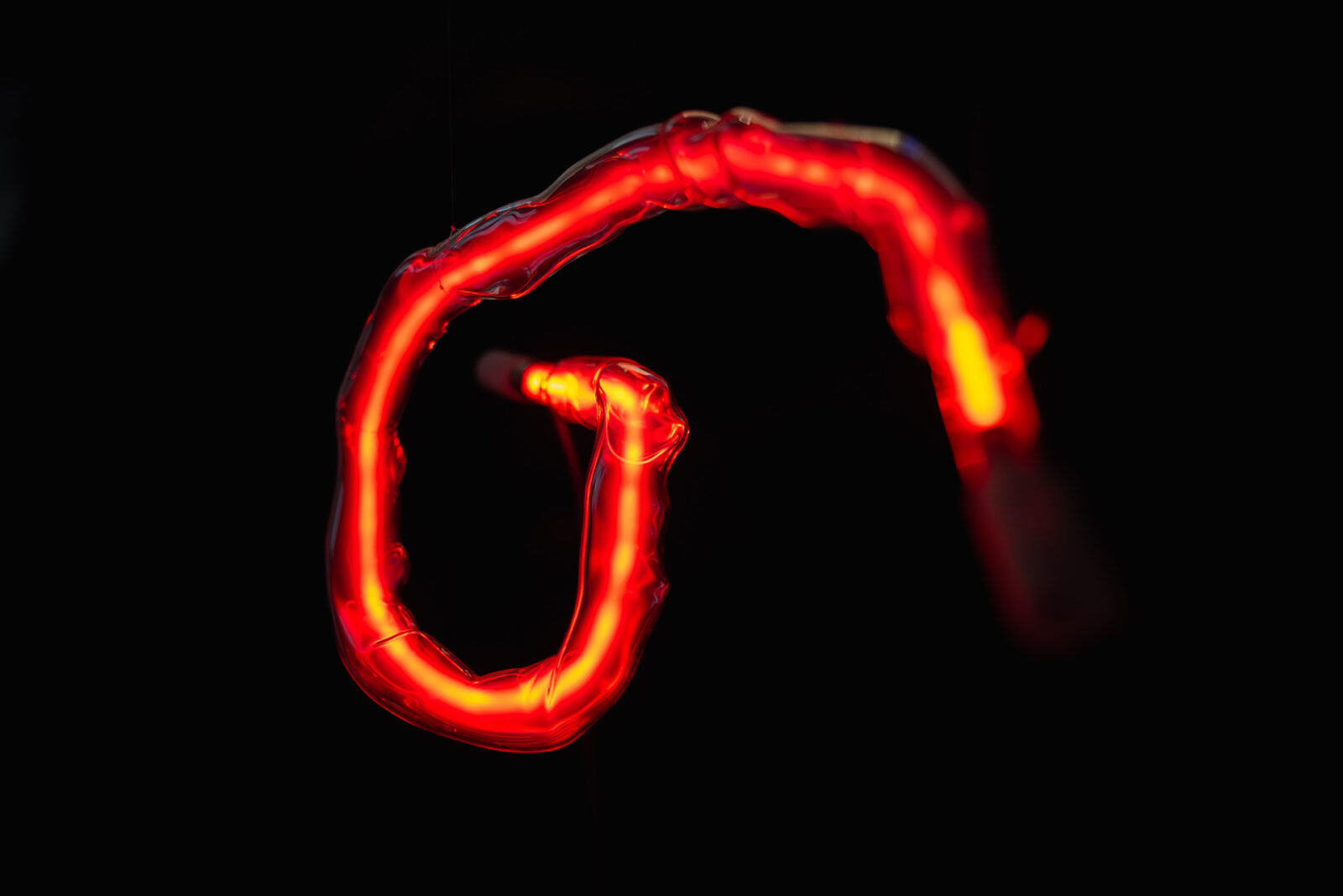
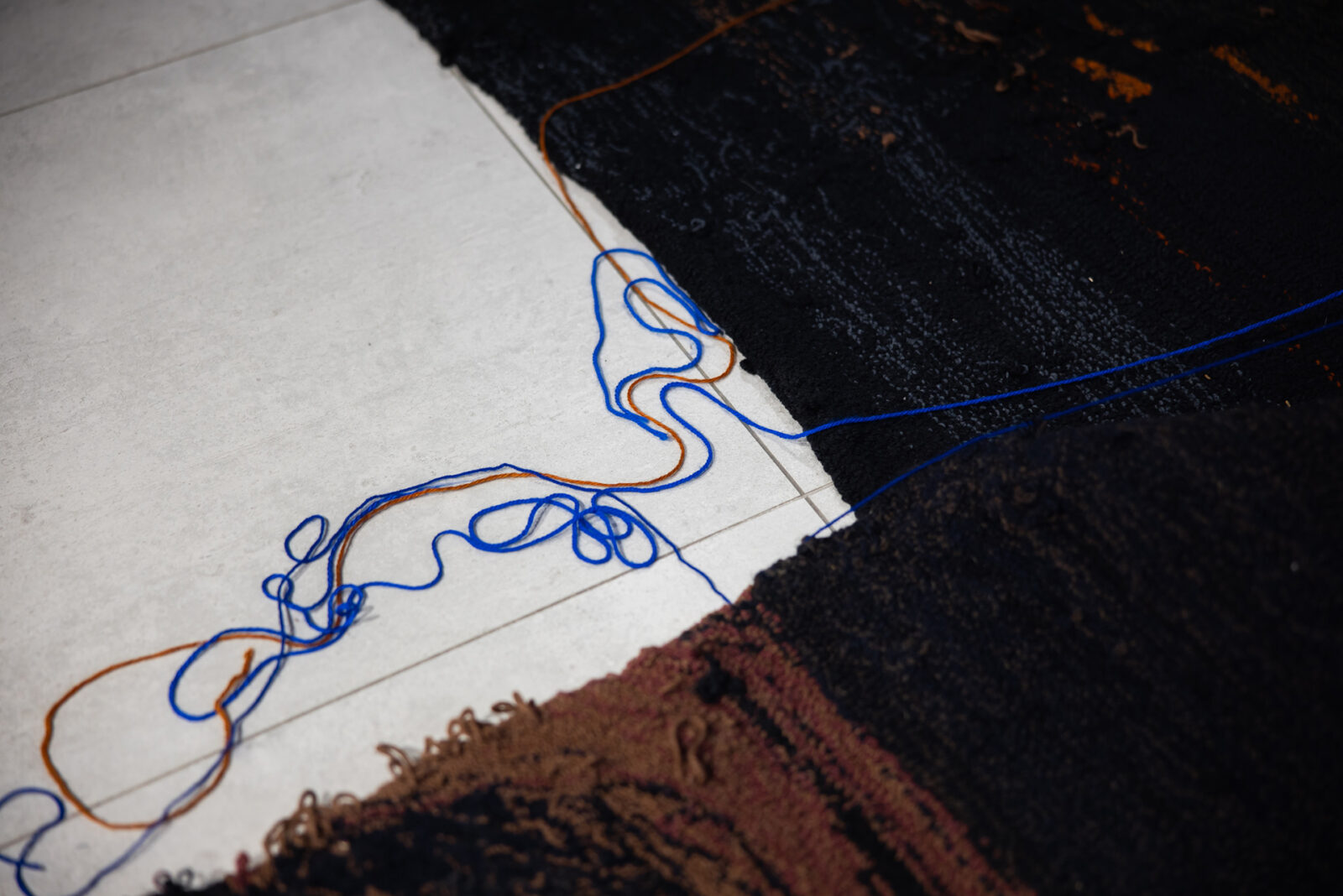
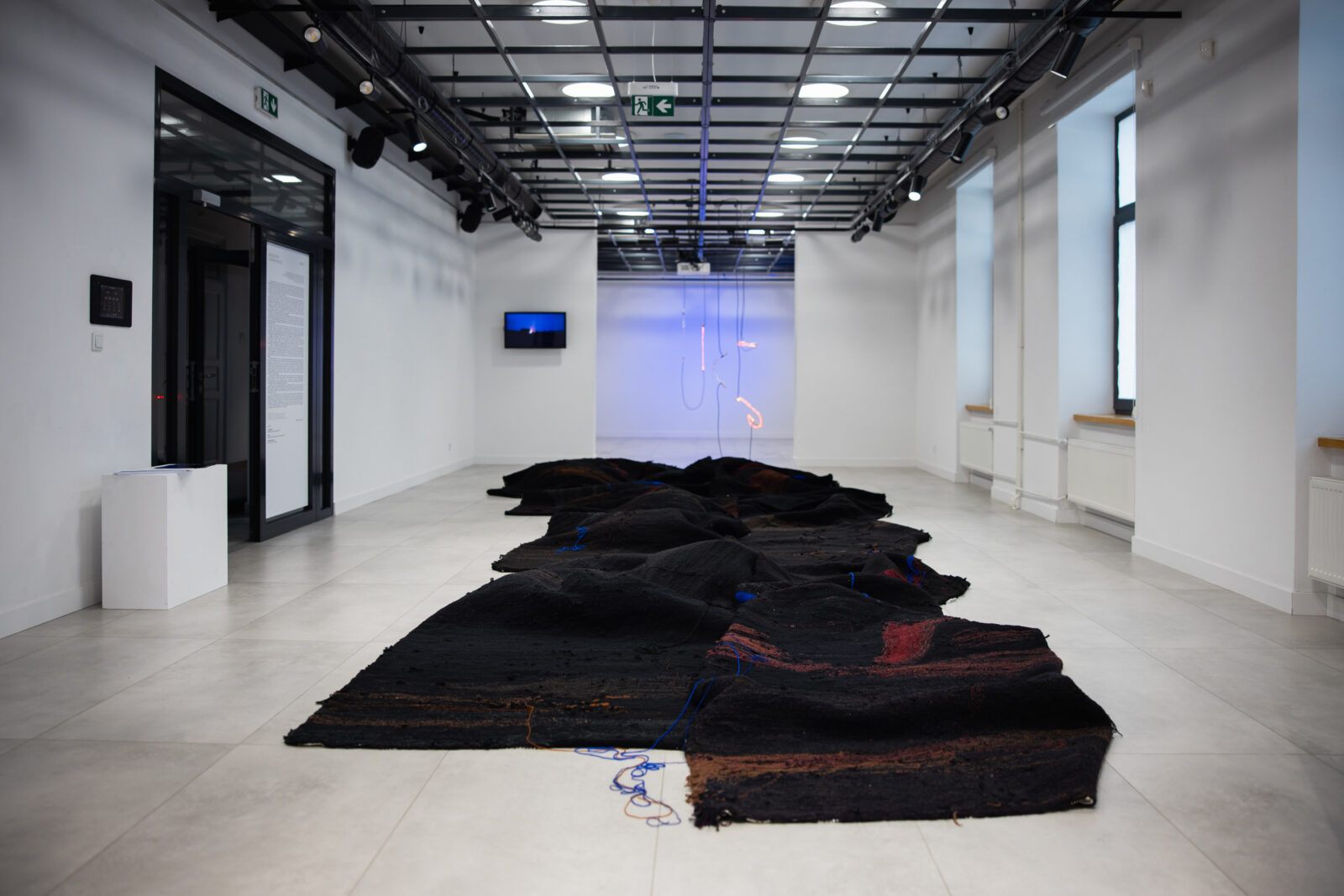
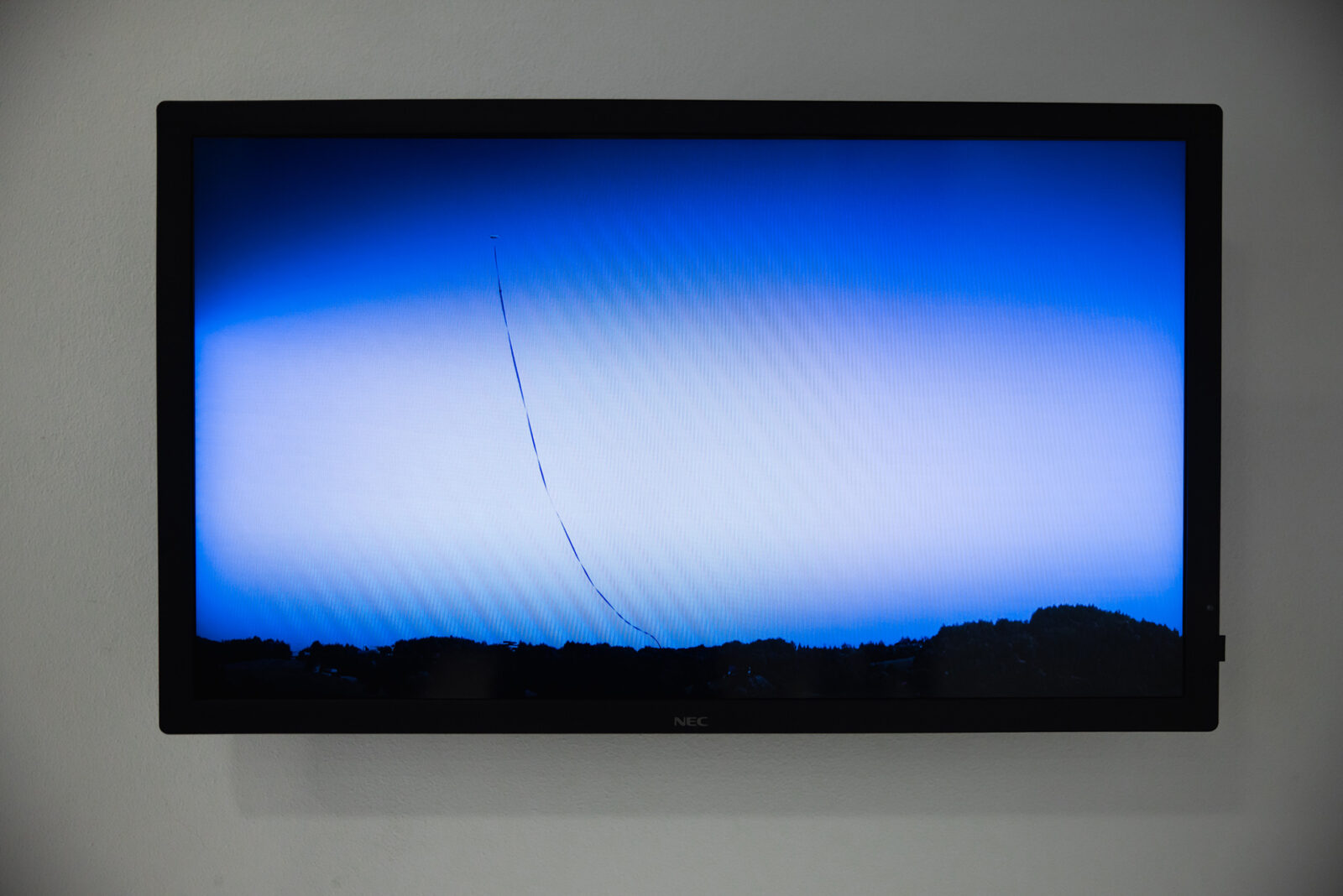
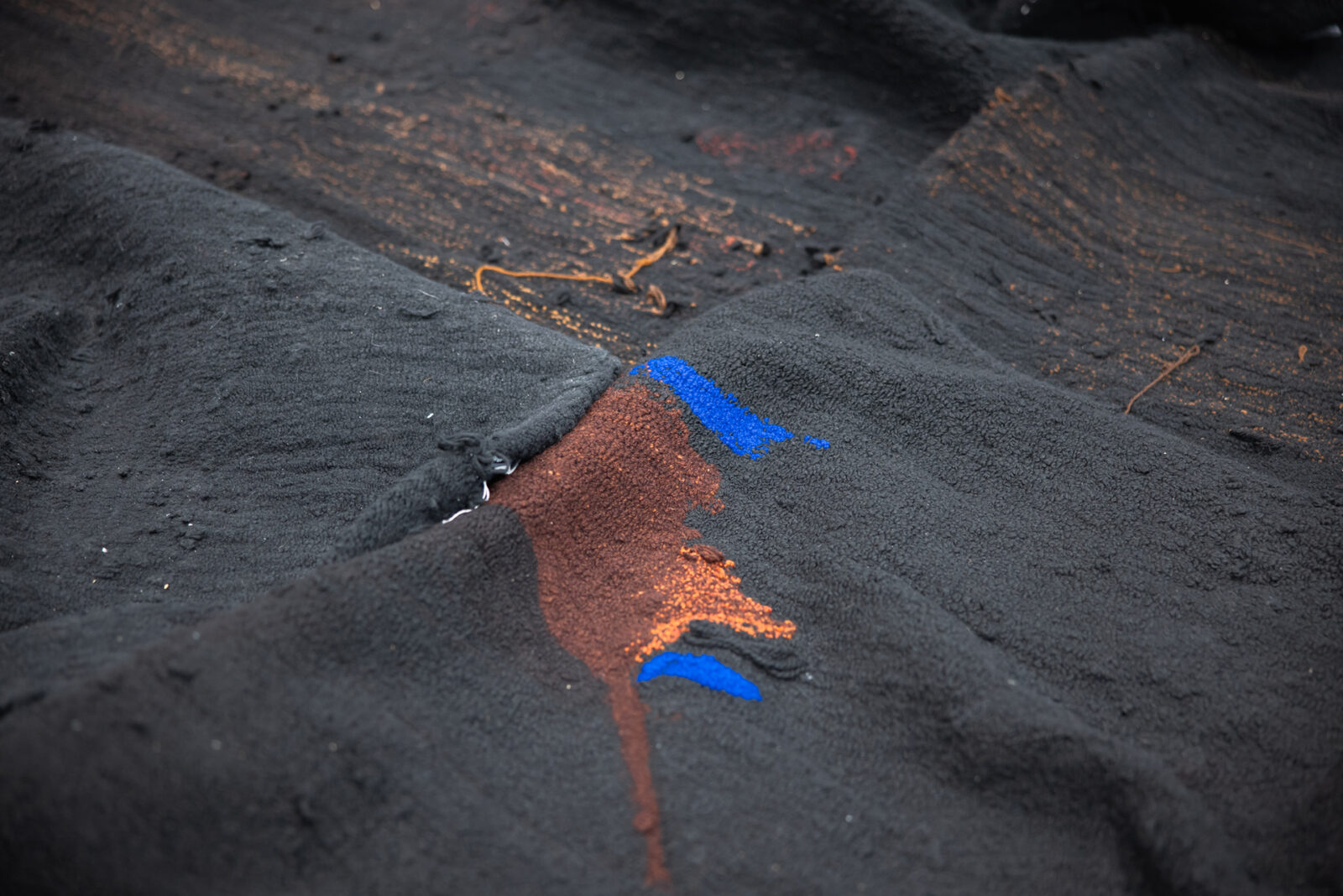
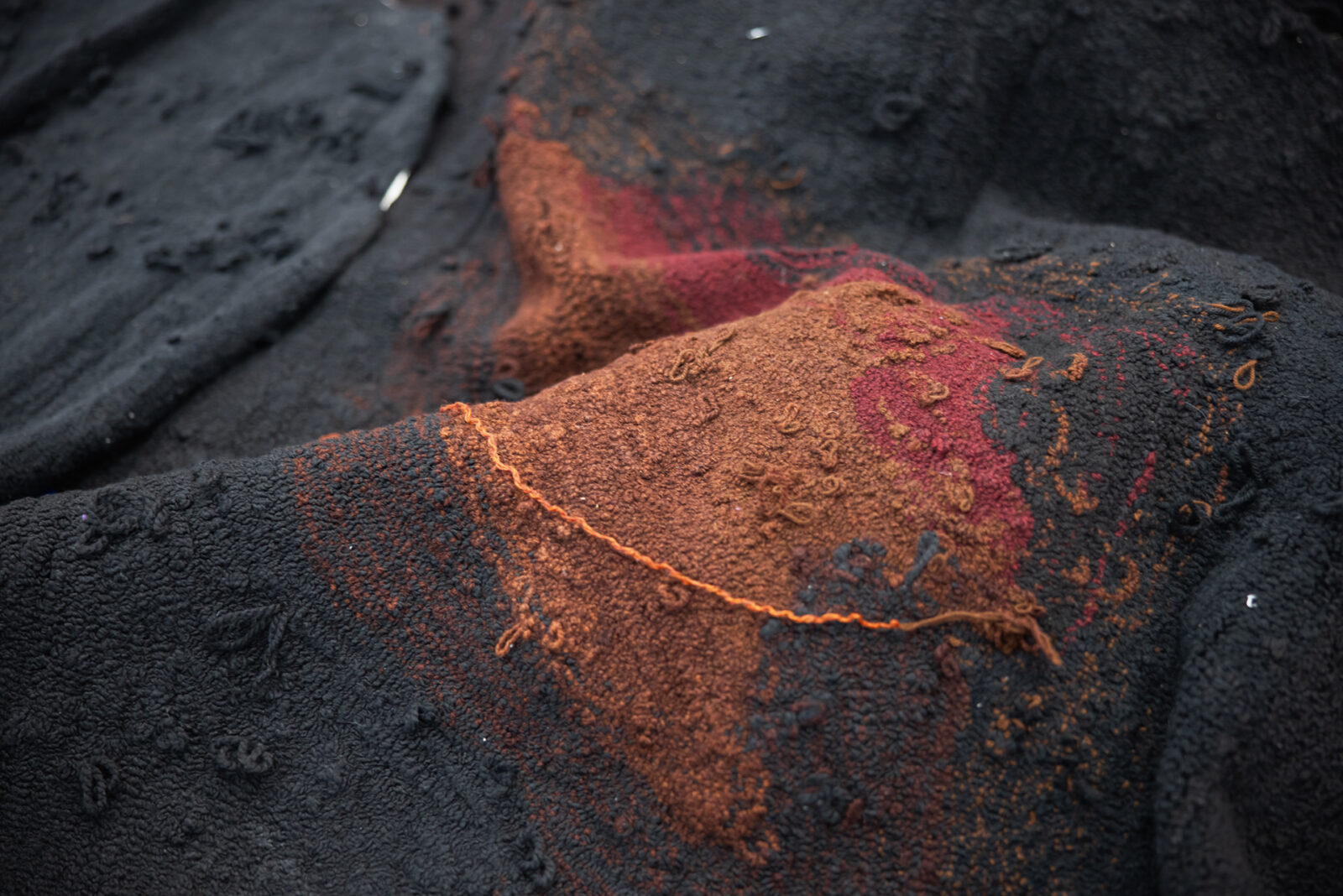
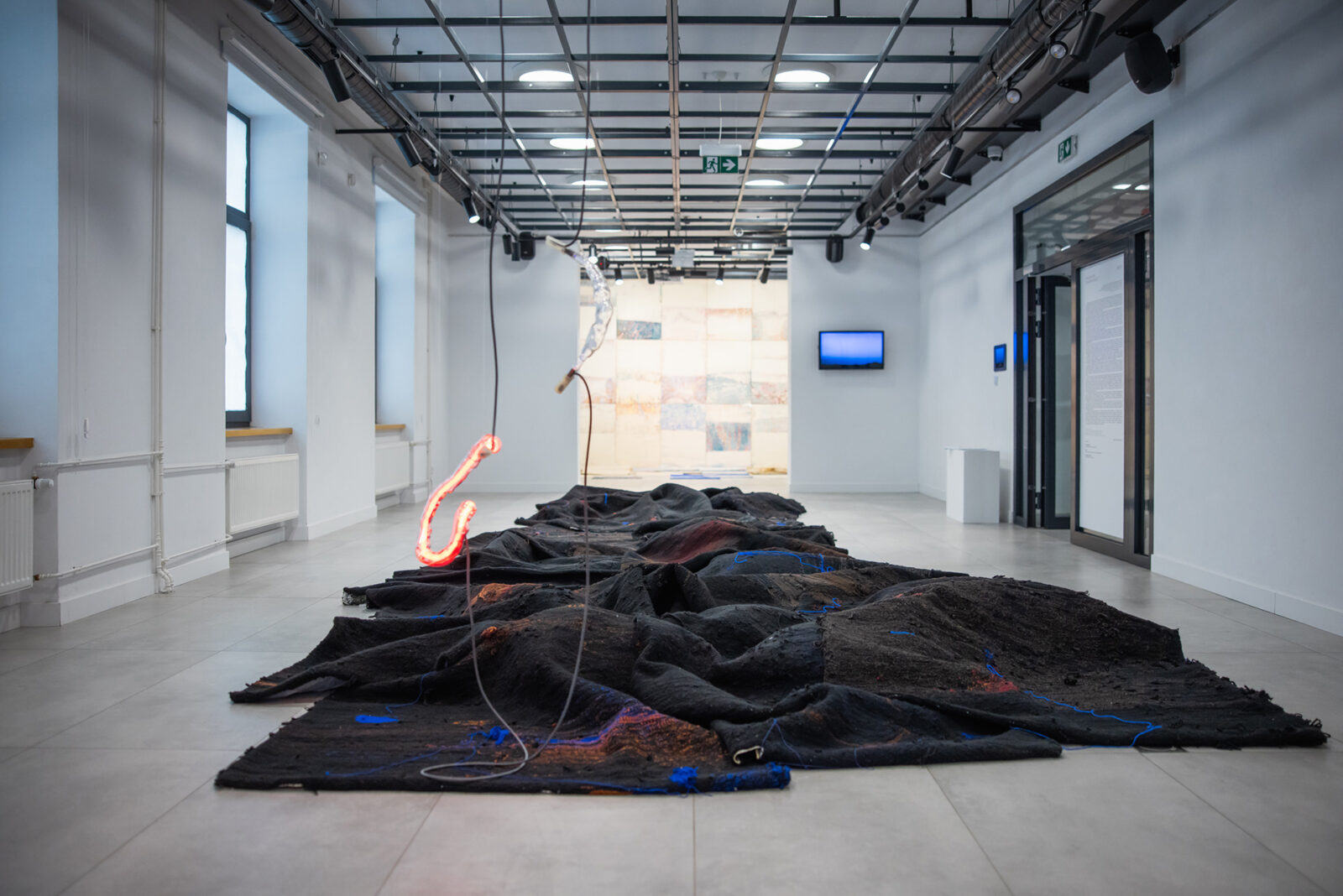
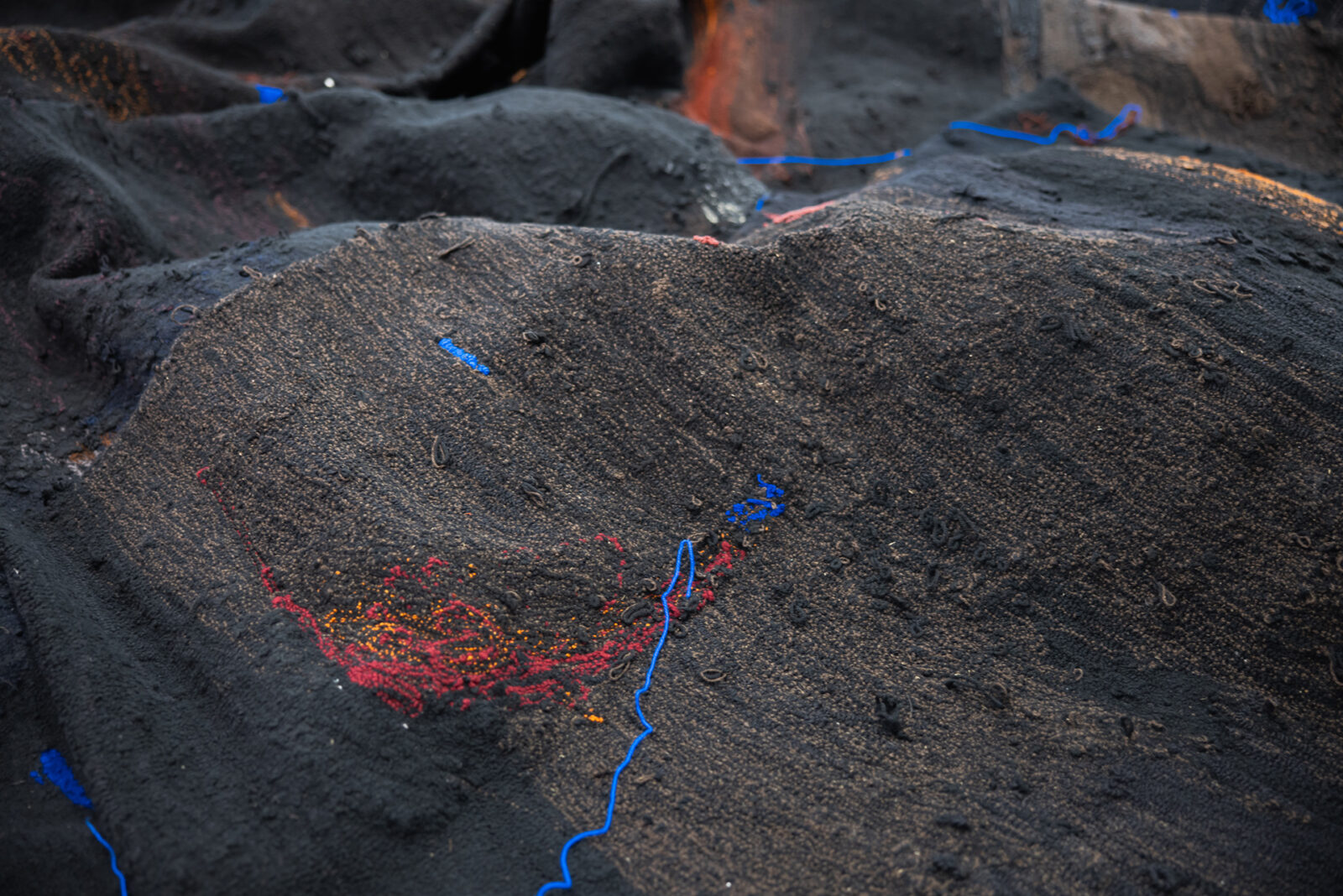
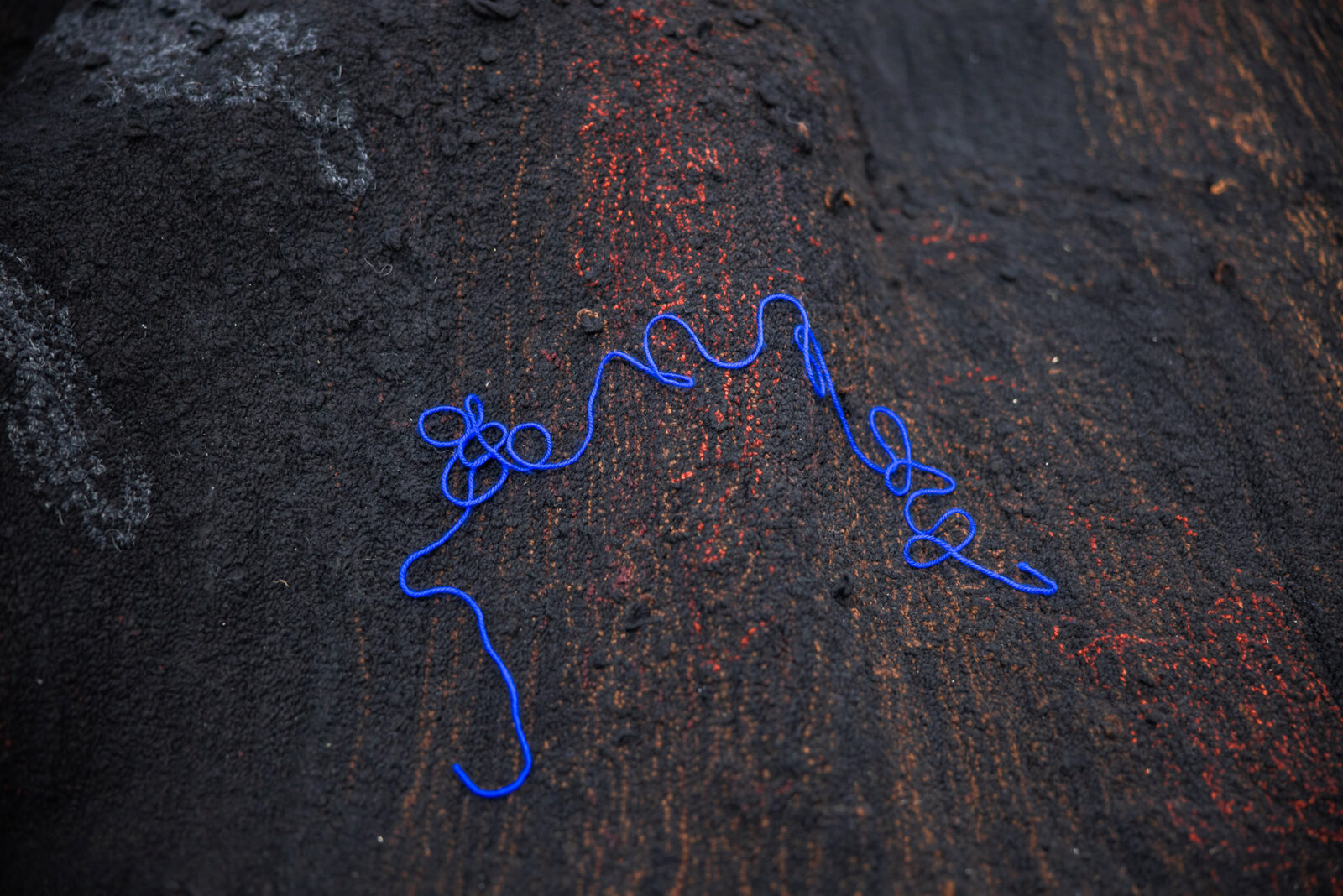
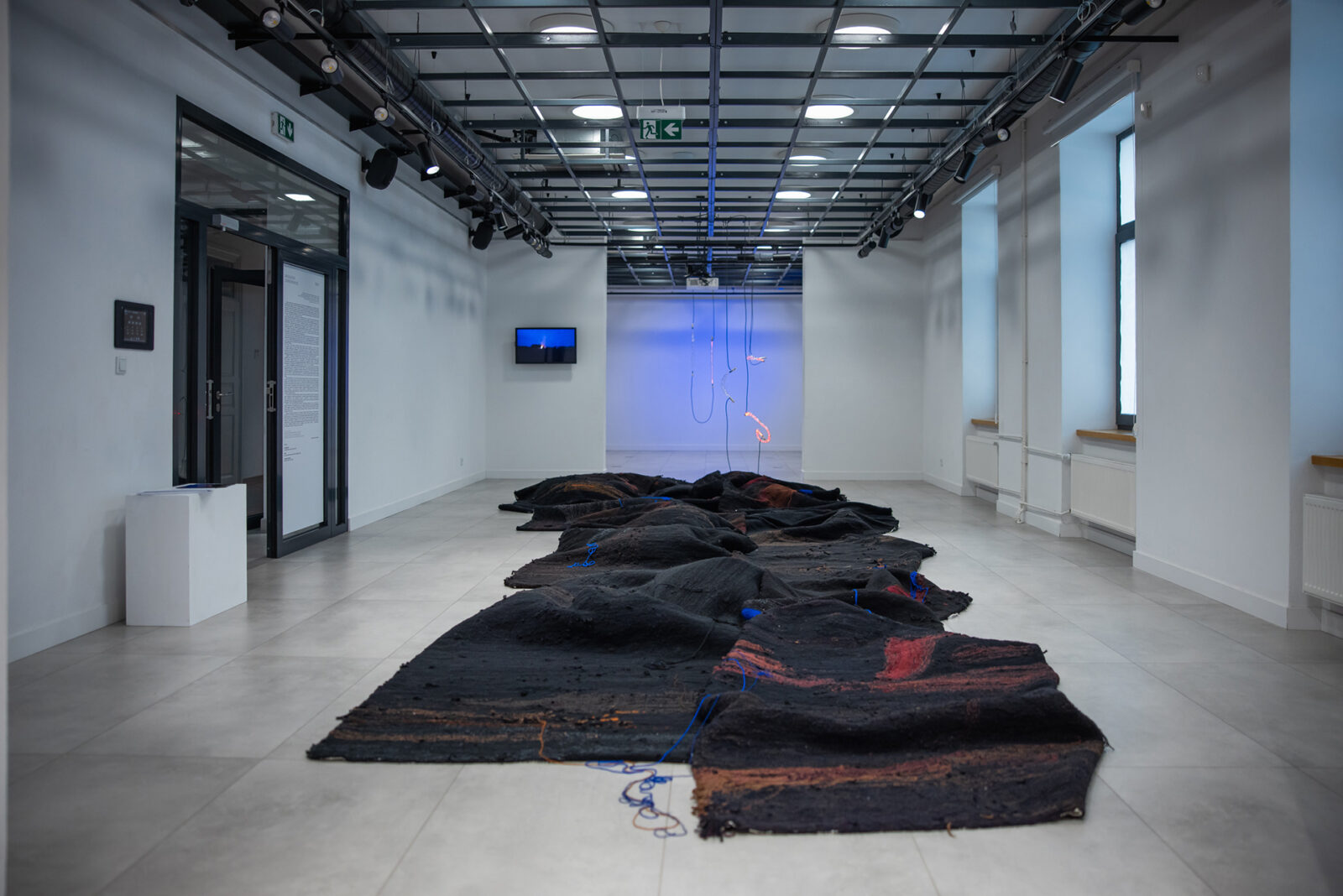
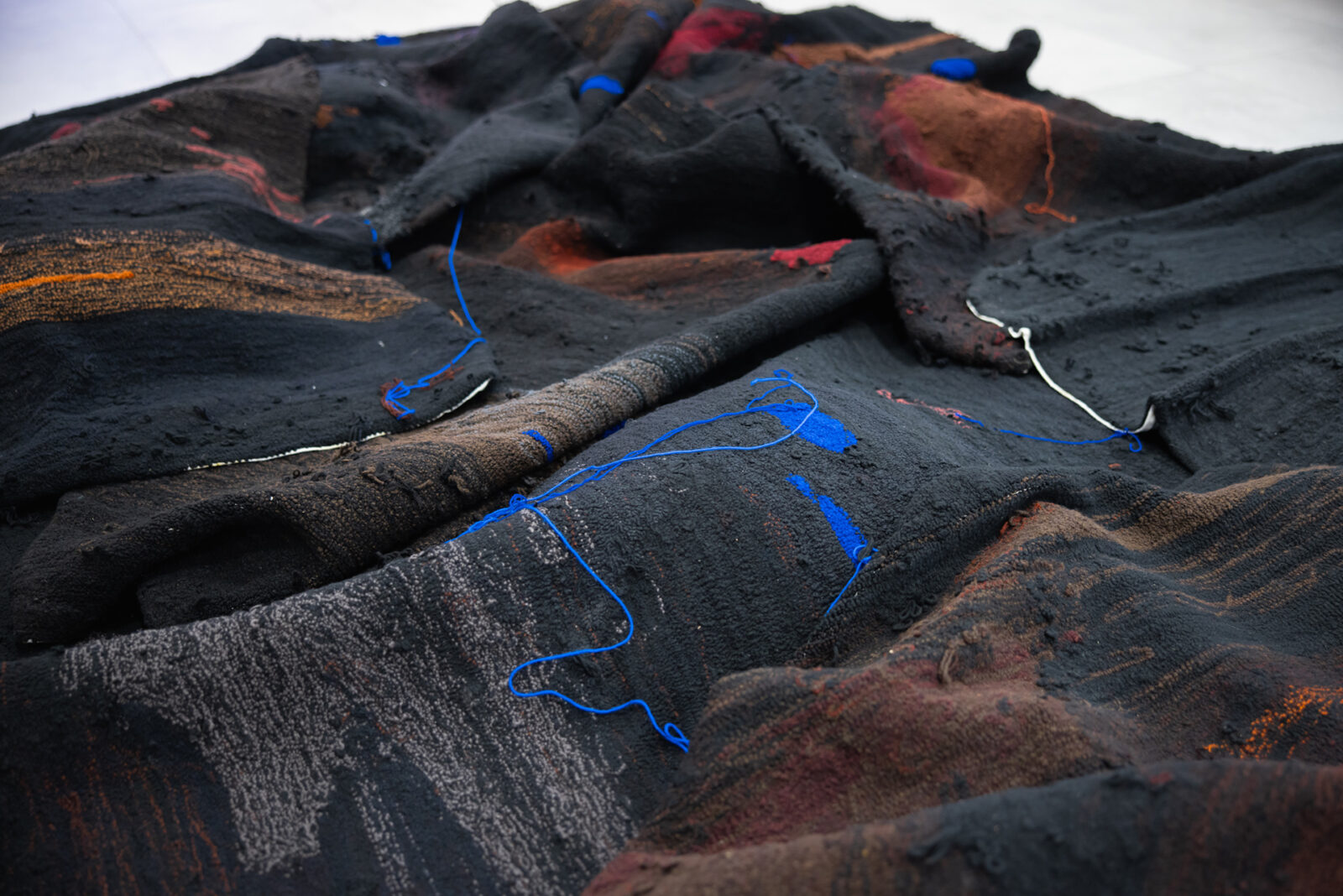
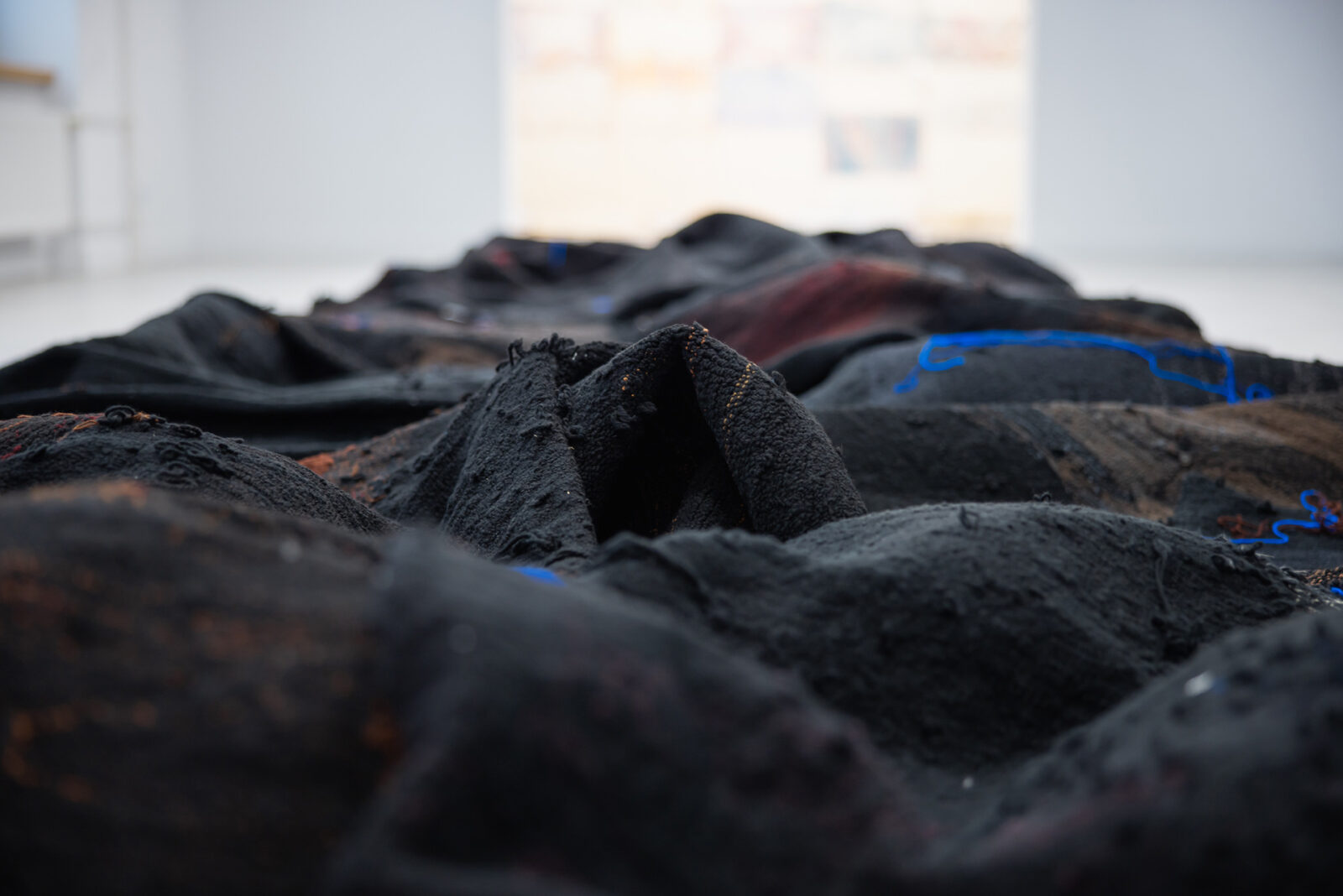
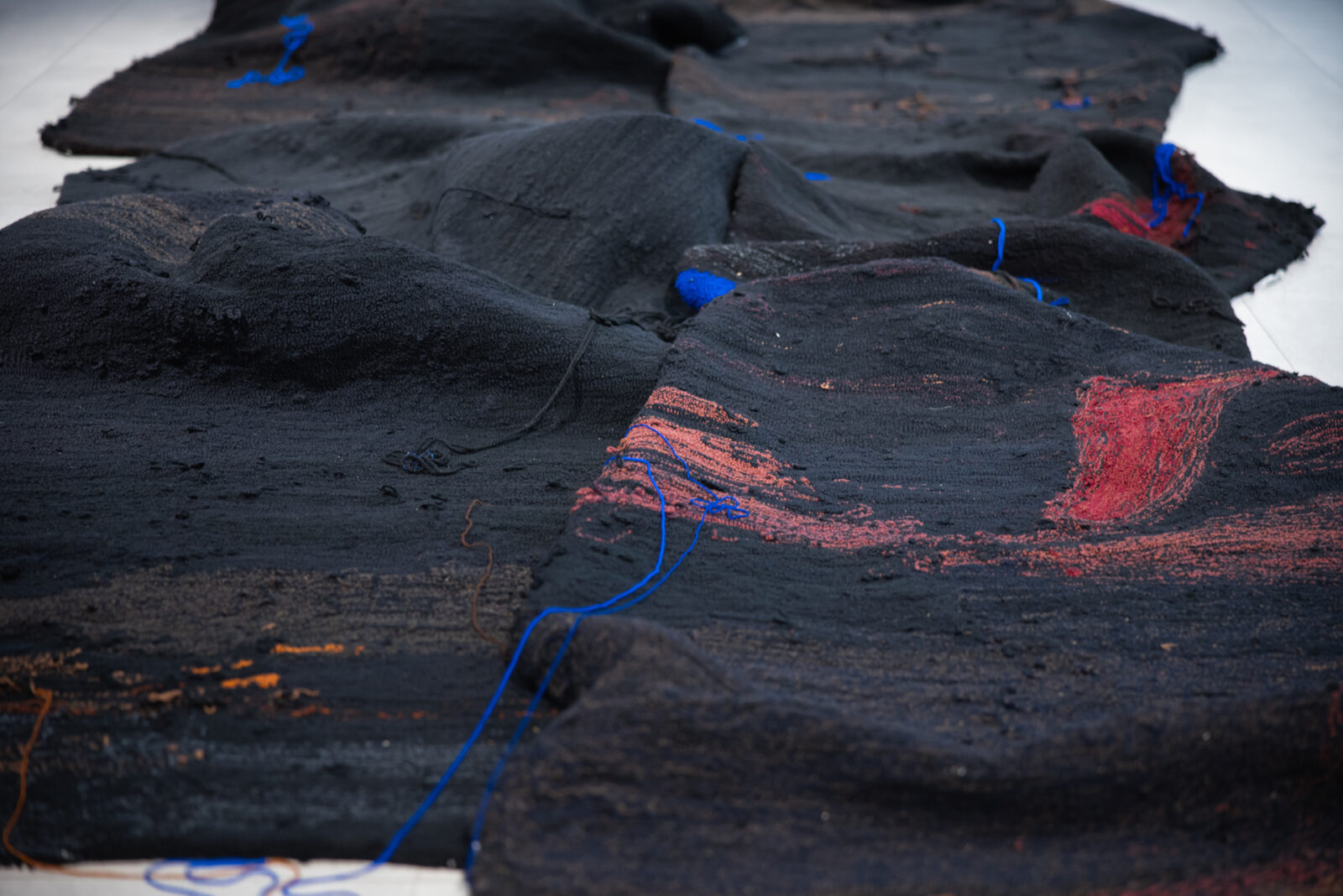
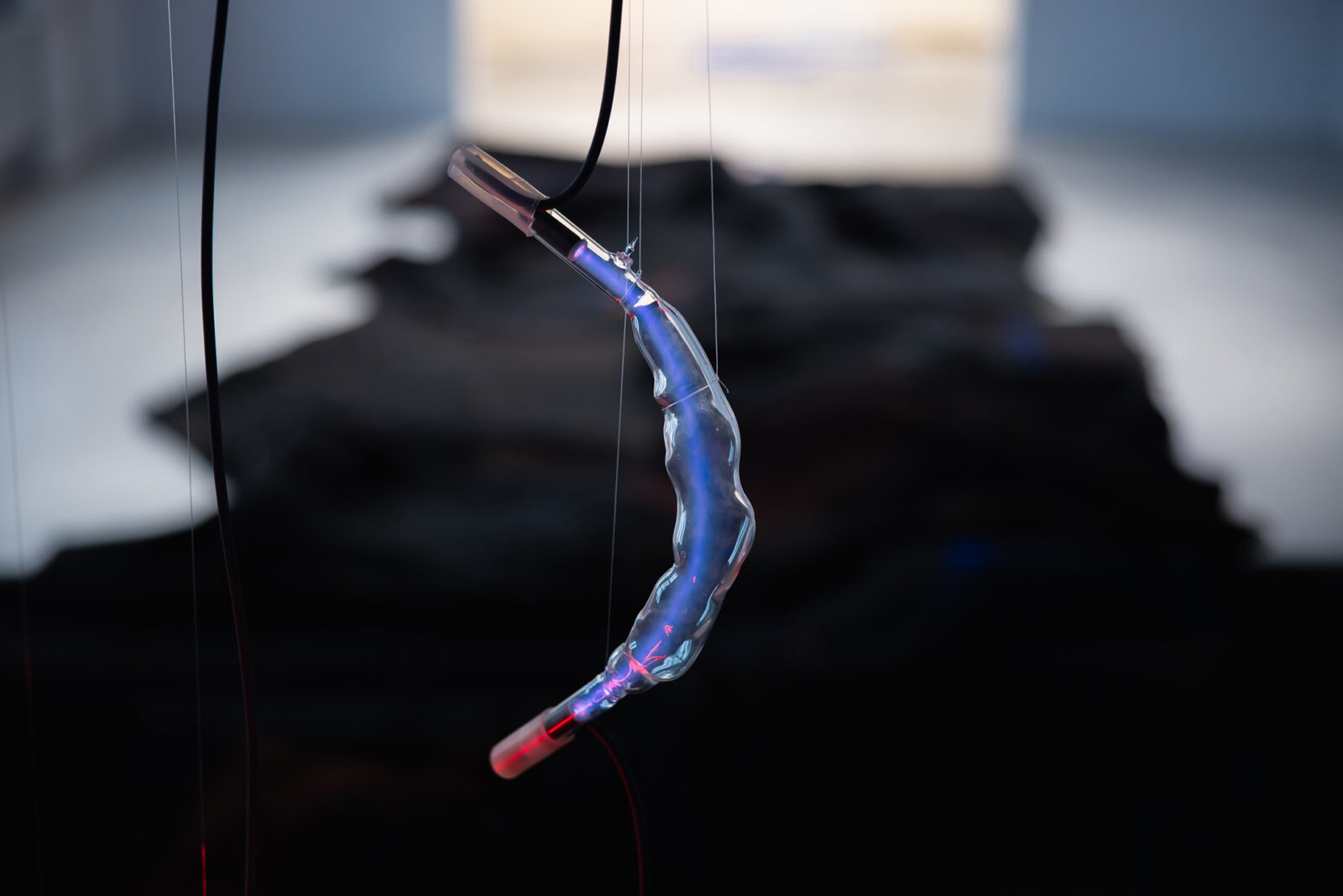
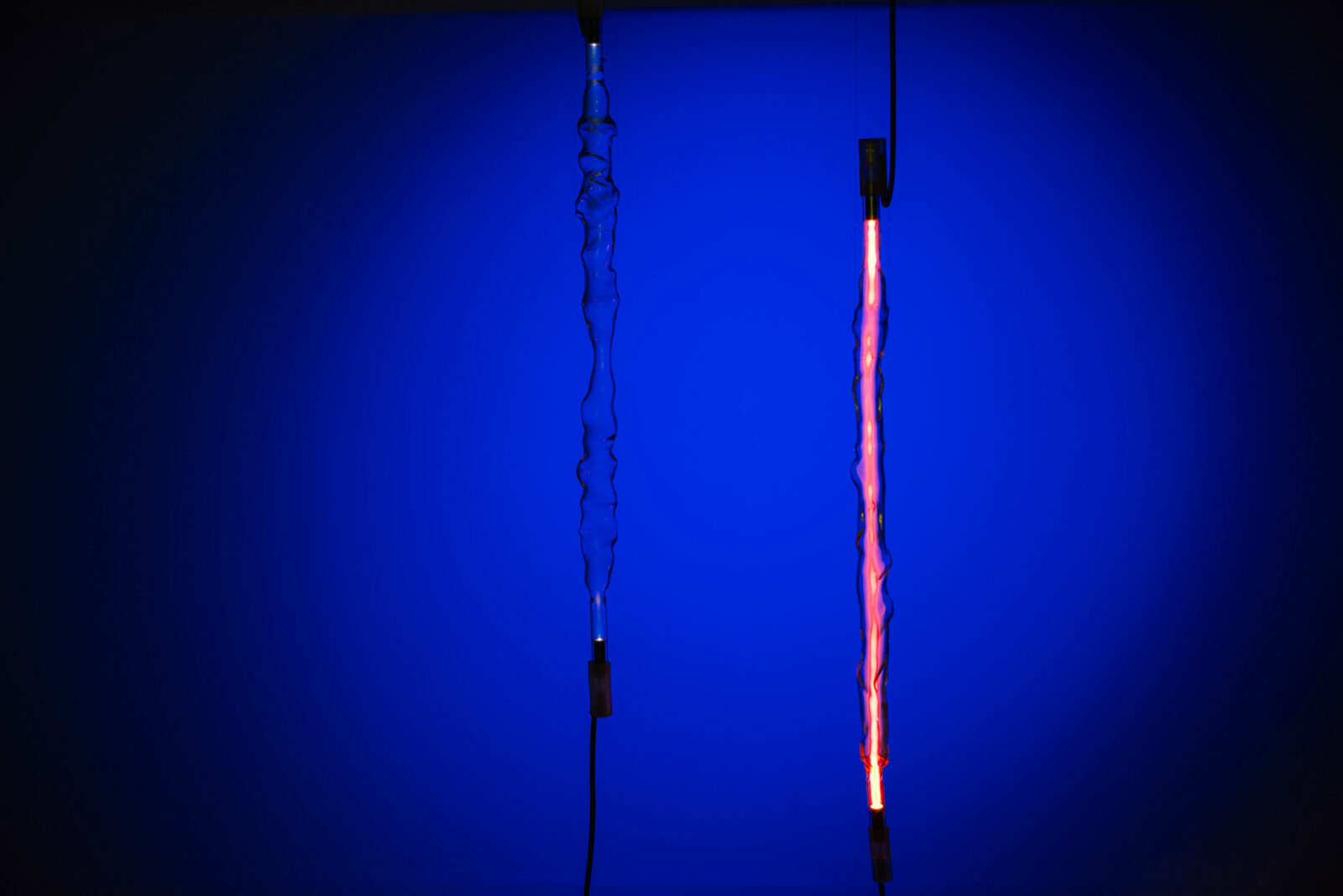
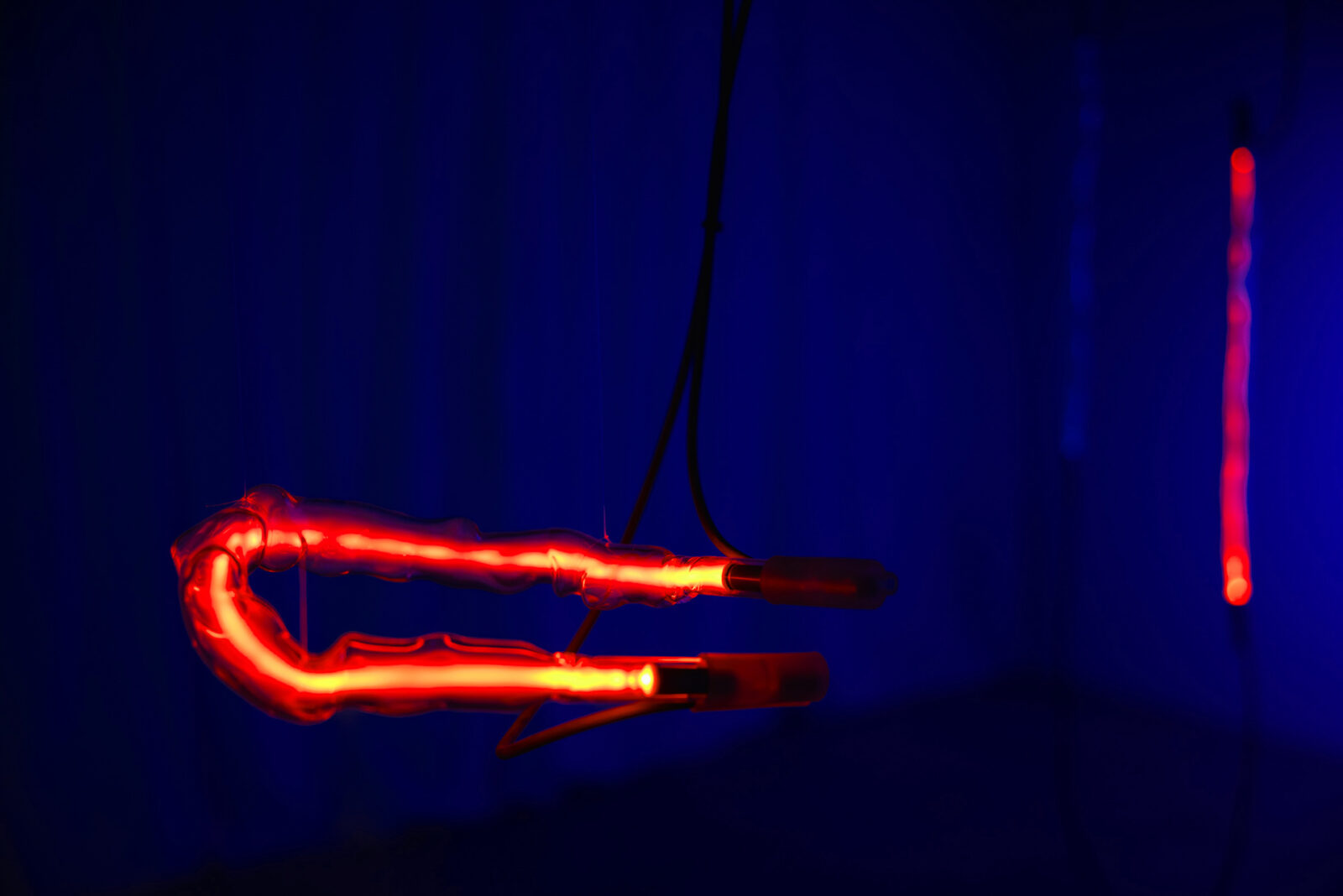
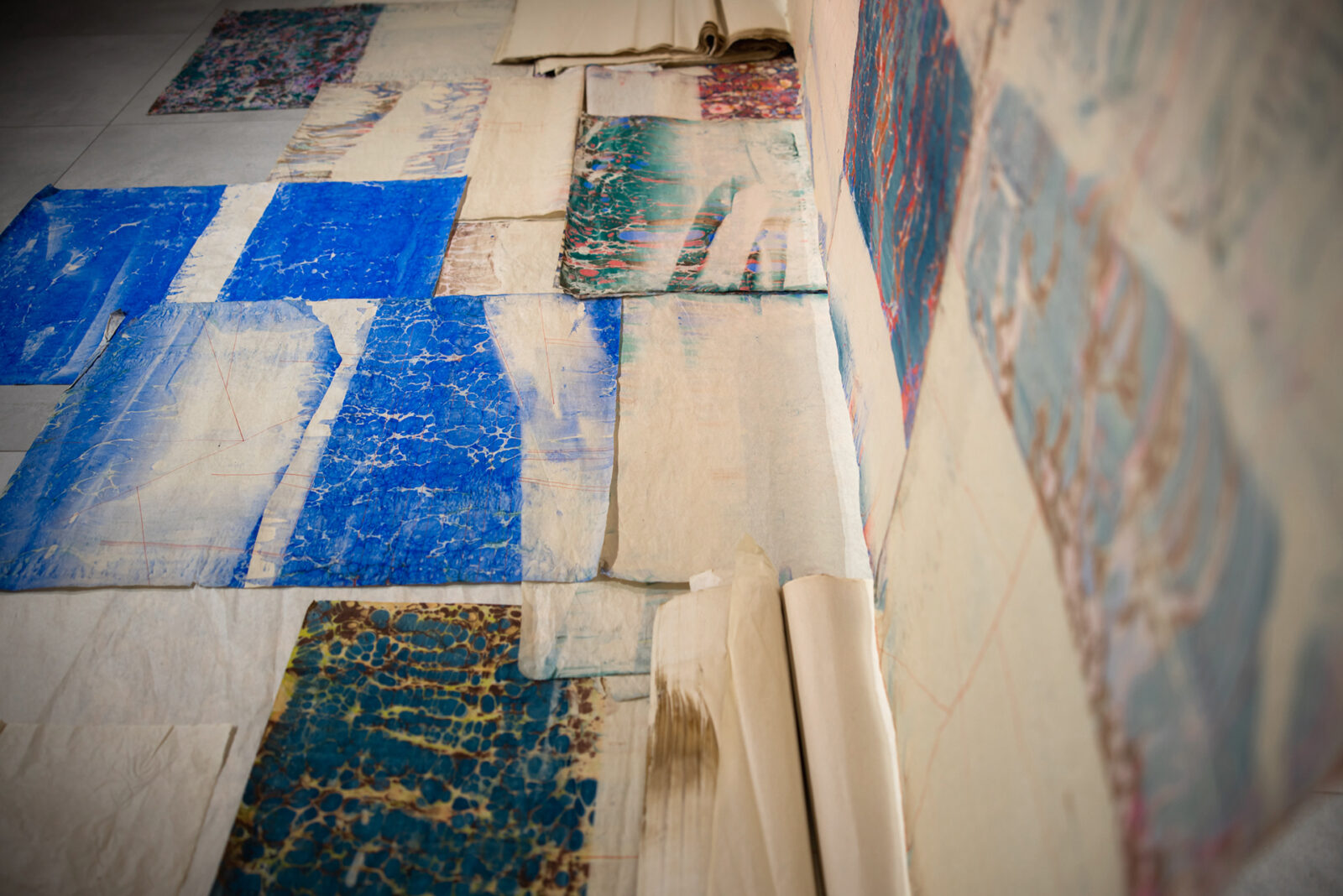
Magdalena Ciemierkiewicz searches through her work for ritualistic, ephemeral, yet also material forms to make visible what we do not wish to see and do not wish to speak about. Paraphrasing the words of Roma Sendyka, the artist restores that which has been pushed outside the social imaginarium, beyond the ways of “‘imagining’/’envisaging’ one’s social environment”. The exhibition Biesy (Fiends) is visually highly minimalist in form. It consists primarily of three works: Czarnoziem (Chernozem / Black Earth), Biesy (Fiends), and Czarna wstążka (Black Ribbon).
Photos: Damian Krzanowski