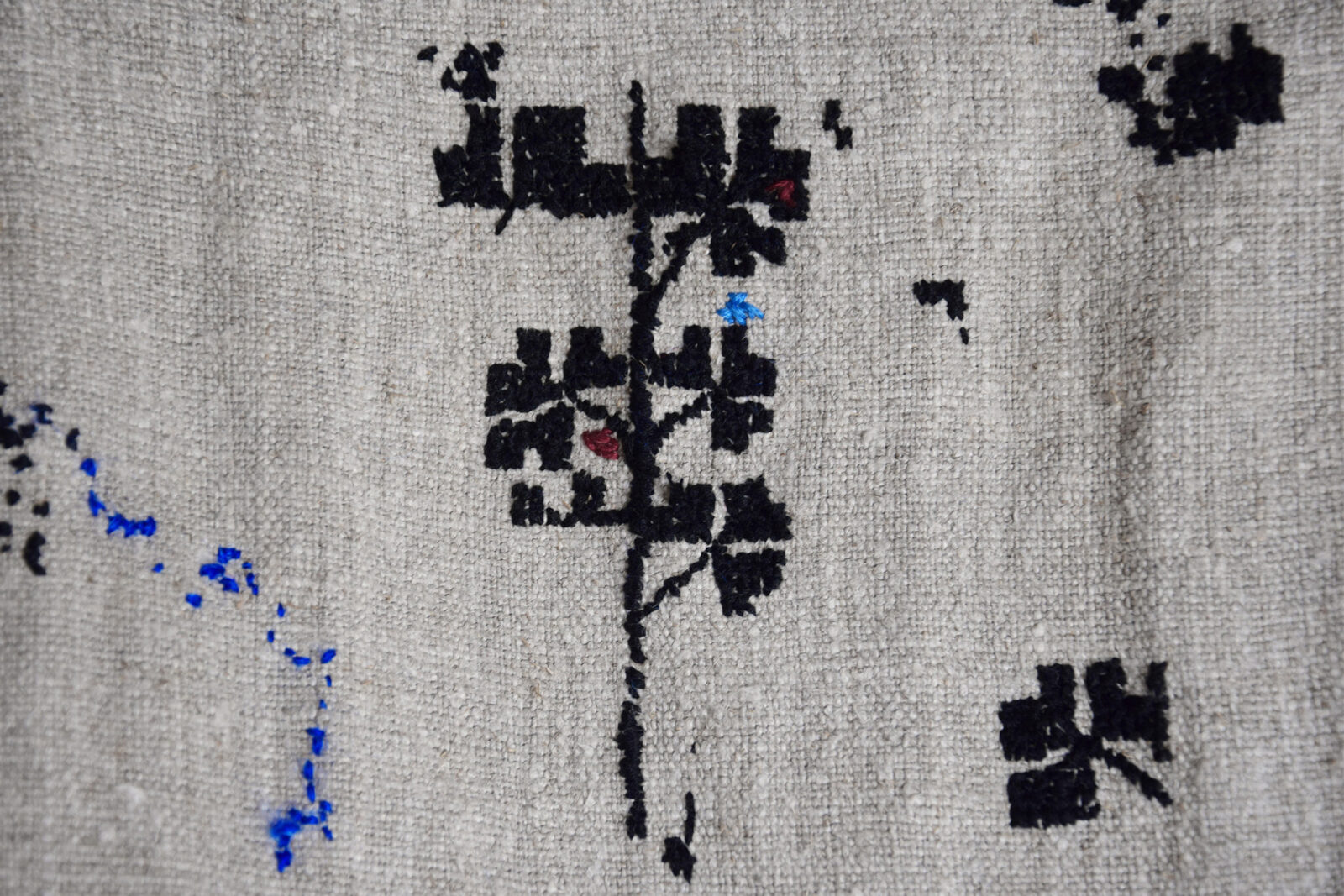
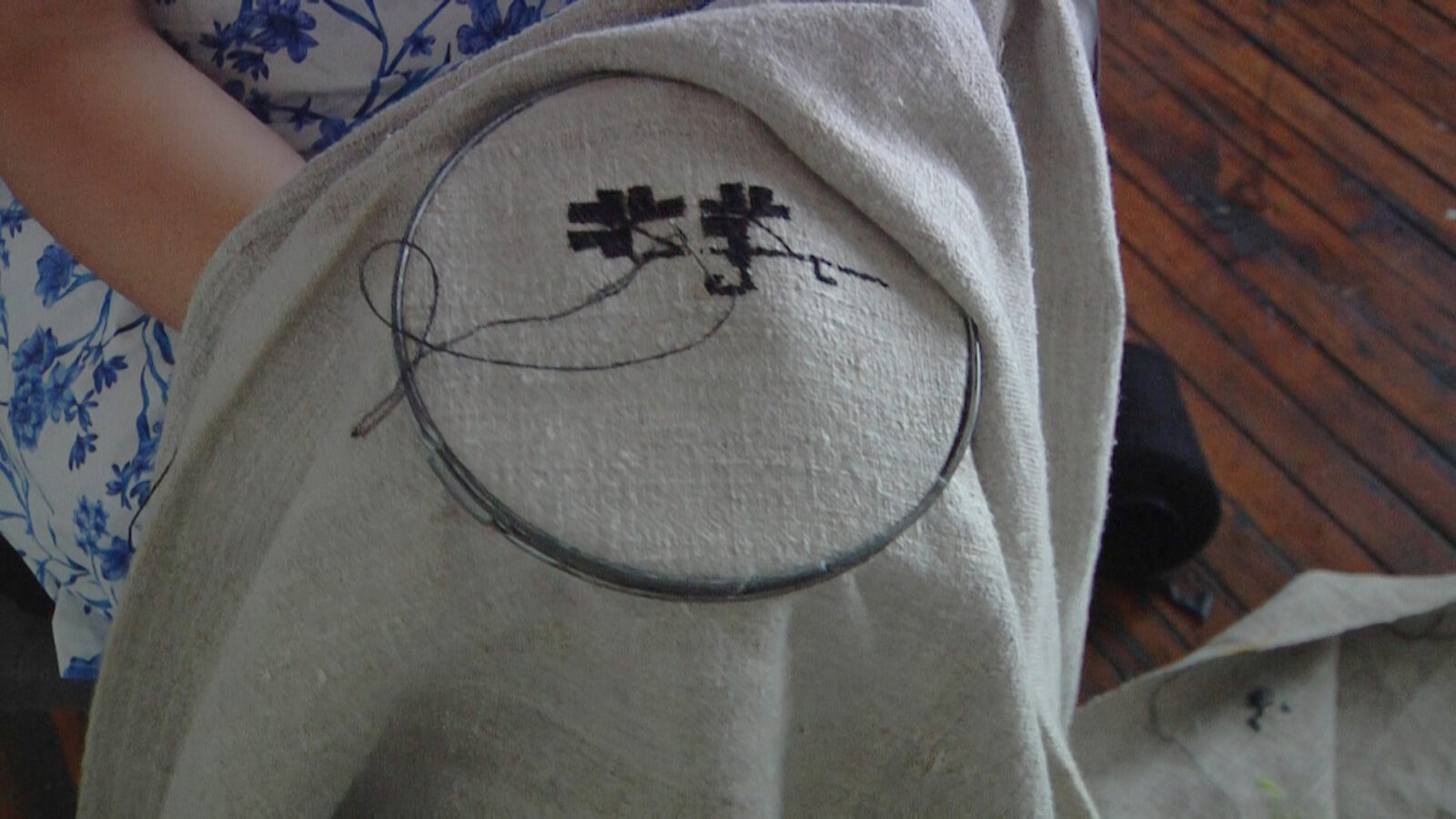
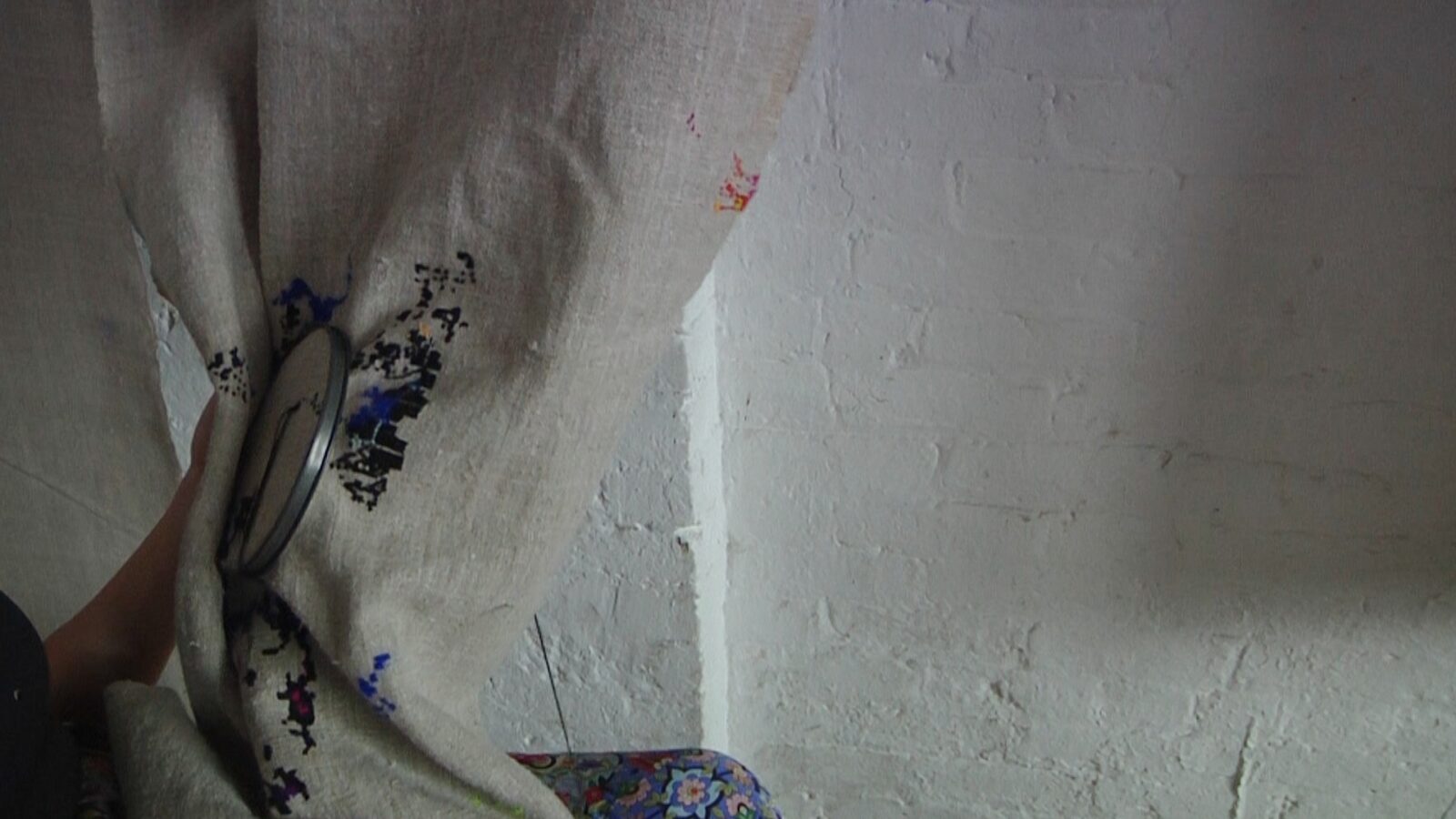
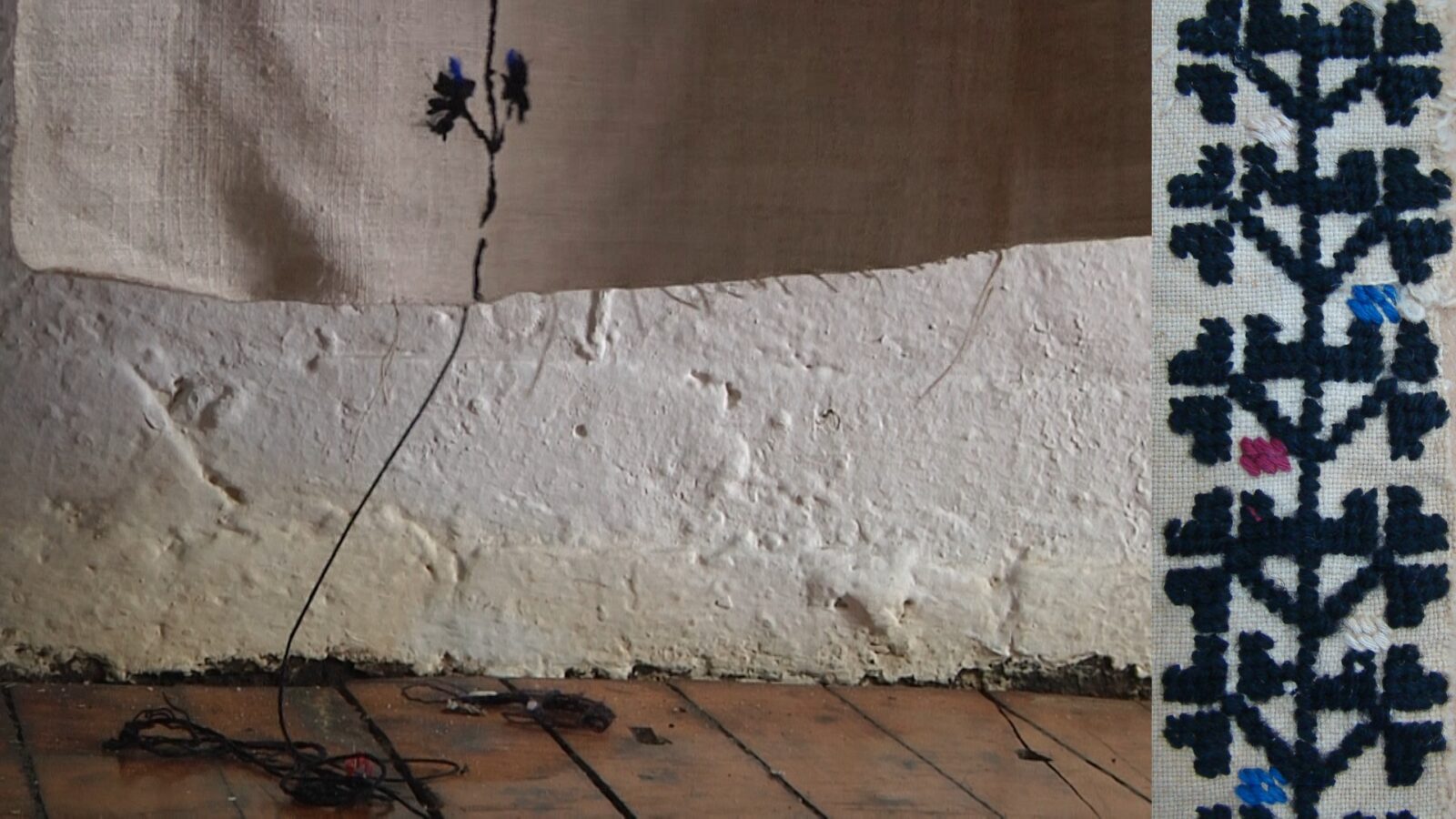
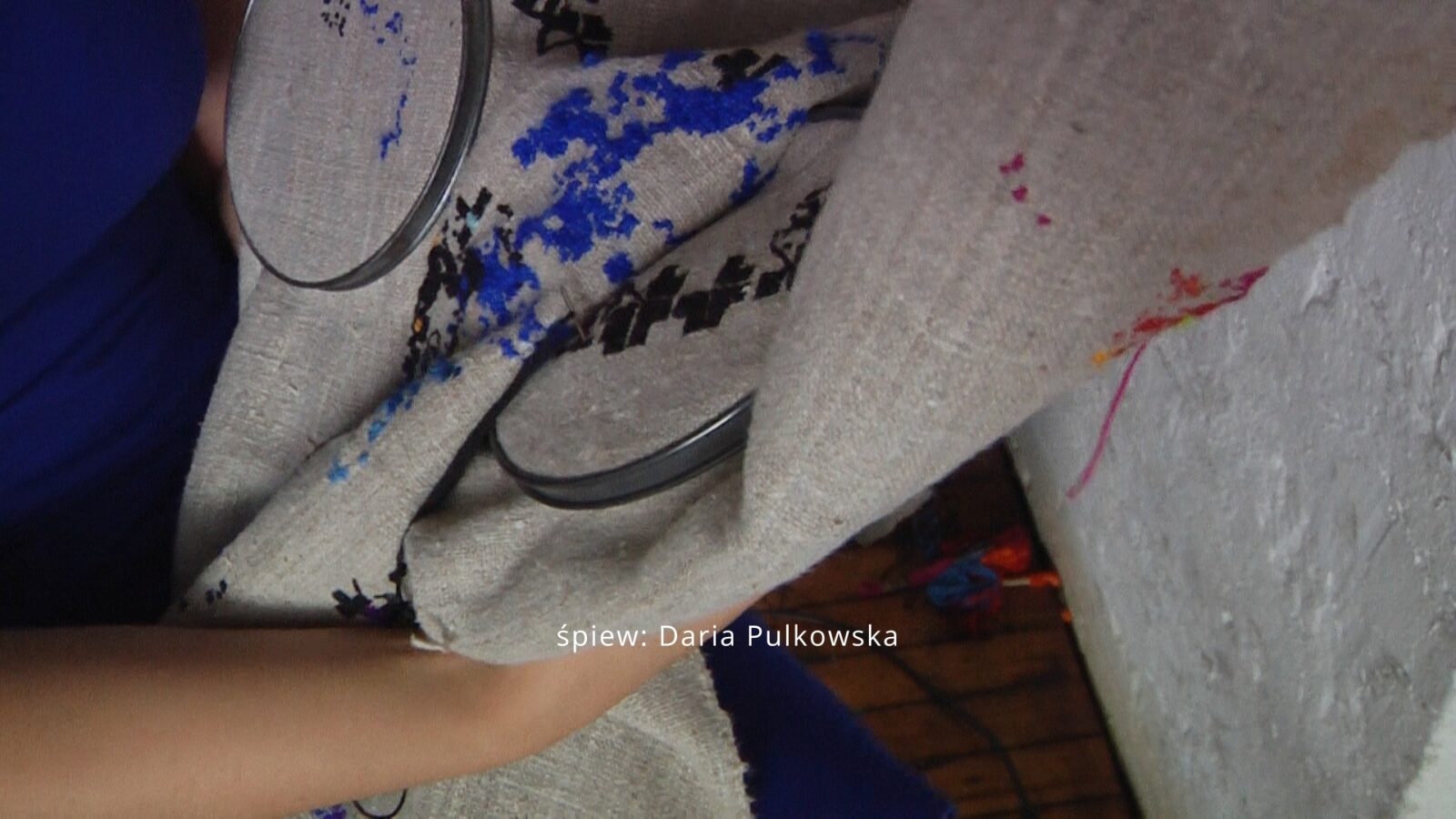
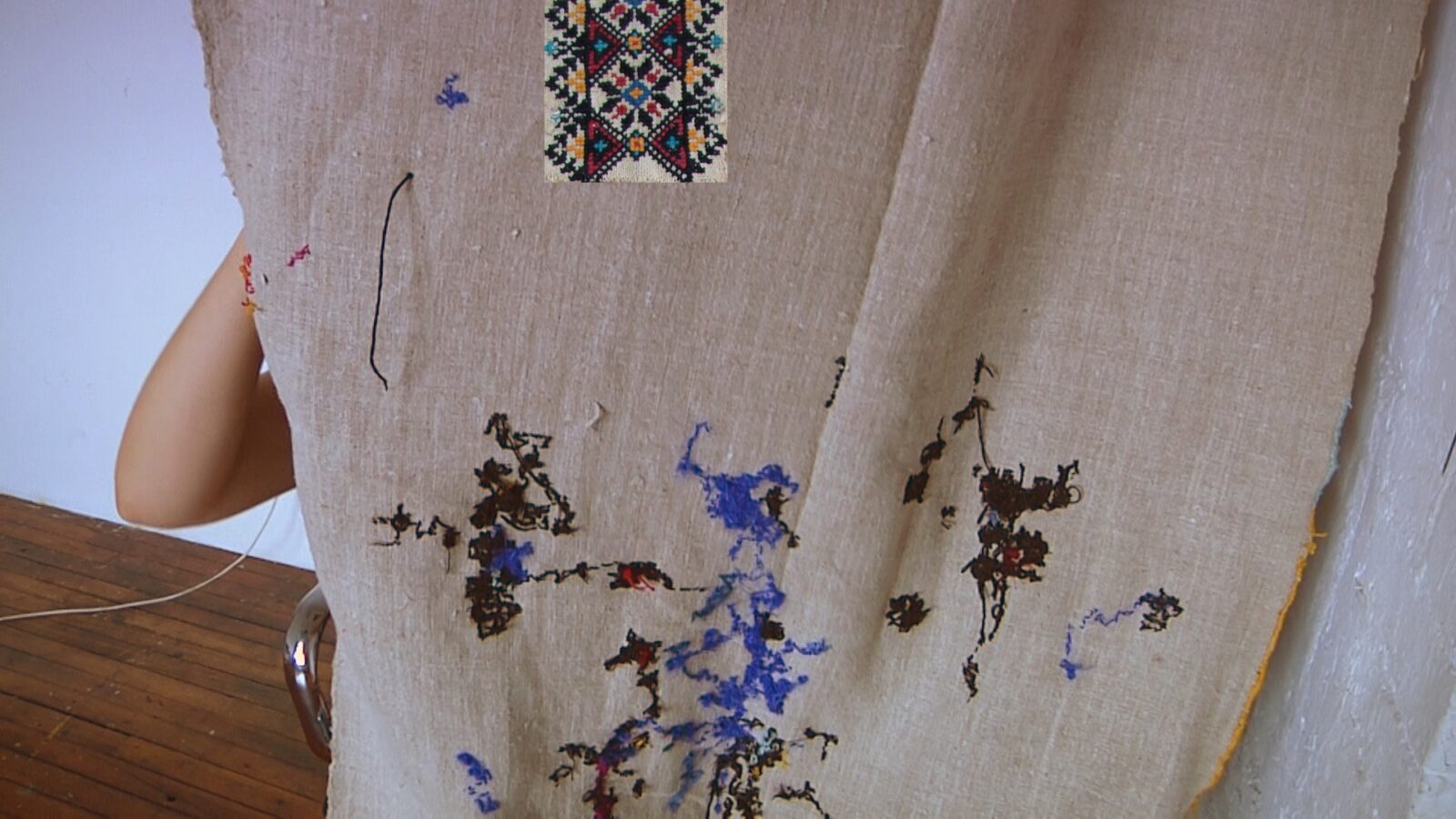
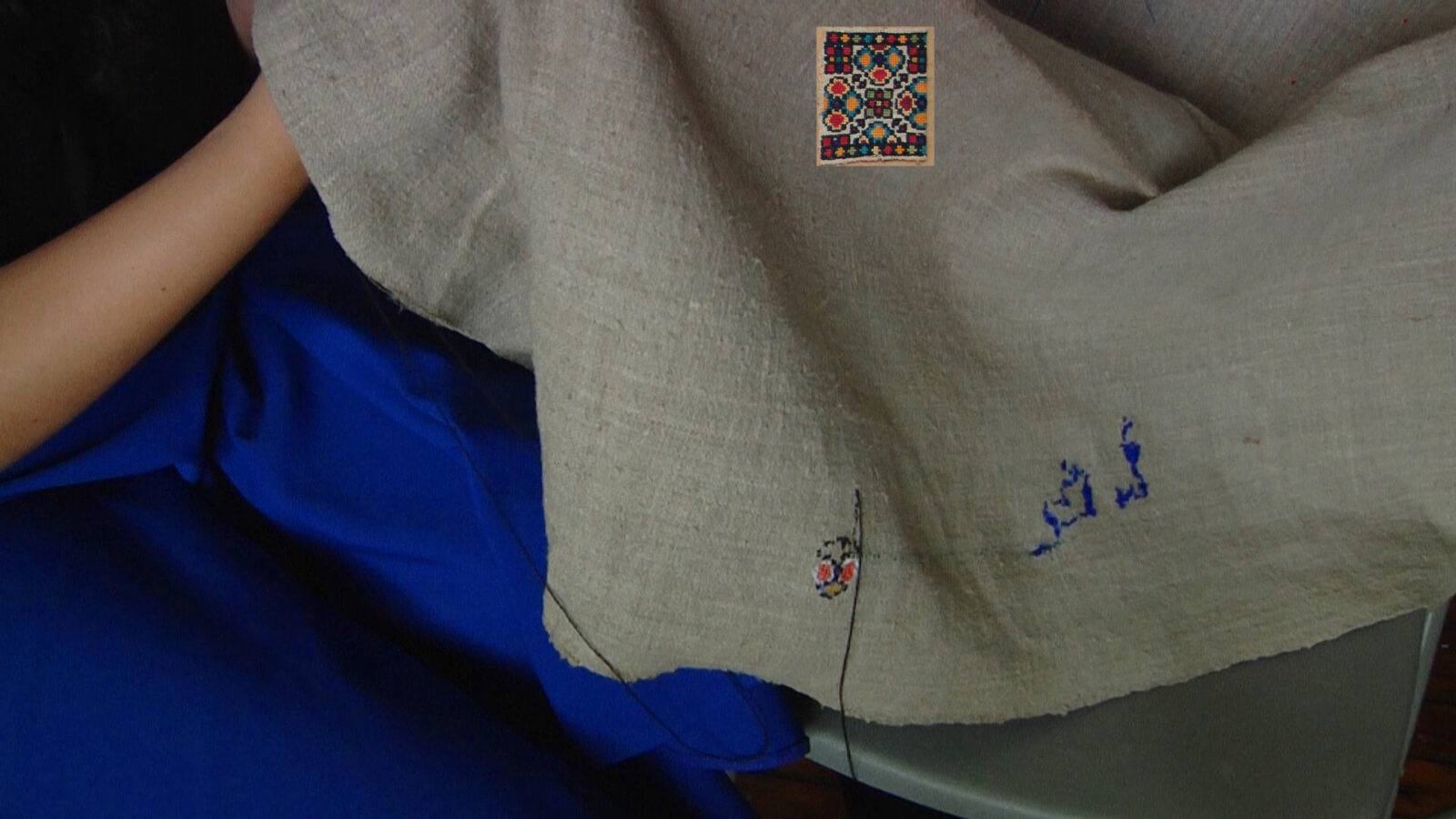
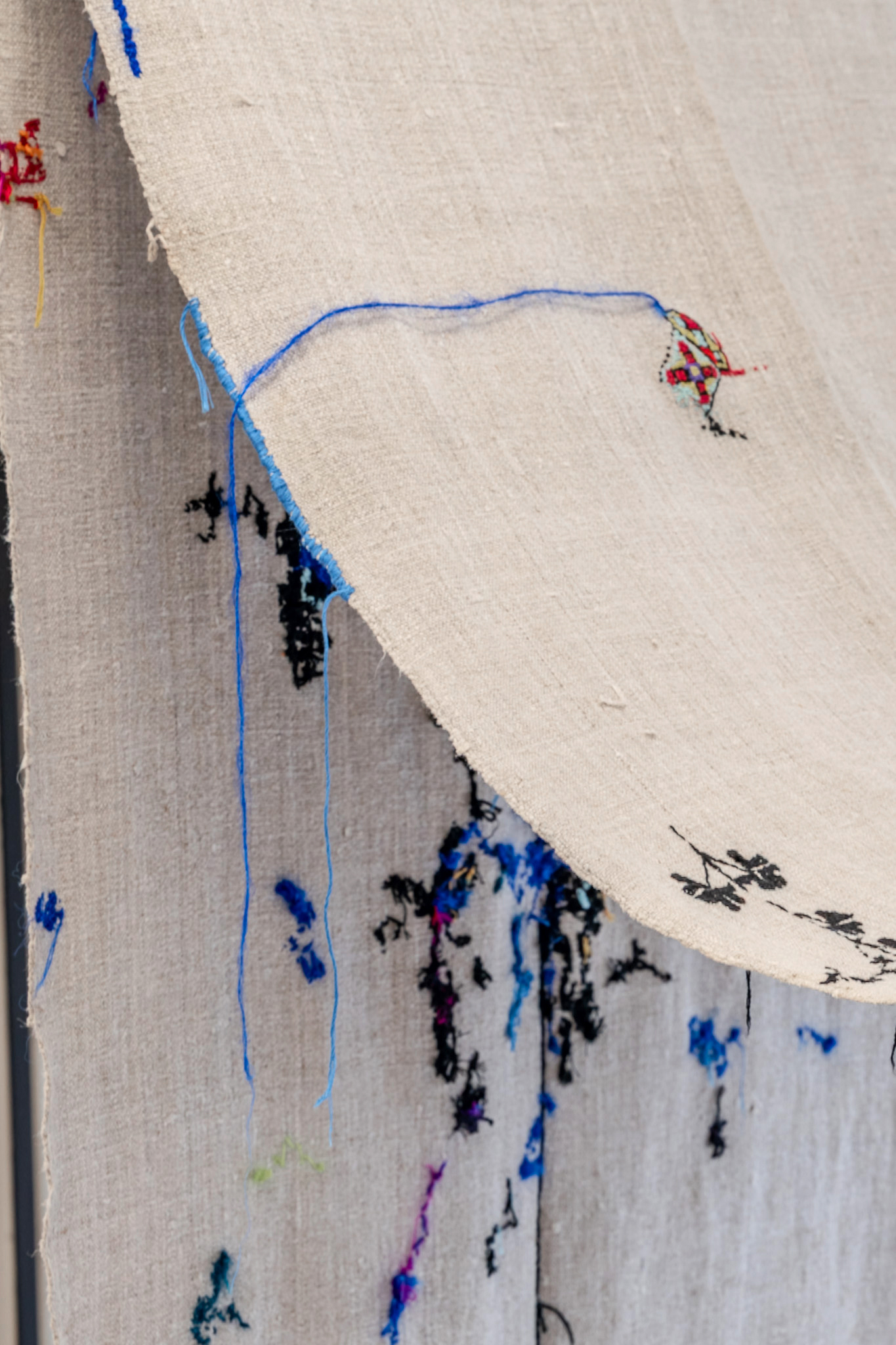
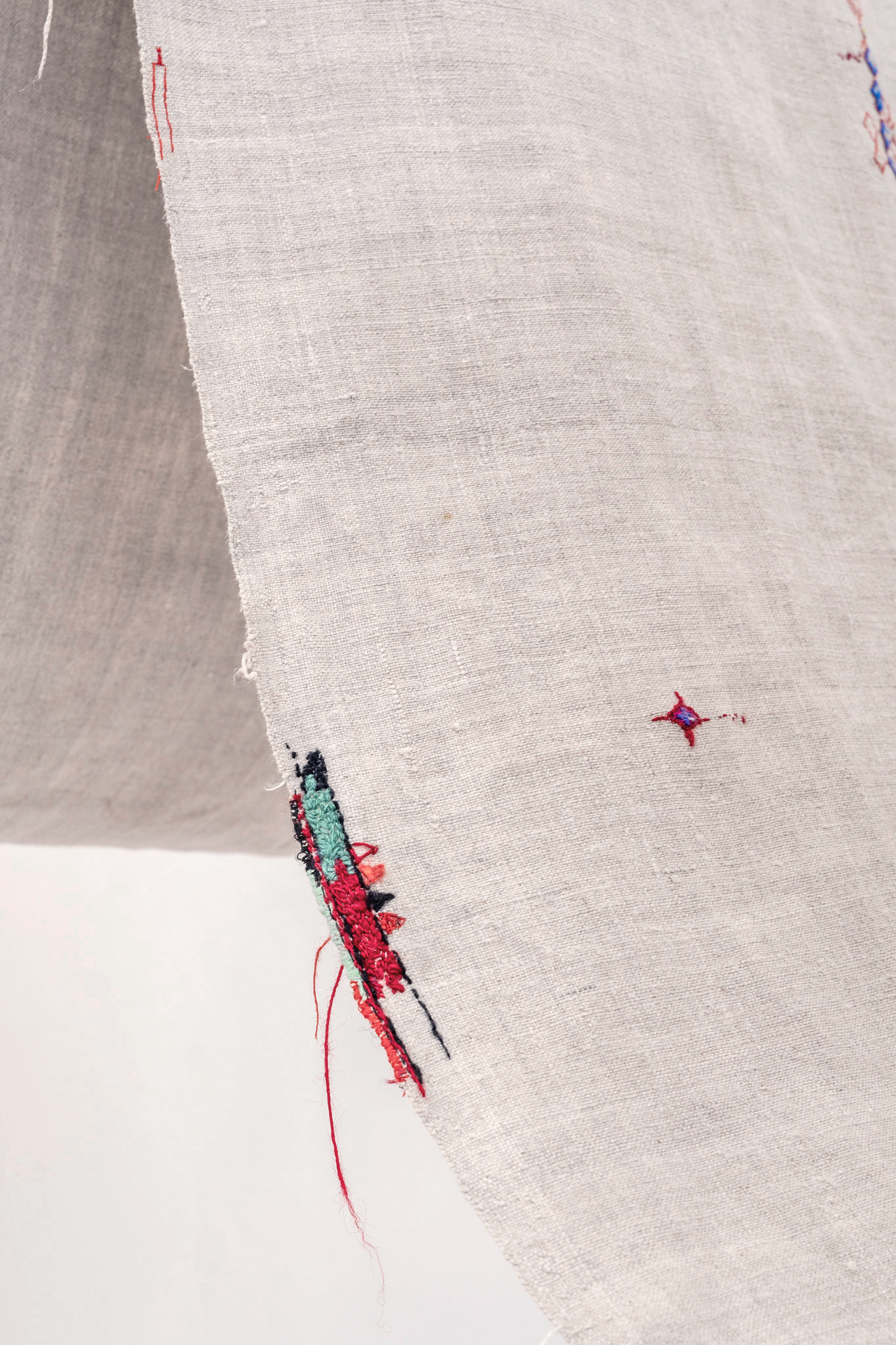
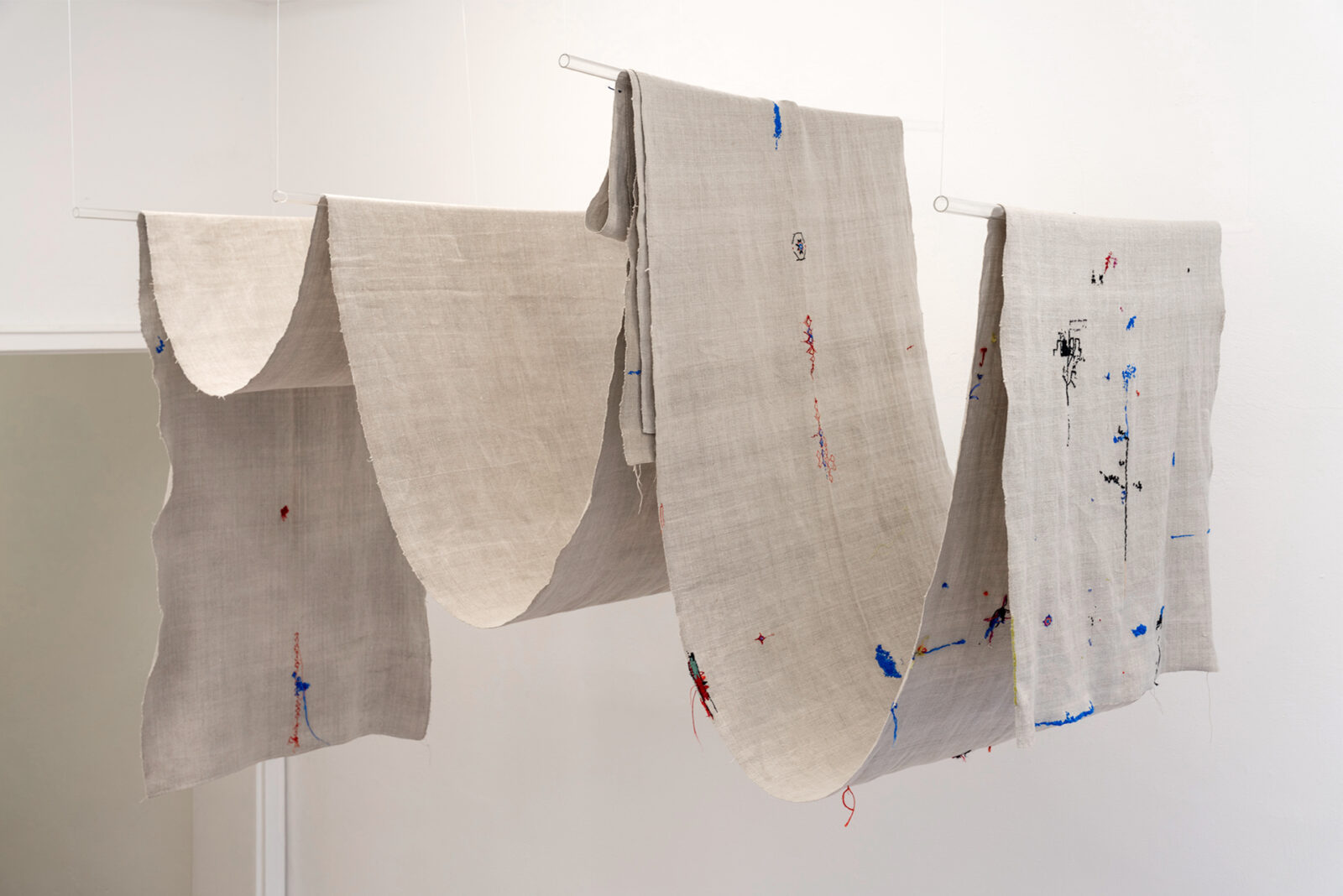
Diffused Herbarium, embroidery on linen fabric 500x70 cm, video HD 8'02''

The Ukrainian artist Olena Kulczycka, together with other activists, founded the Stryvihor Regional Ukrainian Museum in Przemyśl in 1932, whose aim was to protect, commemorate and perpetuate Ukrainian folk culture in the region. In 1945, the institution was closed and its exhibits are still in museum warehouses in Przemyśl. The Strywihor collection included, among others, rich cross-stitch embroidery. Some of them disappear – after years, expressive embroidery made with woolen thread is eaten by moth larvae, which leave a bare, “unwritten” canvas. This phenomenon has a symbolic dimension for me. I treat them as a metaphor for cultural amnesia, which includes not only the official historical narrative, but often also thinking about personal identity. By embroidering, I reverse the progressing oblivion by reproducing Ukrainian embroidery from the border areas.
The canvas is gradually covered with decorations that can no longer be reproduced in their original form. Recalling therefore becomes a creative process, based on imagination, consisting in sewing fragments of the old reality into a new whole. In the form of embroidered patterns, afterimages of the former borderland, of which Ukrainian culture has always been an important part, intertwine. For me, work is a personal search for my own cultural DNA on the border of worlds and in their mutual interpenetration. It is also an attempt to strengthen the visibility of Ukrainian history in Przemyśl and in contemporary Poland.
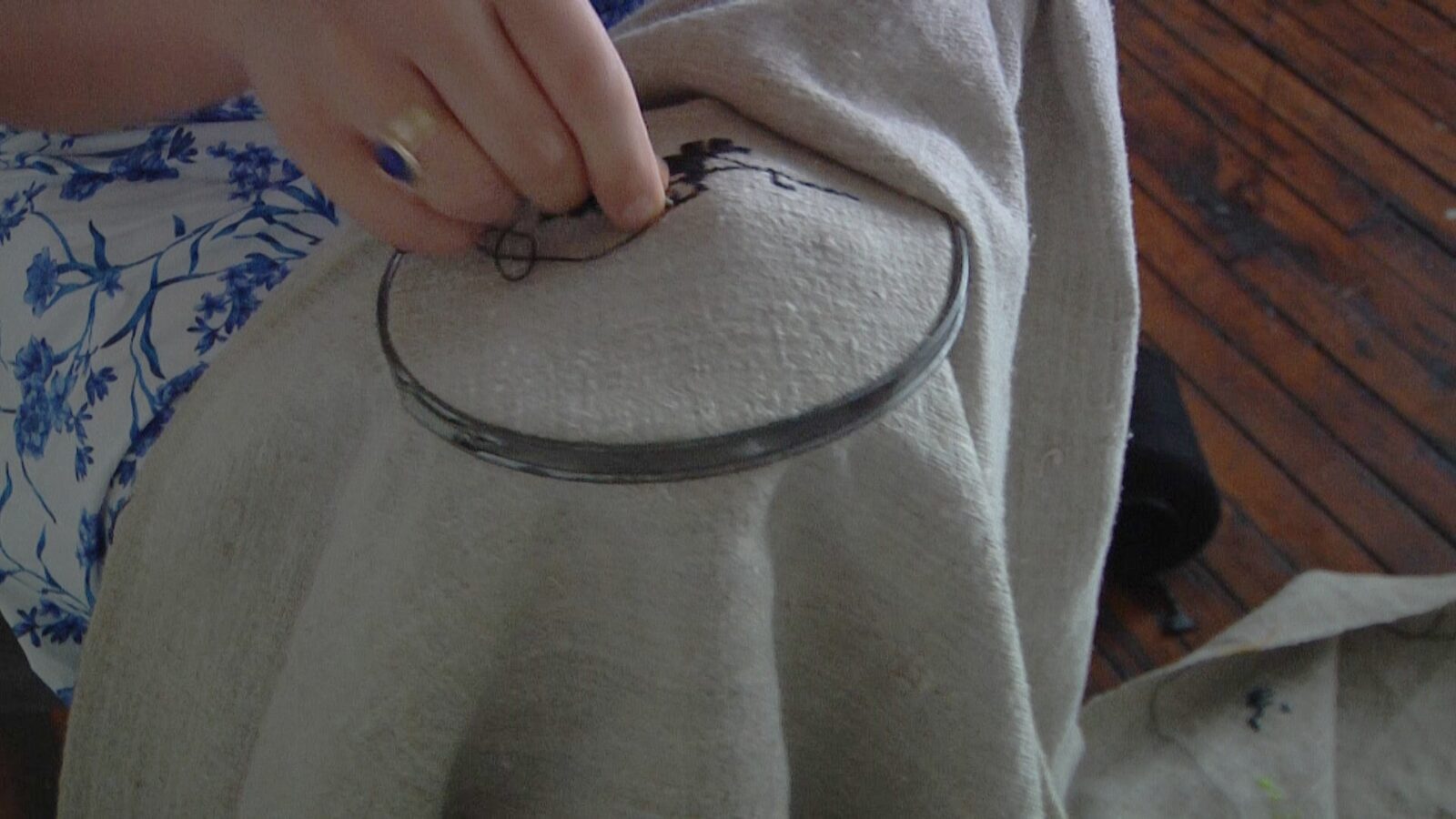
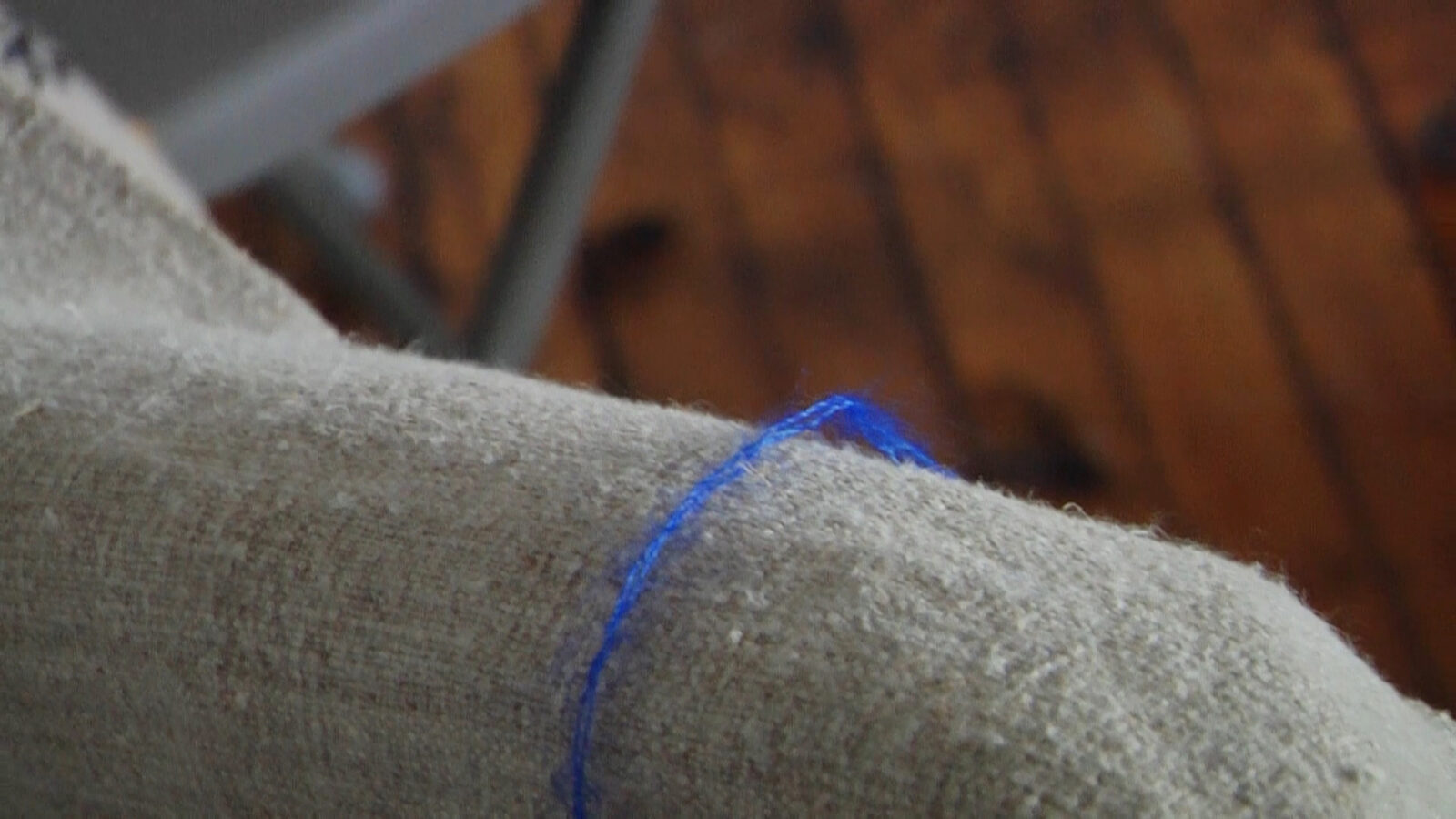
The linen canvas that I cover with embroidery is an authentic, almost hundred-year-old fabric. All stages of its creation, starting from sowing flax, harvesting, spinning and weaving, were made by hand. I document the embroidery in the form of a video, and this process is a link between the micro-stories of the borderland and their contemporary dimension.
Sings Daria Pulkowska
Photos from the exhibition Interweavings, c/off: Minjoon Kim, 2025