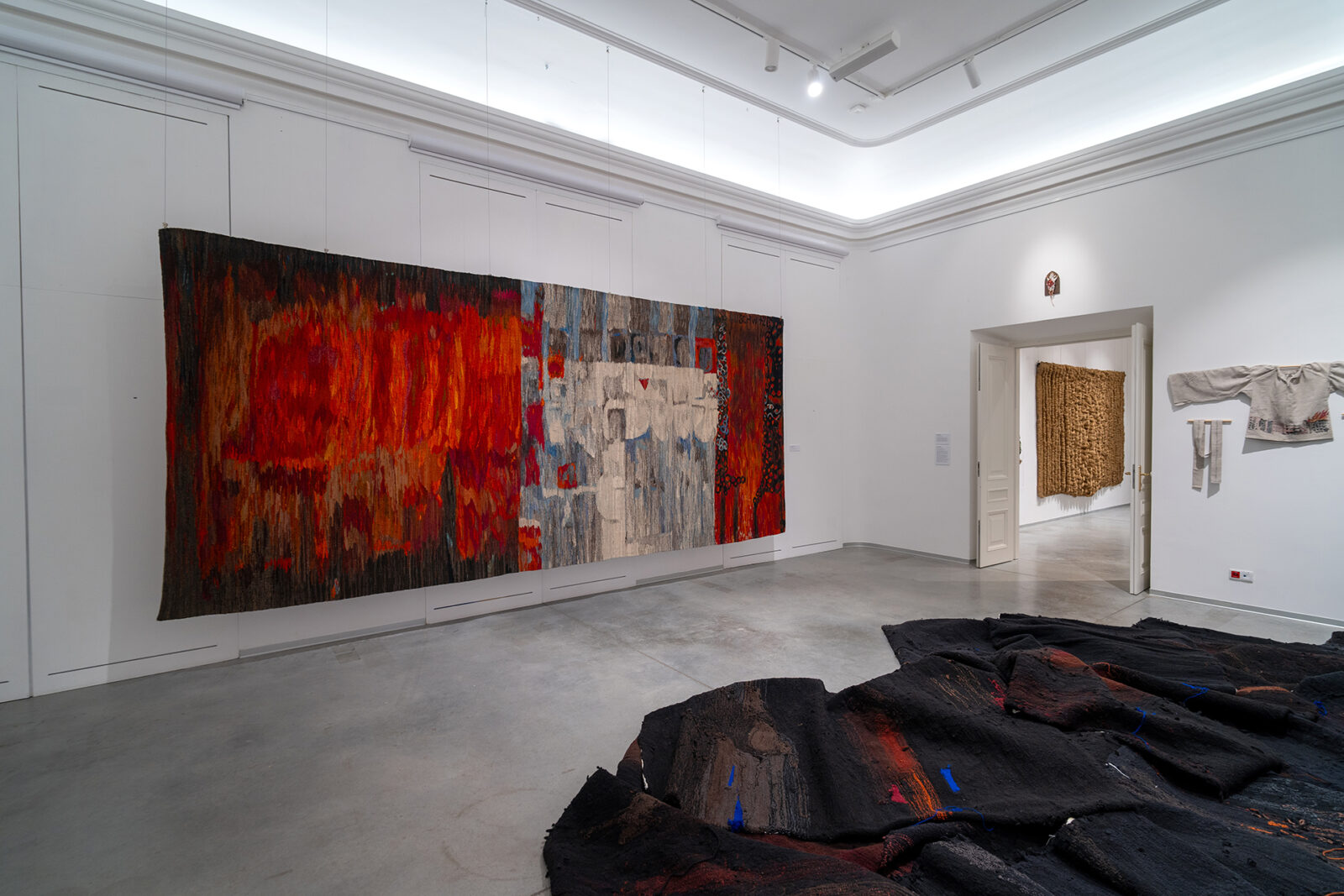
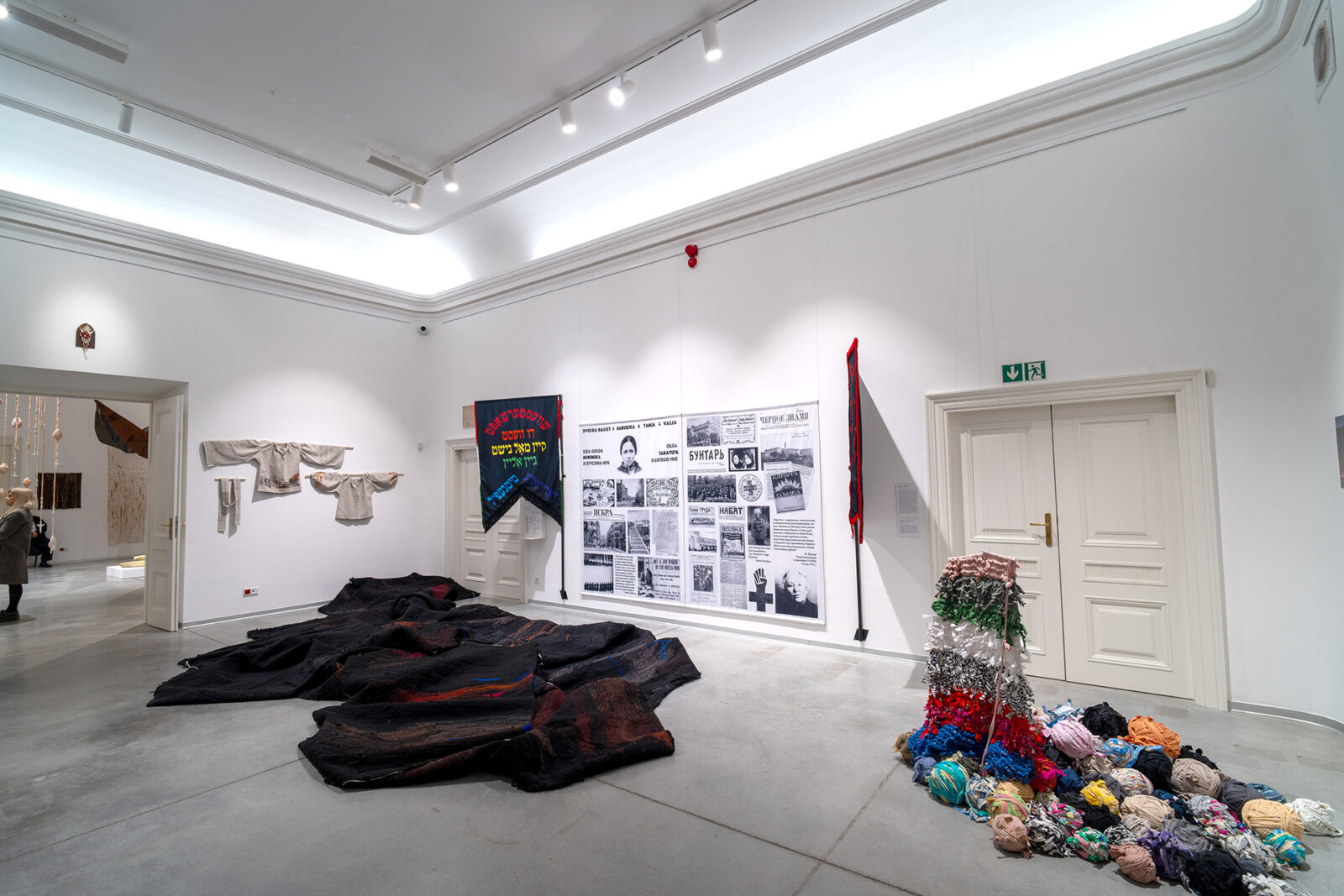
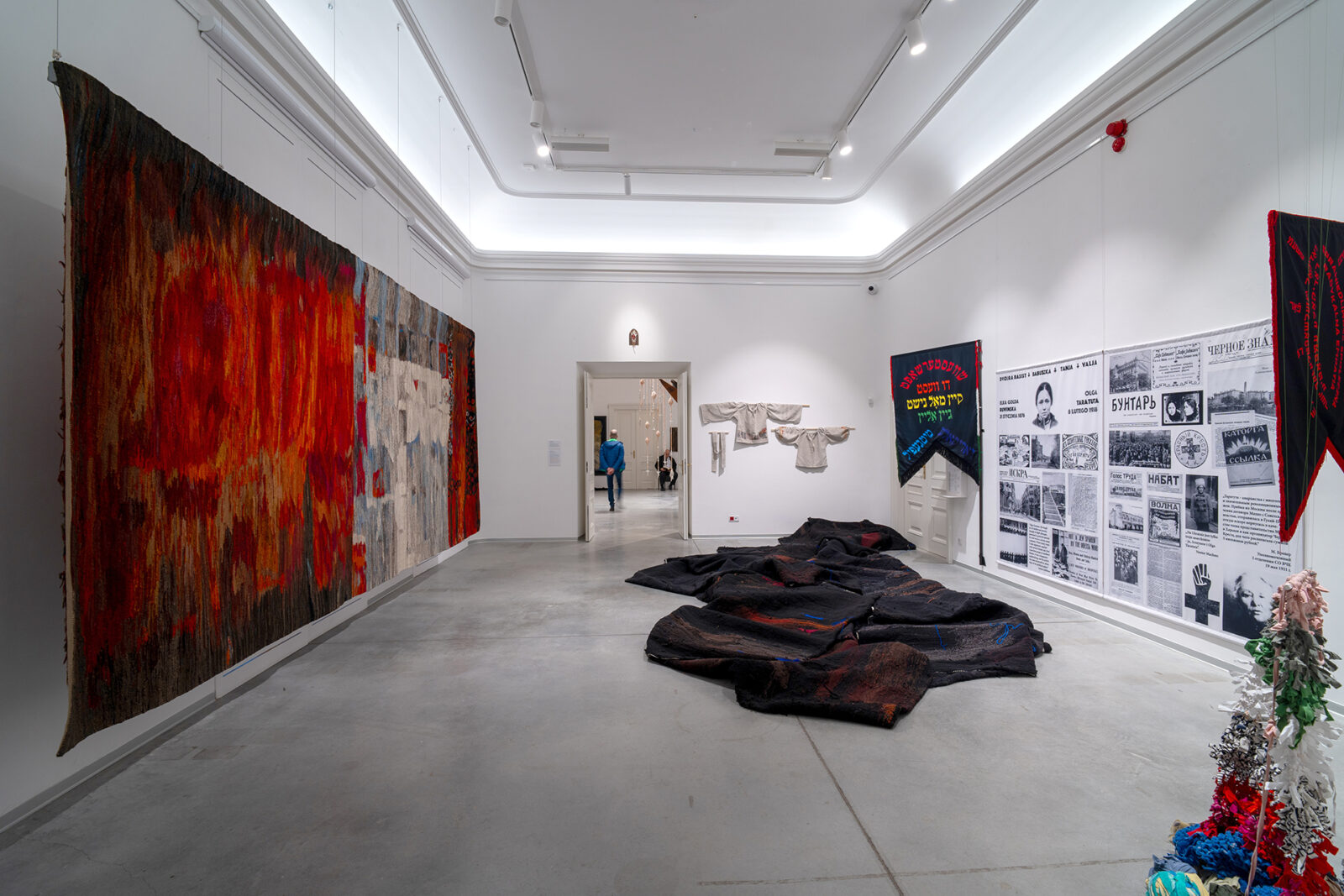
Exhibition documentation
SOFT POWER. Warsaw roots of the Polish School of Textile, group exhibition, Salon Akademii, Warsaw
In the 1960s and 1970s, a revolution was born at the Warsaw Academy of Fine Arts that transformed the language of global art. The exhibition “SOFT POWER. The Warsaw Origins of the Polish School of Textile” connects the historical sources of this revolution with the latest works of contemporary artists, raising questions about the continuity of ideas, the power of textile as a medium, and its significance in the contemporary world.
“The textile of tomorrow was born in Poland” — proclaimed the headline of an enthusiastic article in Gazette de Lausanne in April 1963, when works by graduates of the Warsaw Academy debuted at the International Biennial of Tapestry in Lausanne. At that moment, the attention of the art world turned to Poland. It marked the beginning of a major revolution in shaping a new visual language. It was thanks to Polish artists that textile became such an important artistic medium.
At the roots of this revolution in the language of textile was the decision to give voice to its natural properties: structure, weight, softness, and its susceptibility to the passage of time and external forces. Contemporary artists consciously turn to textile as a medium whose DNA contains codes related to identity, corporeality, and relationality. It is a material close to the body, prone to wear and decay, yet at the same time strongly rooted in the spiritual sphere. Textile becomes a carrier of reflection on the processes of life and death, endurance and transience, illness, placing artistic practices within a broader existential context. But it is also one of the most political media, often used in activist practices.
Artists: Magdalena Abakanowicz, Agnieszka Adamska, Stanisław Andrzejewski, Ewa Bilska, Emilia Bohdziewicz, Izabella Bryzek, Anna Buczkowska, Maria Teresa Chojnacka-Gontarska, Magdalena Ciemierkiewicz, Hanna Czajkowska, Oliwia Czopek, Ewa Dąbkowska, Małgorzata Dmitruk, Małgorzata Durda, Olga Dziąg, Natalia Dzwonkowska, Jacek Dyrzyński, Barbara Falkowska, Zbigniew Gostomski, Julita Goździk, Kacper Greń, Aleksandra Gromadzka (Aleksandra Garnett), Urszula Gruszewska, Dorota Grynczel, Joanna Hasior, Zuzanna Hertzberg, Matylda Huryn, Magdalena Karpińska, Ada Kierzkowska, Maja Kitajewska, Magda Komar, Ludwika Kowalewska, Grzegorz Kozera, Barbara Levittoux-Świderska, Aleksandra Liput, Karolina Lizurej, Maria Łaszkiewicz, Barbara Łuczkowiak, Yana Makukh, Jolanta Owidzka, Anna Panek, Andrzej Pencorek, Julia Platt, Eleonora Plutyńska, Eliza Proszczuk, Alicja Raczyńska, Wojciech Sadley, Irmina Staś, Marek Stabrowski, Ewelina Szakińska, Krystyna Szczepanowska-Miklaszewska, Elwira Sztetner, Mieczysław Szymański, Tea Tomaszewicz (Ten Cza), Krystyna Wojtyna-Drouet, Wojciech Zubala.
Curators: Marta Kowalewska, Eliza Proszczuk, Elwira Sztetner
Exhibition design: Anna Skołożyńska-Cieciera
Visual identity: Maja Żurawiecka
Production: Iga Chmielecka, Katarzyna Urbańska
Photo: Patryk Stokowski
“Chernozem”, loop embroidery, dyed wool, 14 carpets, 2022
— presented in the company of works by, among others, Wojciech Sadley and Zuzanna Hertzberg.