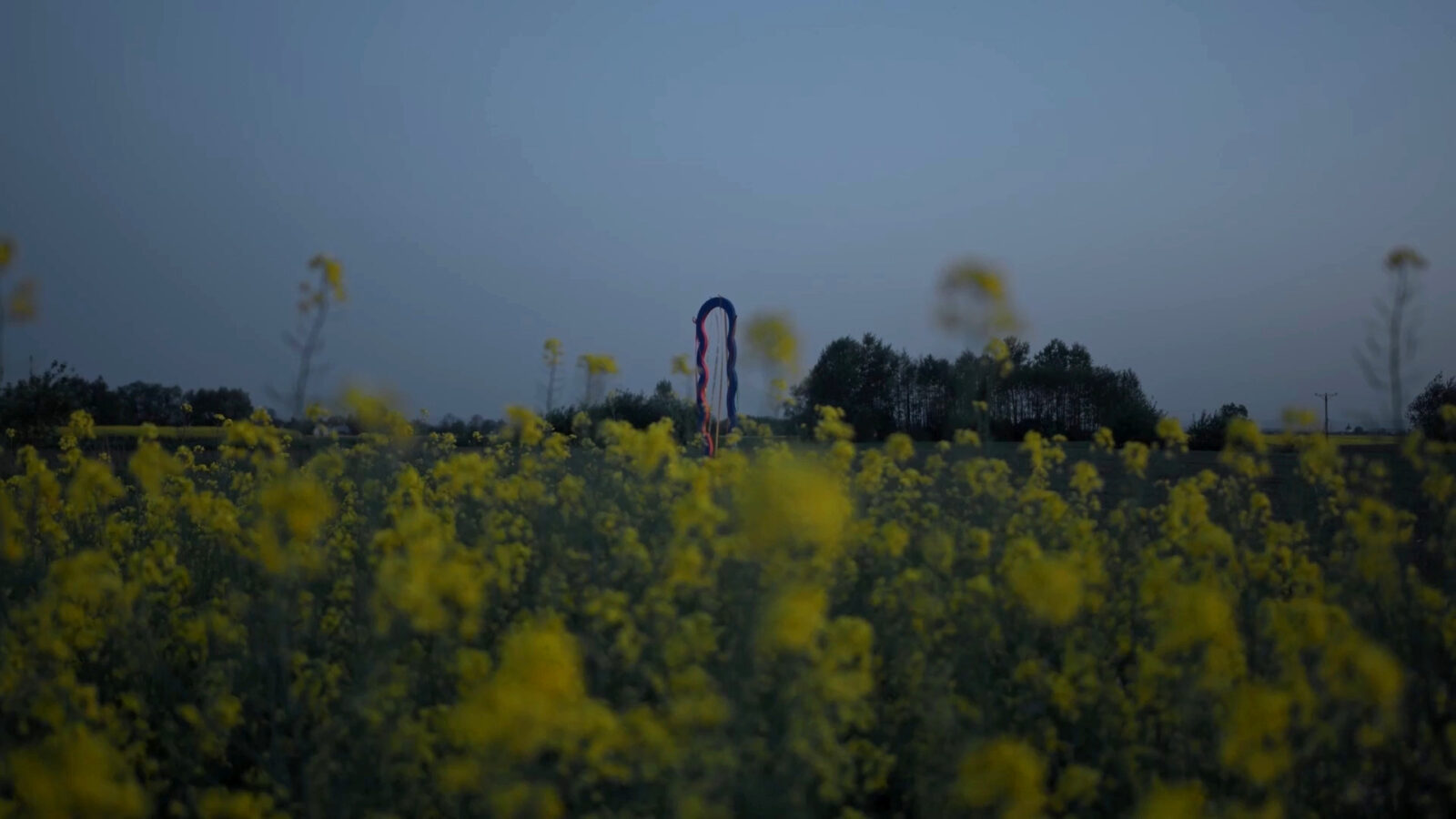
Ghosts—Forms, objects, video Full HD 10'40''

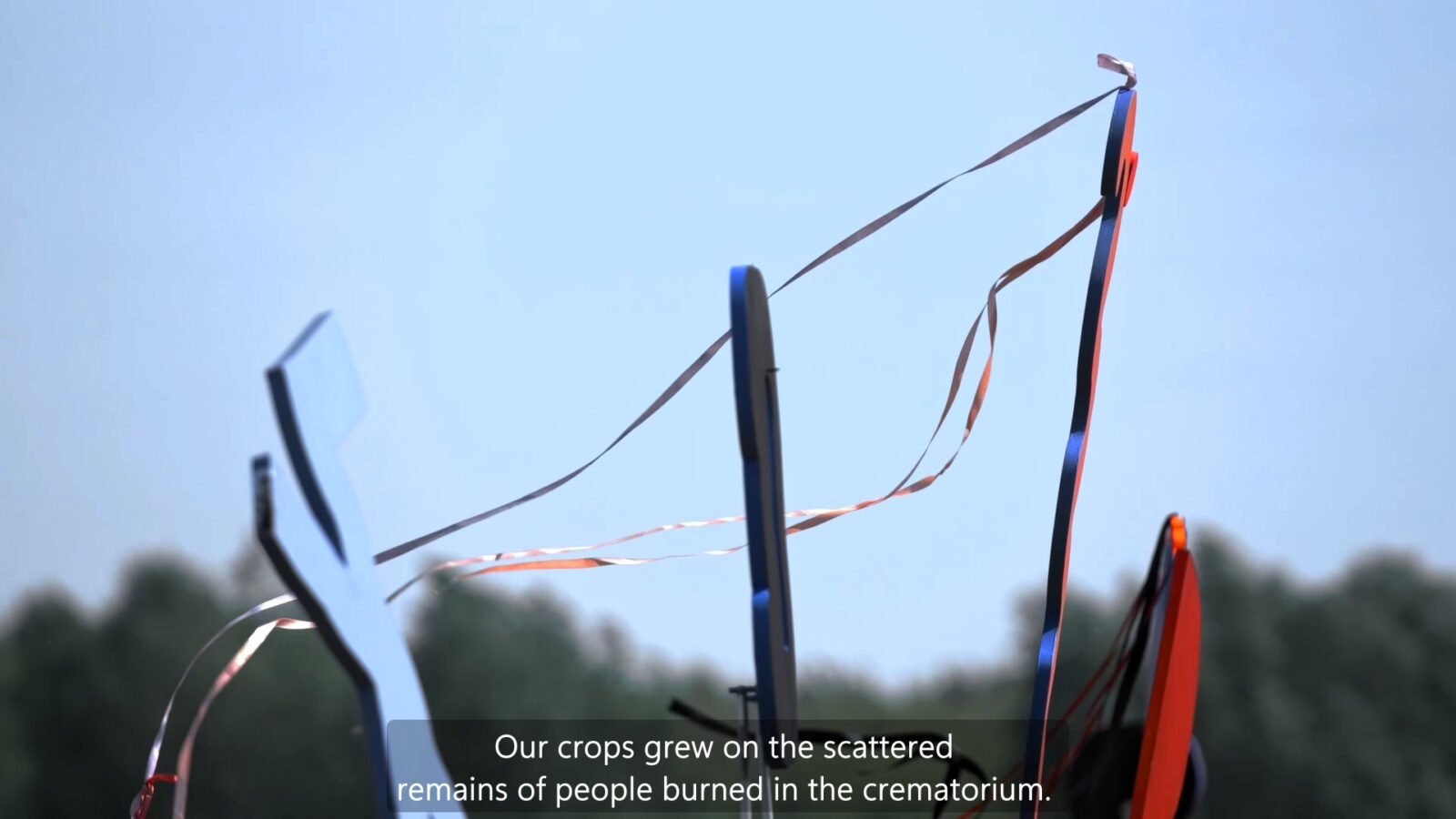
During the Second World War, an anti-tank trench was dug in the farmland behind my native village. It was used by the Nazis as a mass grave for victims who were executed there and in nearby localities. In late 1943, they established a field crematorium at the site, which operated until April 1944. Its purpose was to erase all traces of the crime.
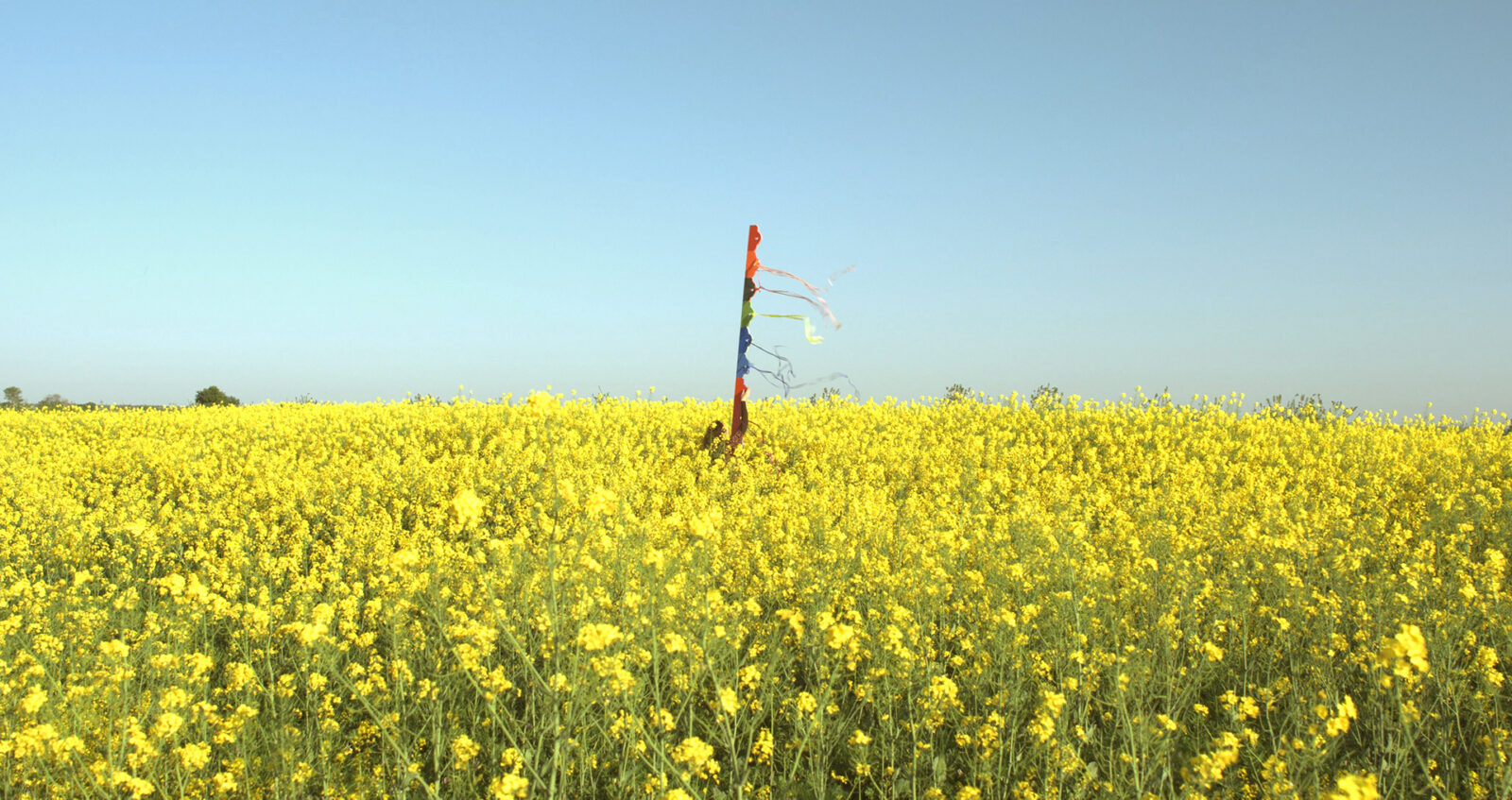
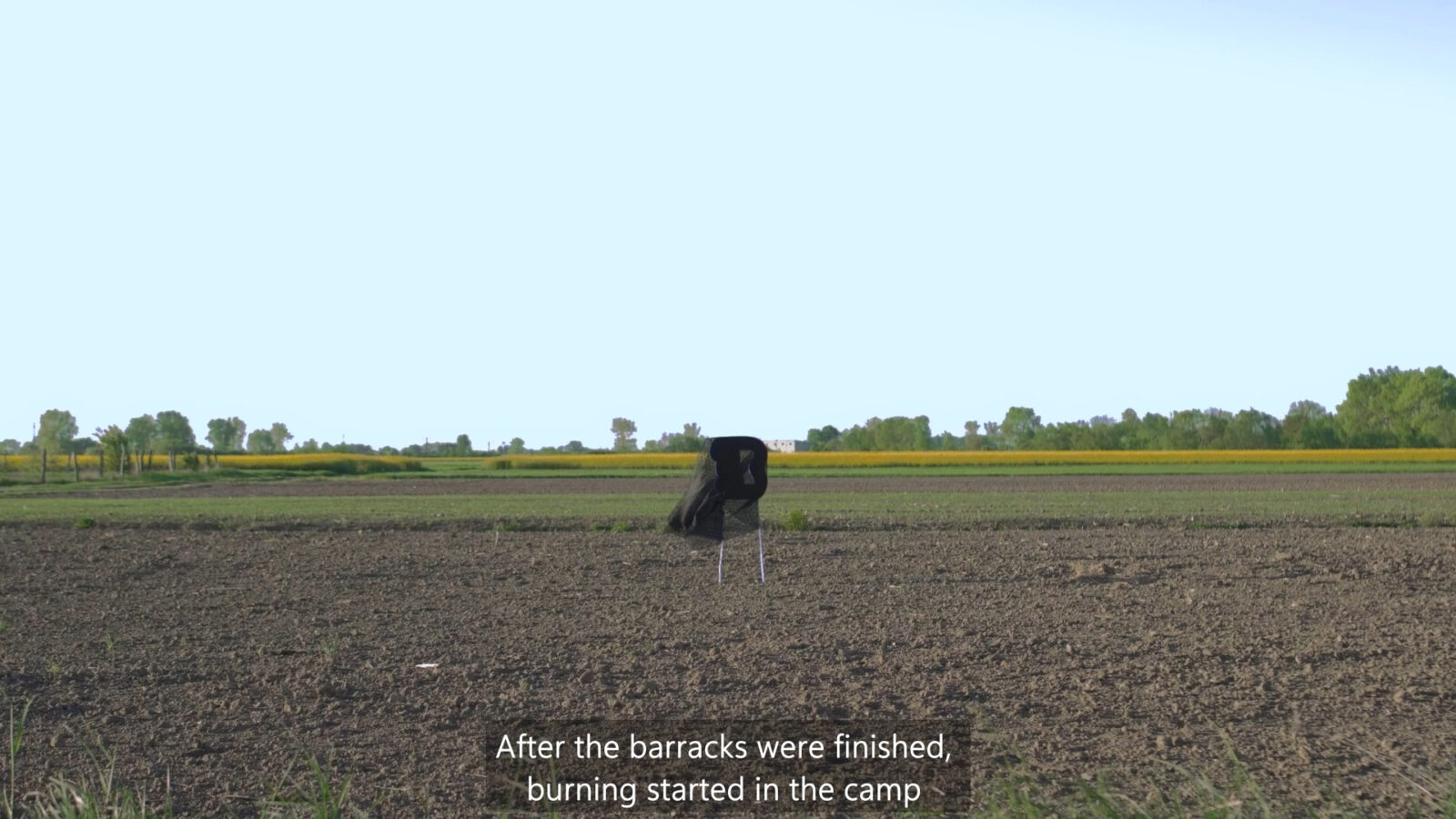
The bodies were burned there by stacking them on wooden pyres. The remains were doused with petroleum and set on fire. The bodies were burned, and the ashes were then buried, scattered across the fields, or thrown into the river. After the barracks were dismantled in 1944, the land was plowed over. Today, wheat, potatoes, and other crops are cultivated there. In May, yellow rapeseed blooms here against the blue sky.
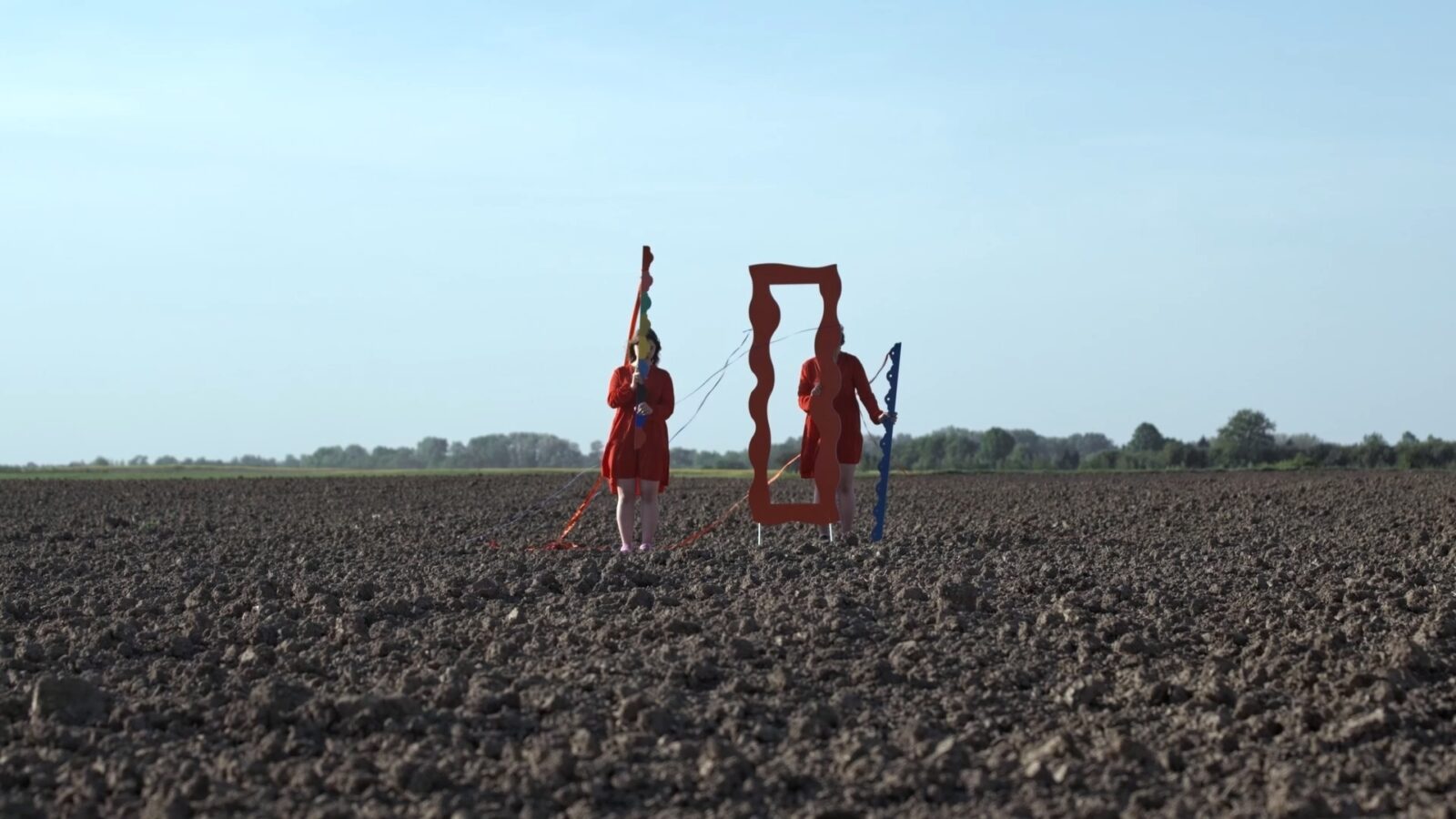
Every monument will eventually be covered with moss once those who sustain memory are gone. The performative forms of remembering that appear in the recordings are attempts to locate spaces of memory within the picturesque landscape and to mark them with symbolic objects. They are also acts of retelling the history of the place and remembering it from the perspective of a new generation.
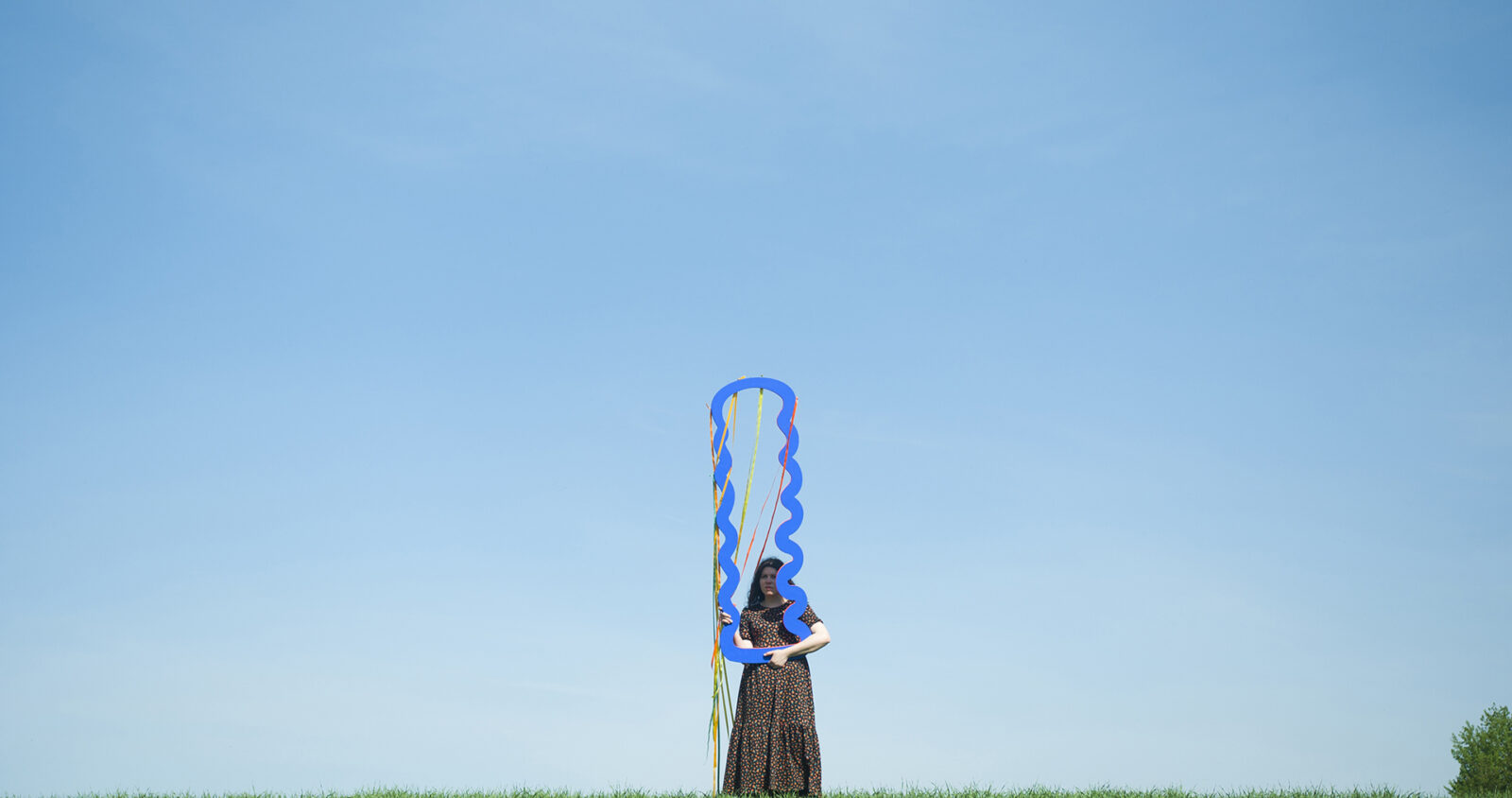
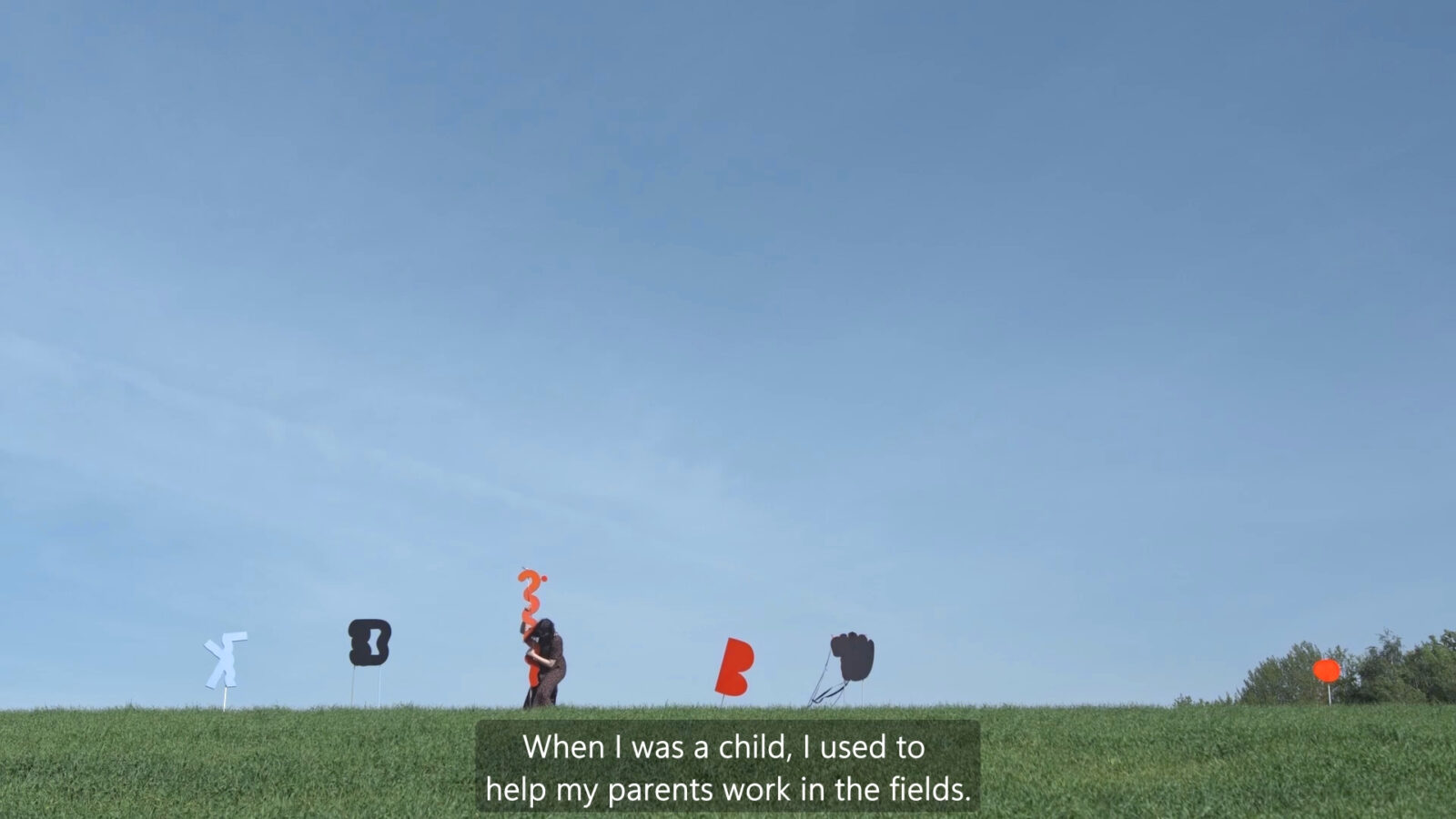
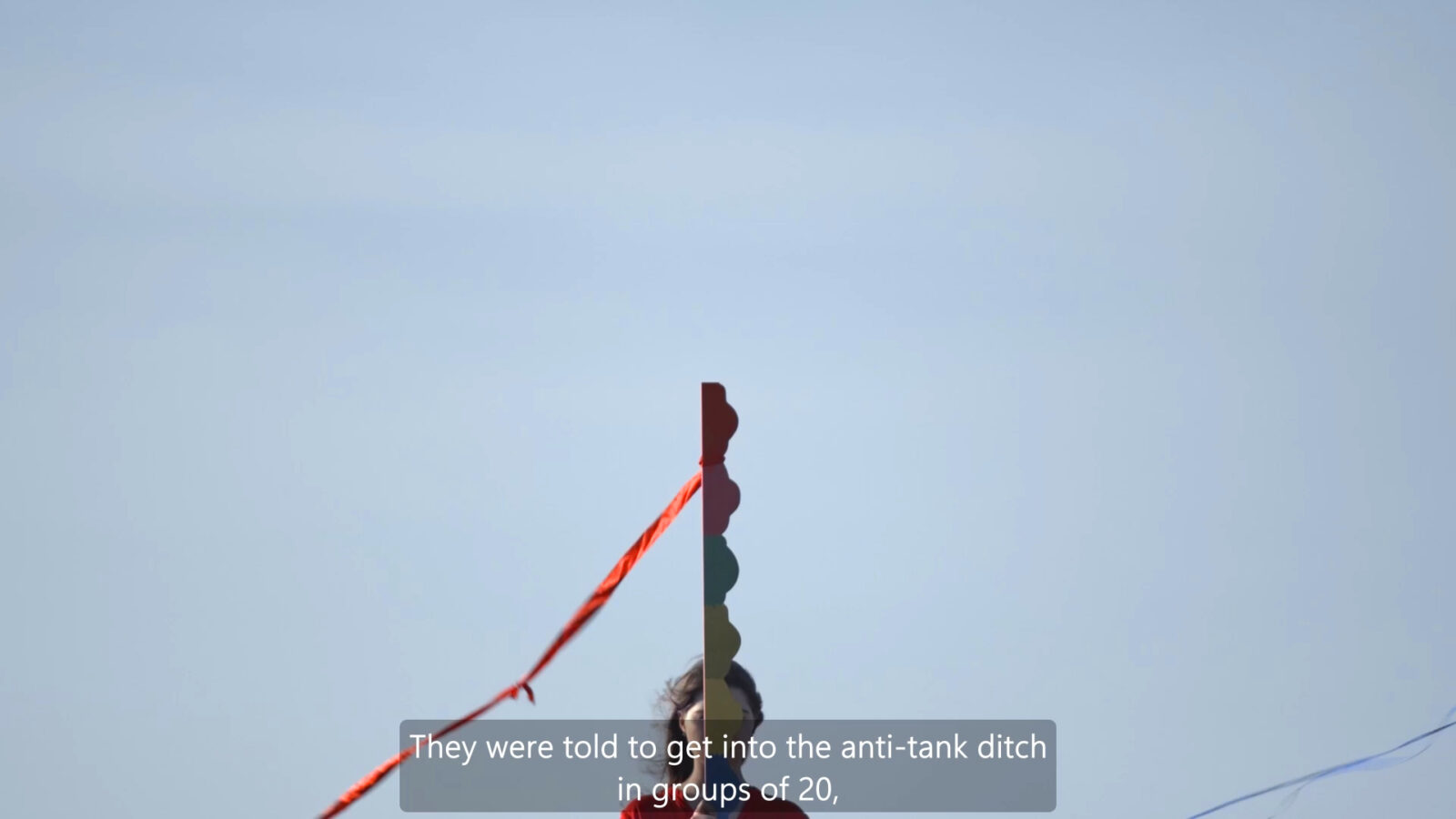
The objects are inspired by the tradition of roadside crosses and shrines. They were most often painted on wood and decorated with various materials such as ribbons, flowers, or fabrics.
The works take the form of markers, signaling places of particular significance that often remain unrecognized to an outside observer.
Given the dispersal of the victims’ bodies, the site functions as an expansive field of memory—the entire living nature of the area has become a living monument. I enter this space together with my younger sisters, who are nearly the same age as our grandmother was during the Second World War. As a woman in her early twenties, she was a witness to the genocide committed here.
At first, using object-signs, we search for the location of the former crematorium. Over time, we extend this form of commemoration to encompass the entire, vast expanse of farmland. The action addresses not only local history, but also the memory of the borderland as a whole, whose multicultural character was erased in a criminal act.
The narrative accompanying the video work was created on the basis of witness testimonies—those of the builders of the camp barracks, members of the local community, including my grandmother, great-grandfather, and their neighbors. These accounts intertwine, taking on the form of a polyphonic voice.
Camera operator: Karol Jakóbczyk
Sound design: Alex Banaszkiewicz
Editing: Magdalena Ciemierkiewicz, Rafał Kruszka
Featuring: Wiktoria Ciemierkiewicz, Michalina Ciemierkiewicz