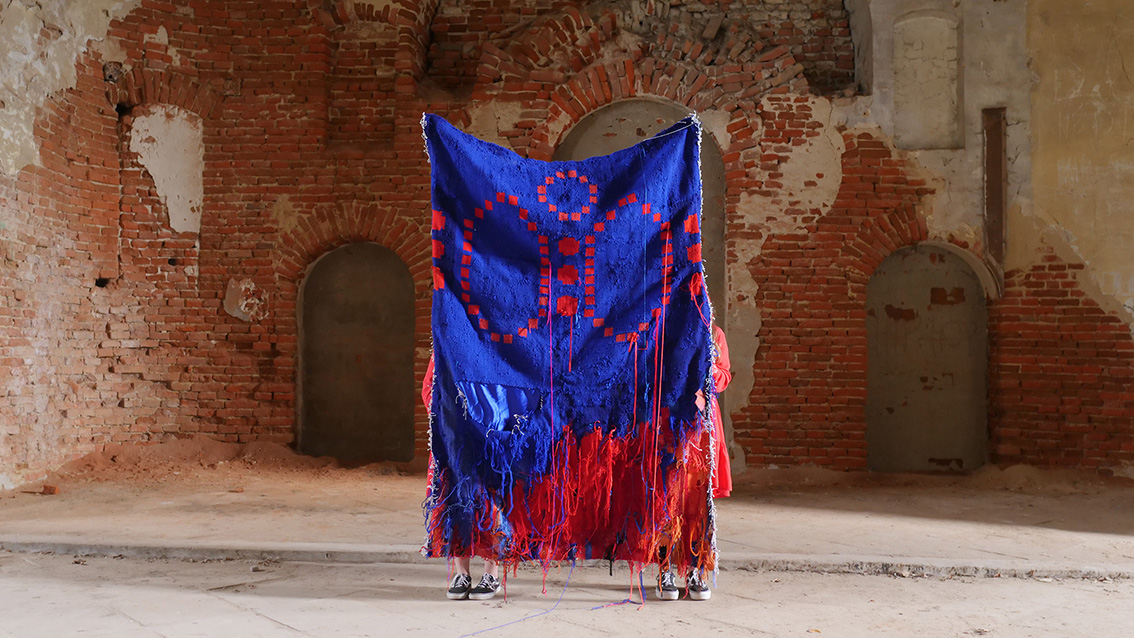
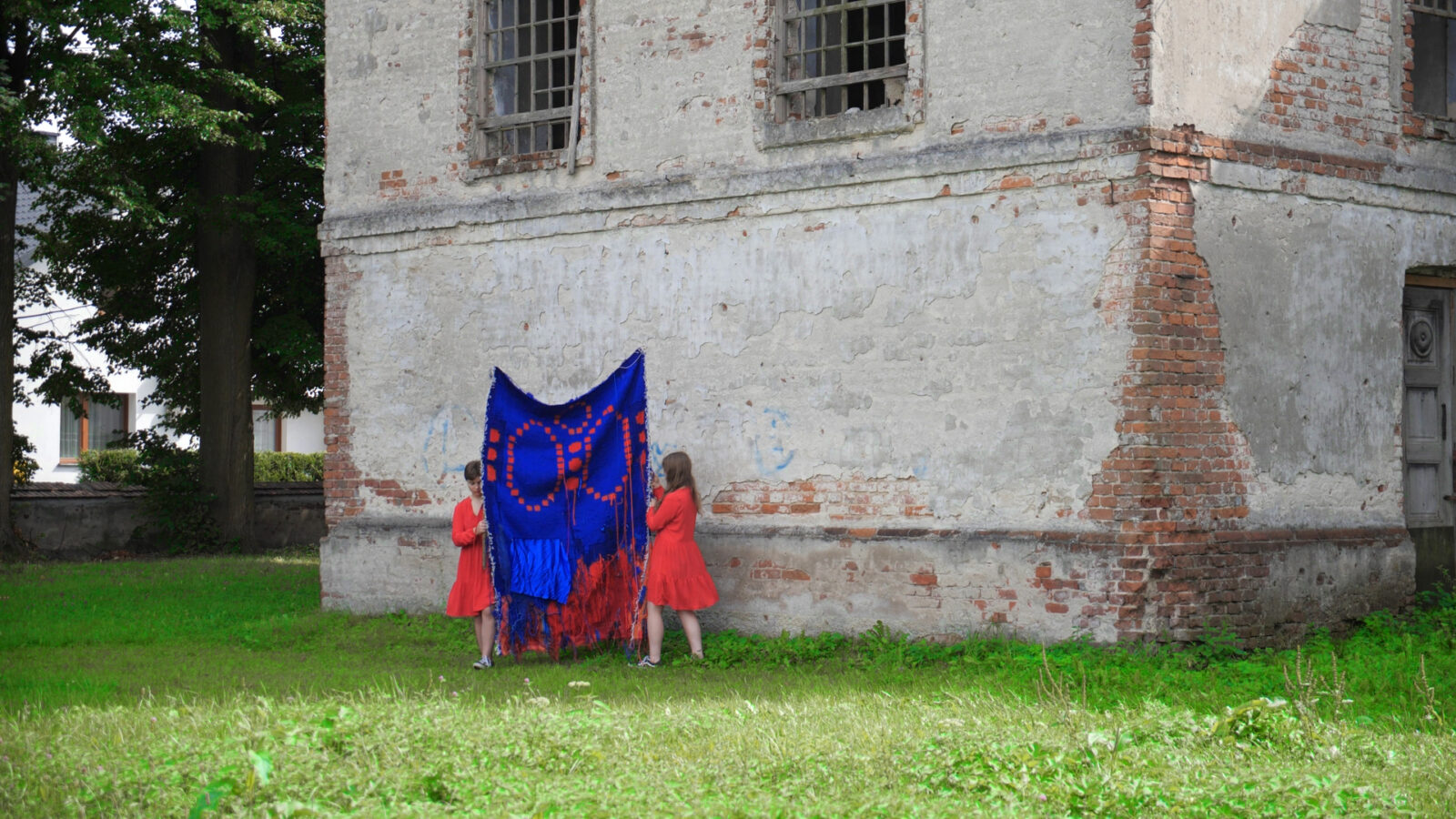
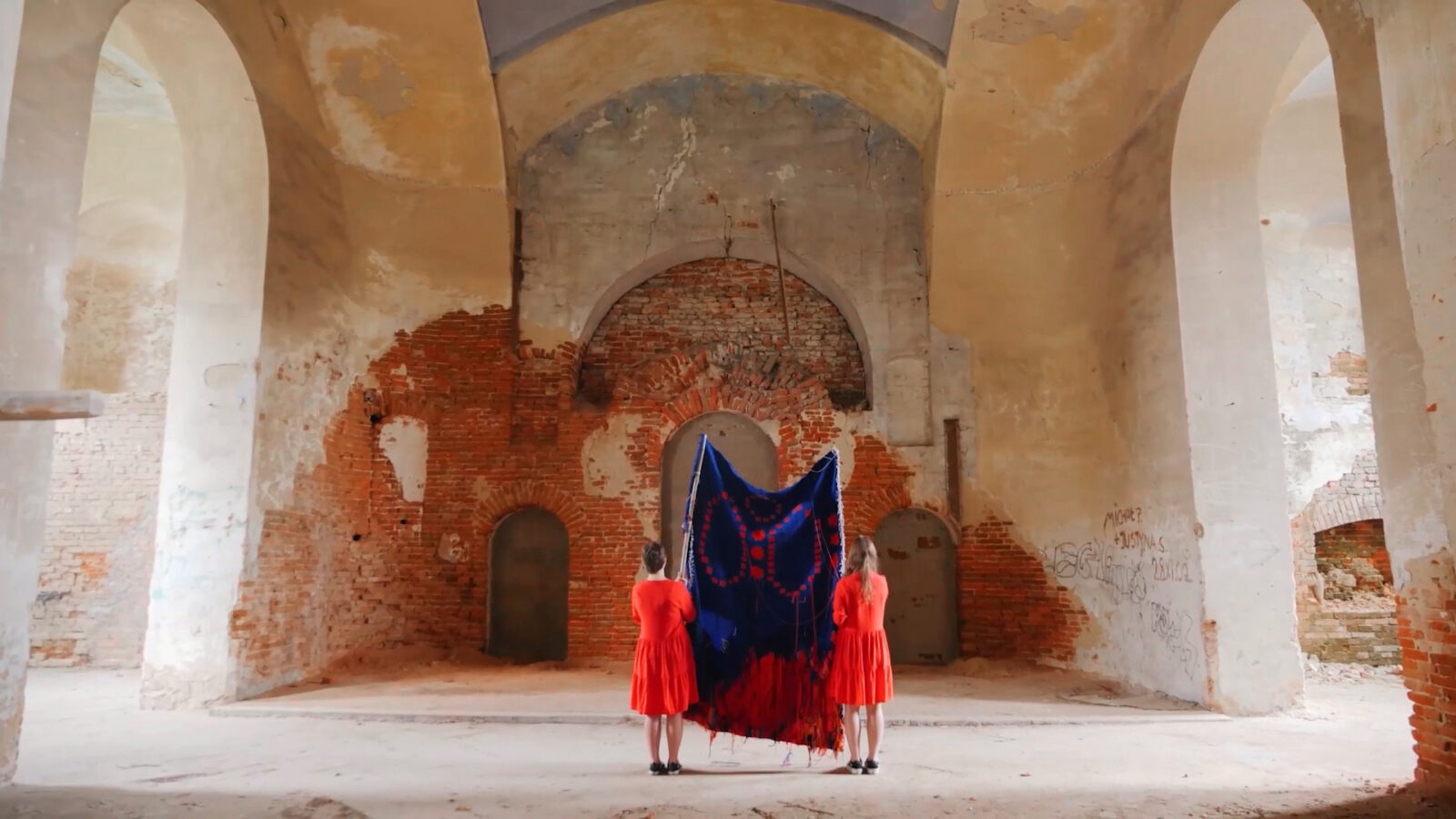
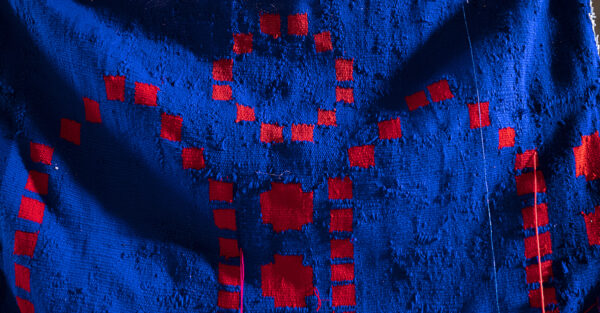
Flag of the Borderlands | Stare Oleszyce, fabric 240x160 cm
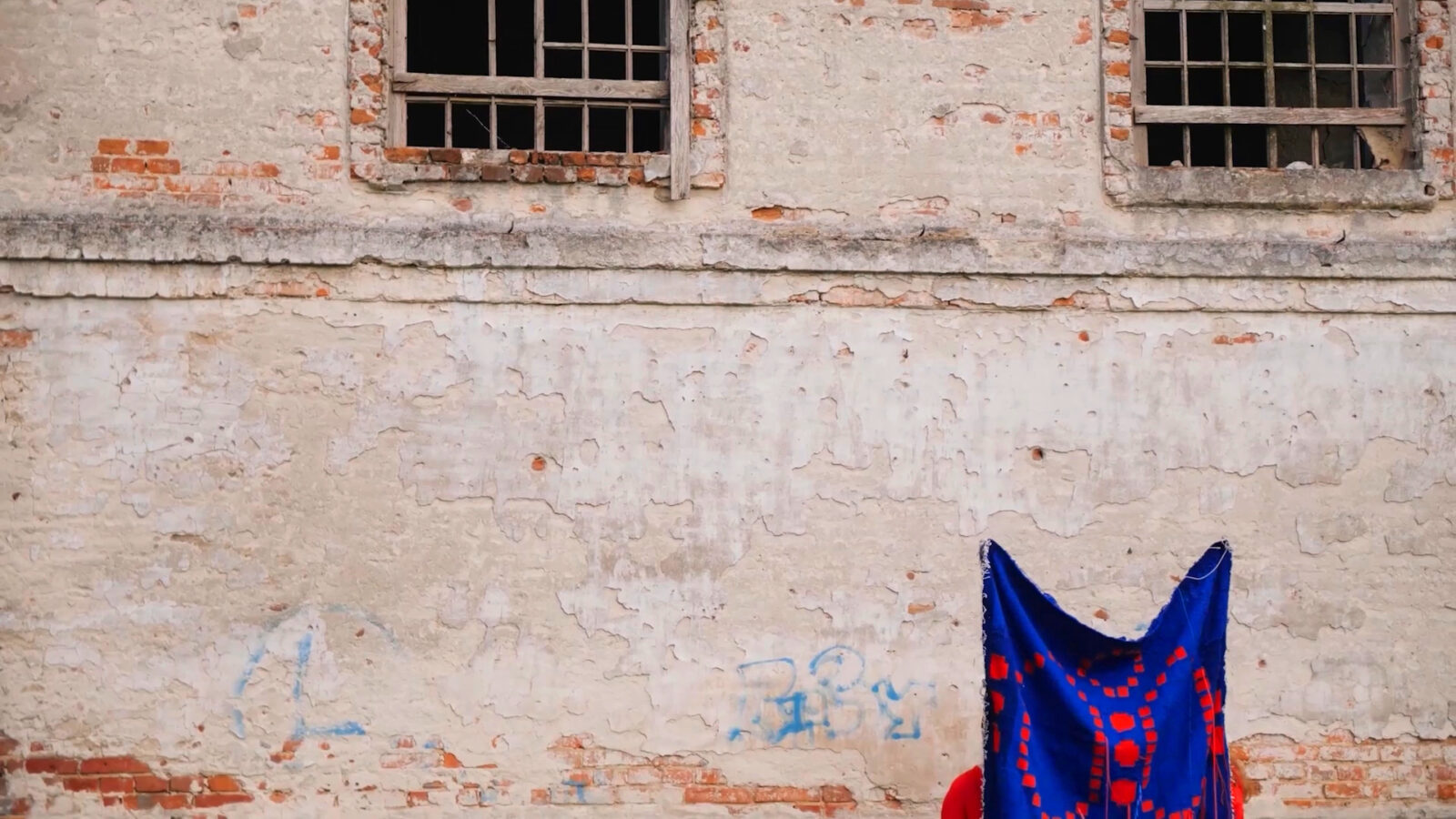
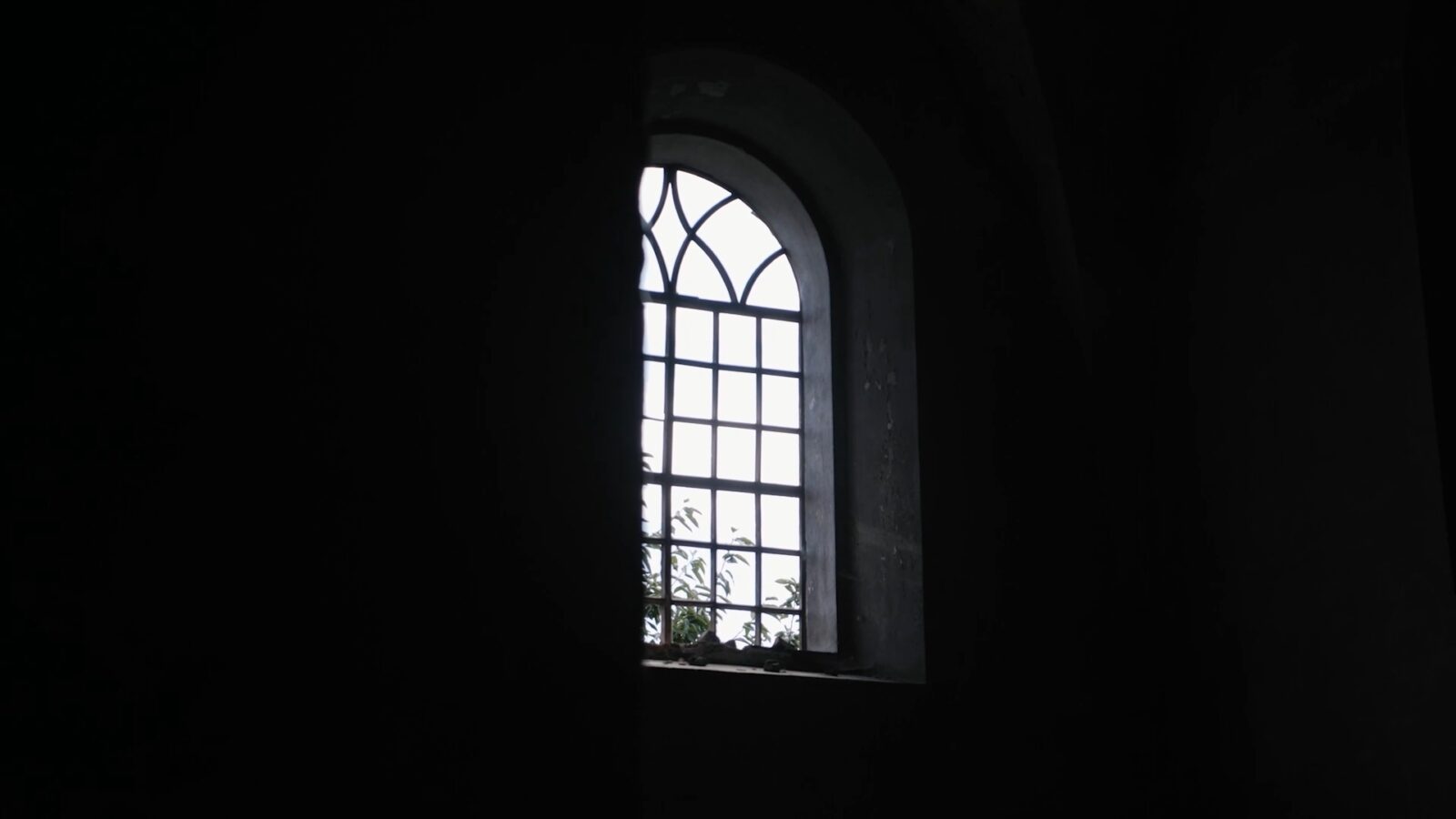
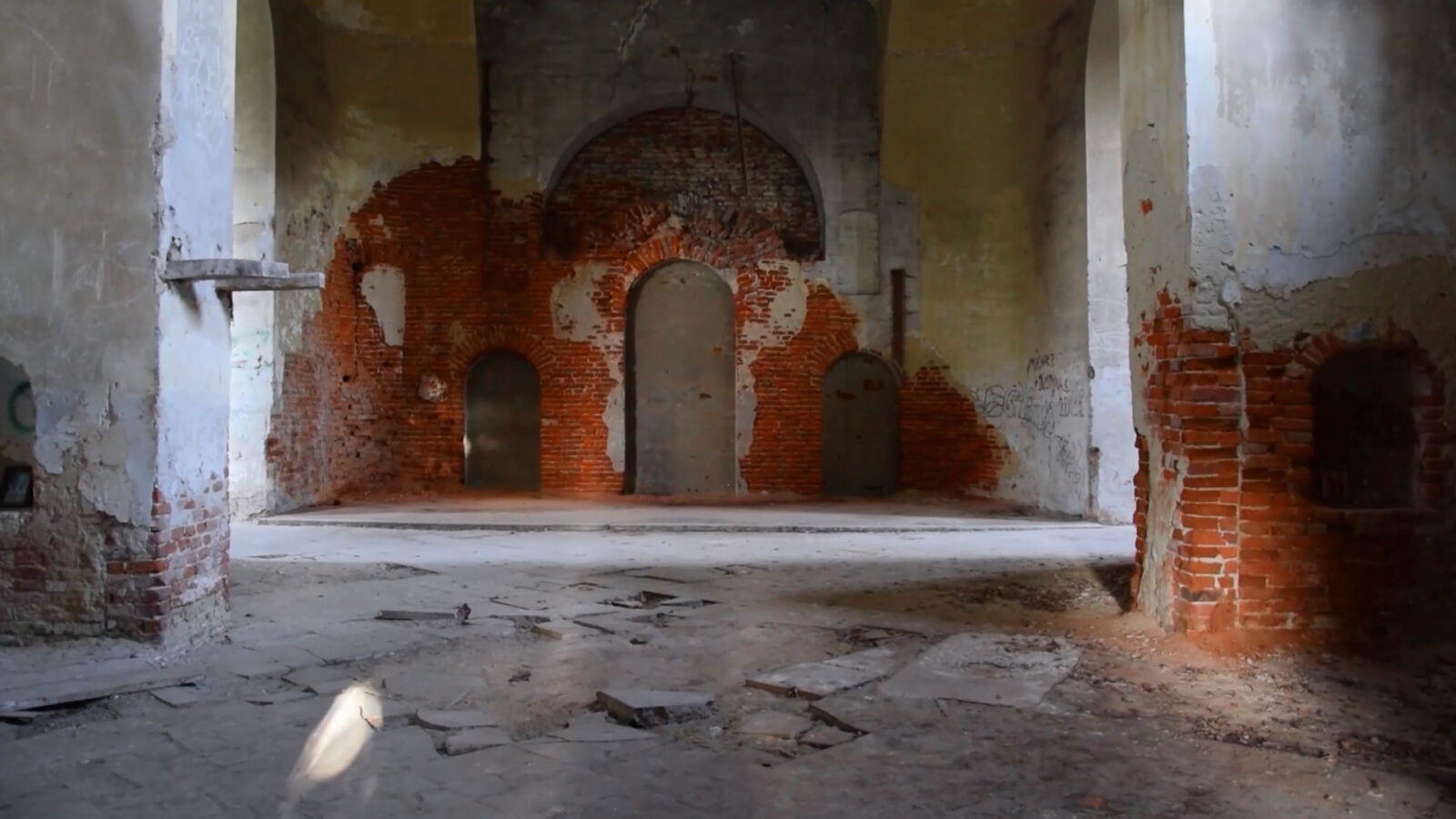
Living in the Subcarpathian region, I have often seen abandoned Greek Catholic churches—slowly collapsing in on themselves, sometimes right in the center of towns or villages. One of them was the Church of the Protection of the Mother of God in Stare Oleszyce, which I visited and photographed frequently. Over time, I discovered more such buildings in neighboring localities—decaying structures in Oleszyce, Stary Dzików, Moszczanica, Cieszanów, and many others. I documented Greek Catholic roadside shrines and crosses, and uncovered the foundations of Ukrainian houses that had been burned down. I observed how, in their gradual disintegration, these architectural remnants absorb and erase the memory of those who once lived there. Only a small number of these sites undergo conservation. Many have been converted into Roman Catholic churches, in which original Uniate elements are being replaced with Catholic symbolism. Those left to fall into ruin carry with them the story of a world that once was—and of what remains of it.
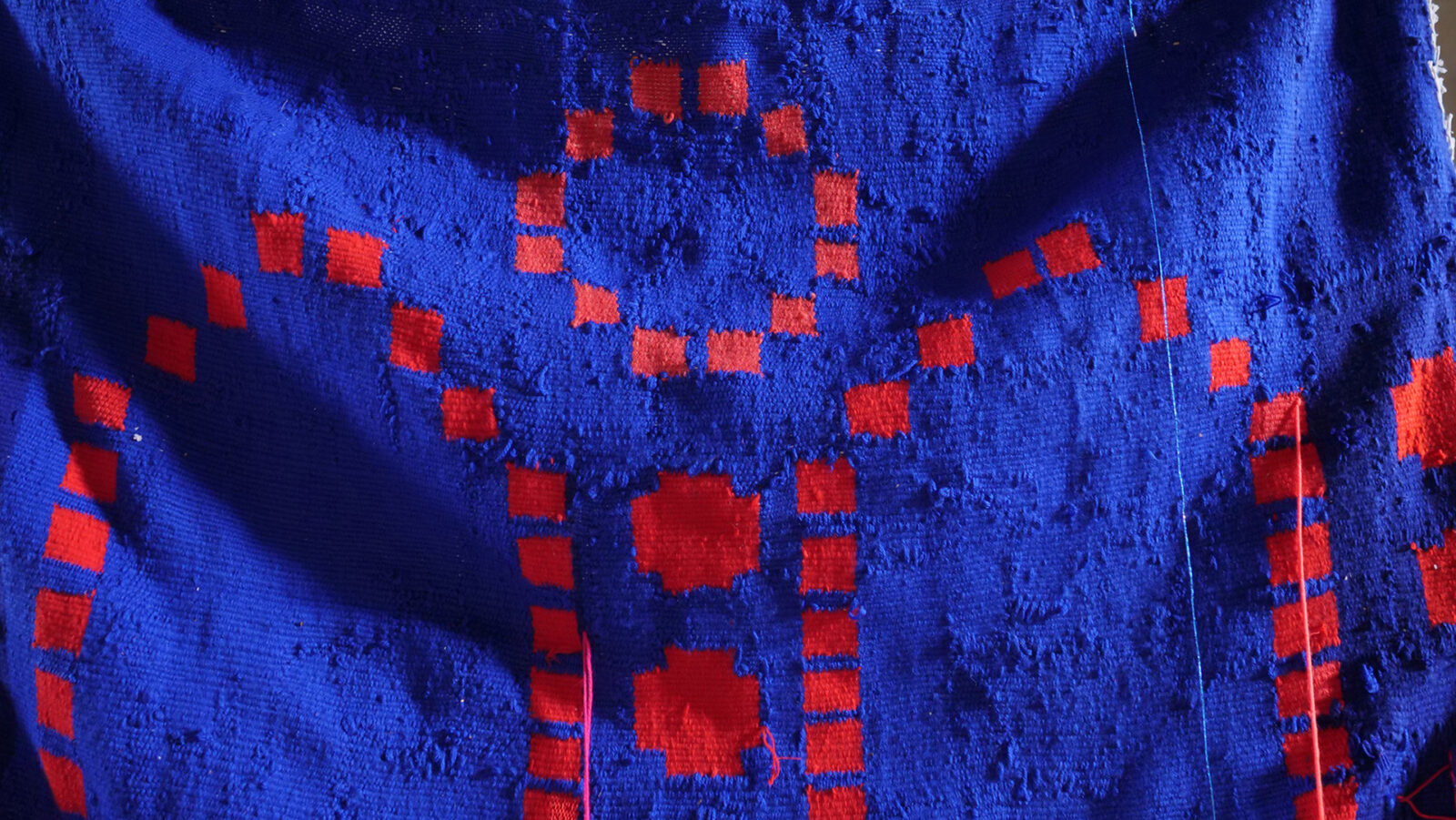
For the Flag of the Borderland, I chose a small remnant of that former reality—a geometric fragment of an ornament that was once part of the elaborate polychrome decoration in the church in Stare Oleszyce. It is merely a trace, a ghost image of a world in decline.
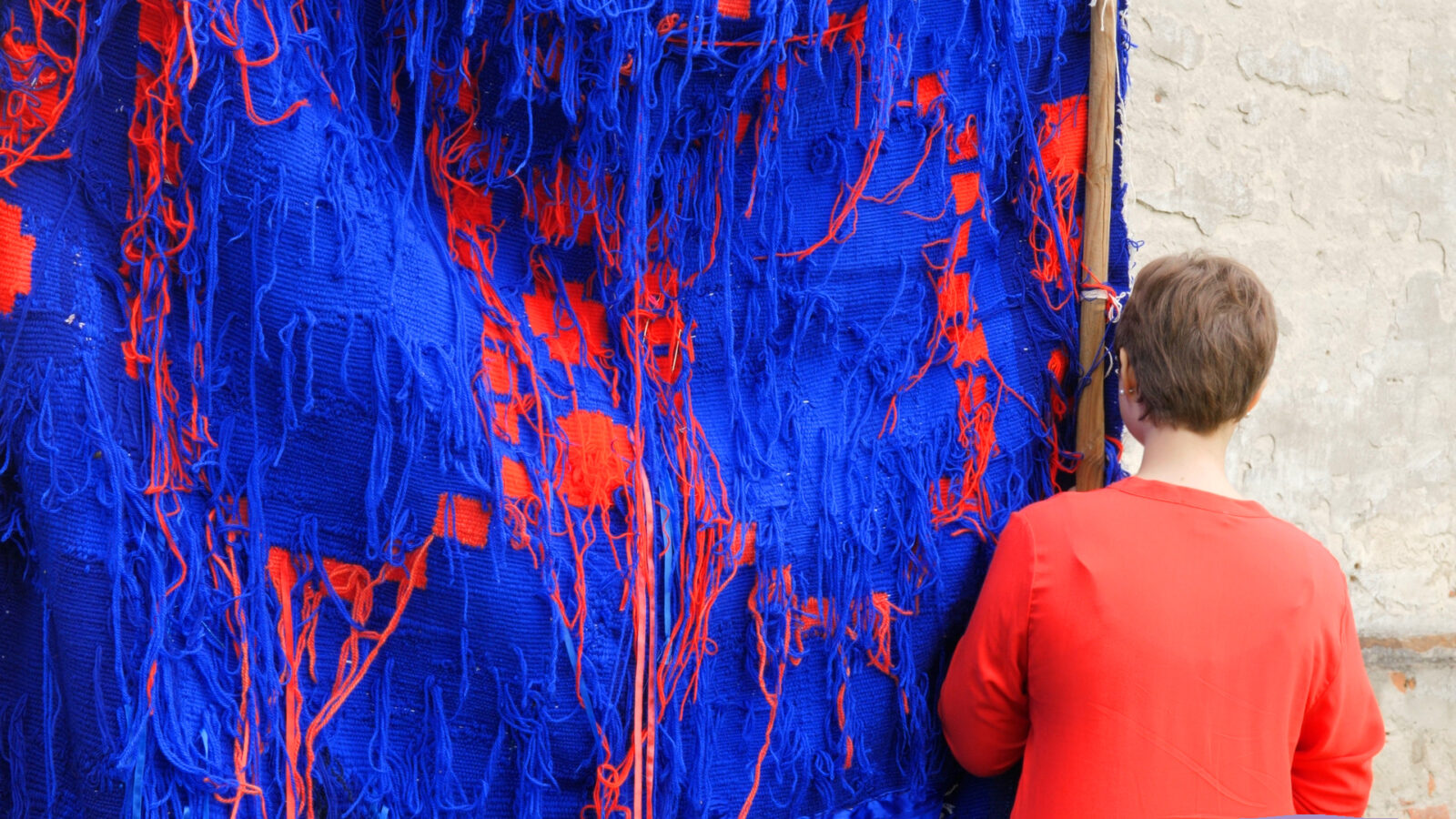
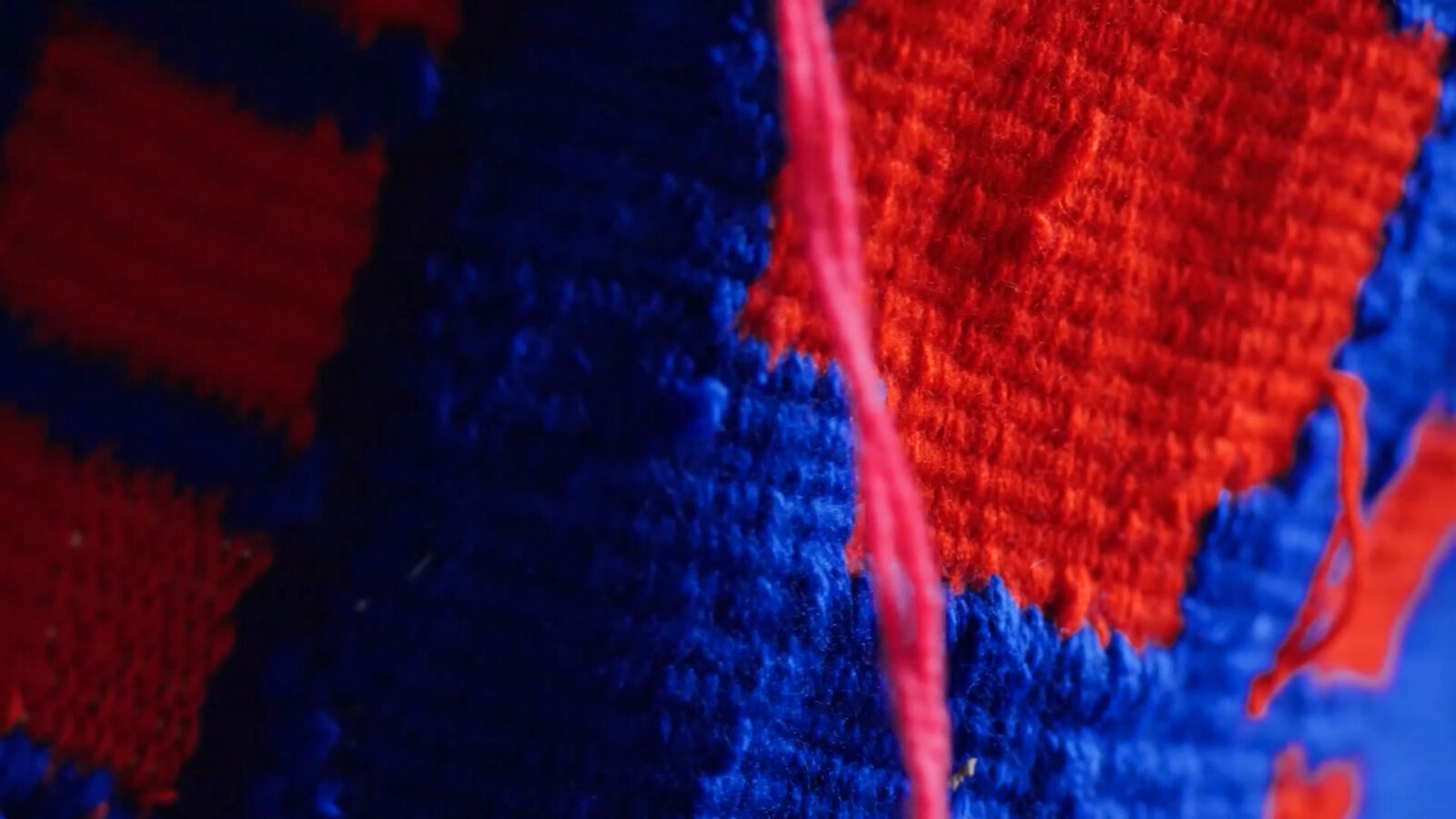
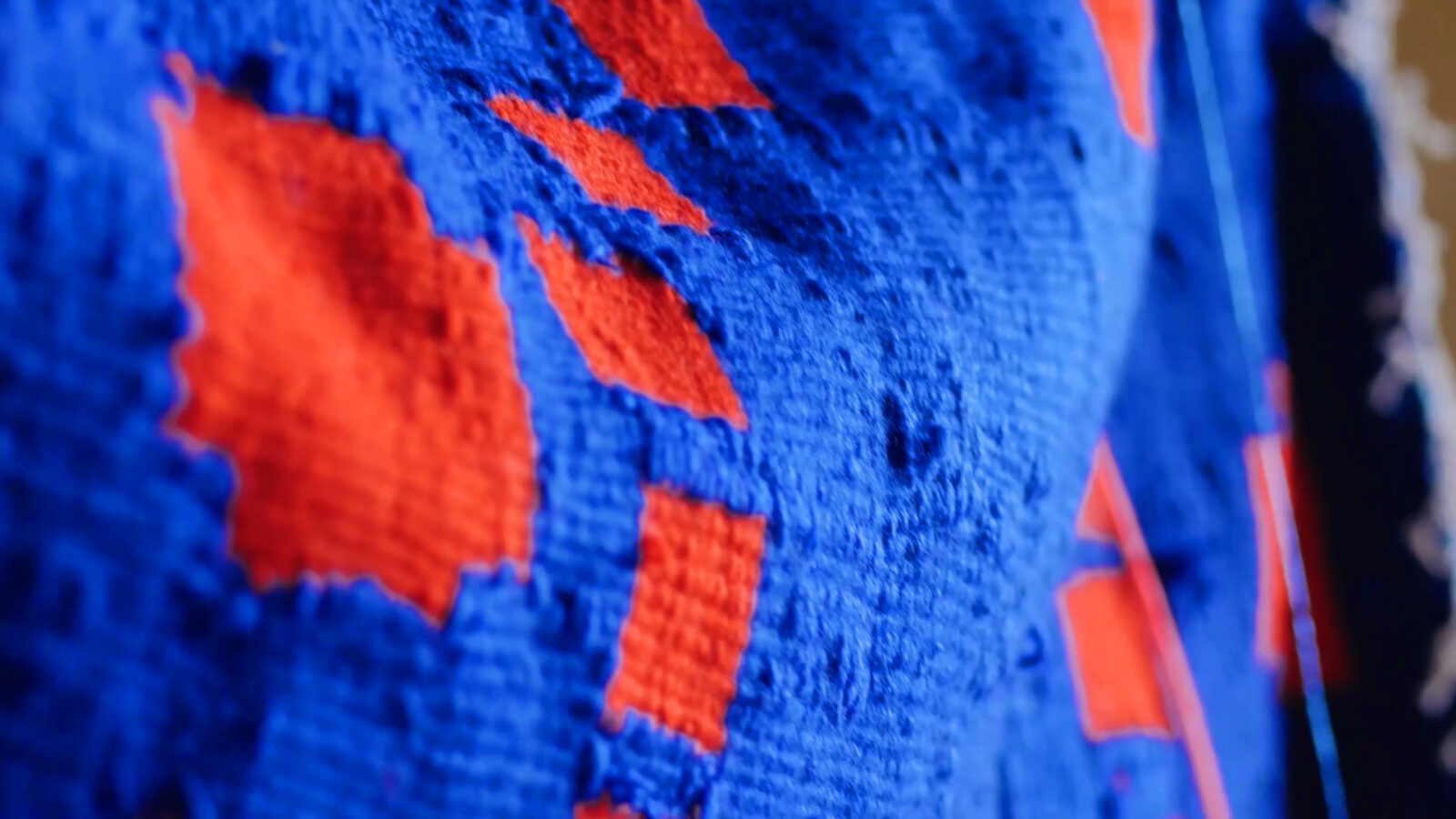
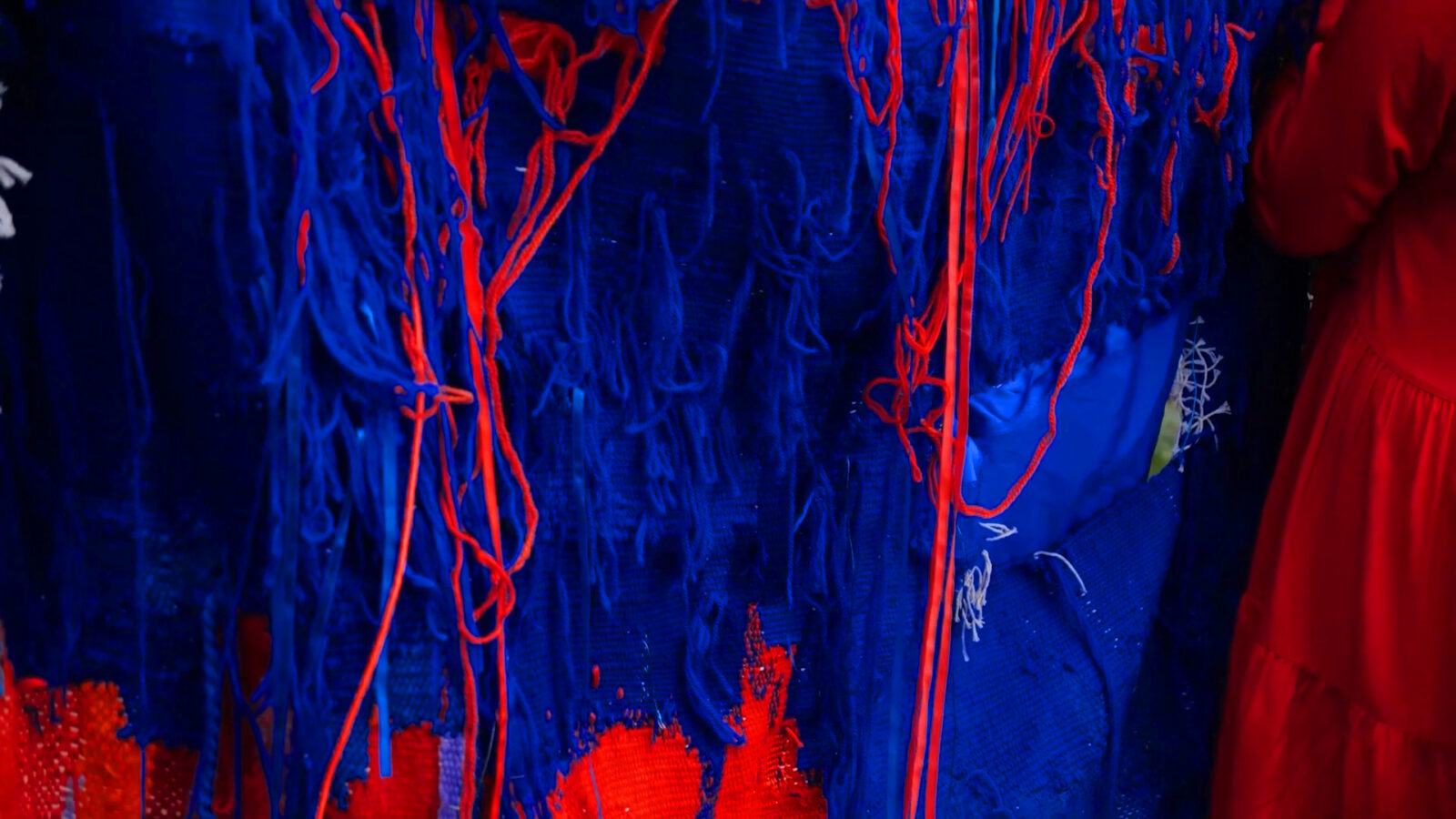
I replaced the ornament’s original yellow-earth tones with a contrasting combination of red and ultramarine—colors that may linger under the eyelids even after the eyes are closed.
While monumental architecture crumbles, the soft medium of textile proves to be more enduring. The act of weaving became, for me, a way of telling a fragment of this story—a gesture of passing it on in the intimate, domestic space. Weaving is a form of remembering, one that relies partly on imagination—just like storytelling, it takes place in silence and requires time and focus. A full reconstruction of the past is impossible—memory is always a kind of projection, a new form suspended between the past and the present.
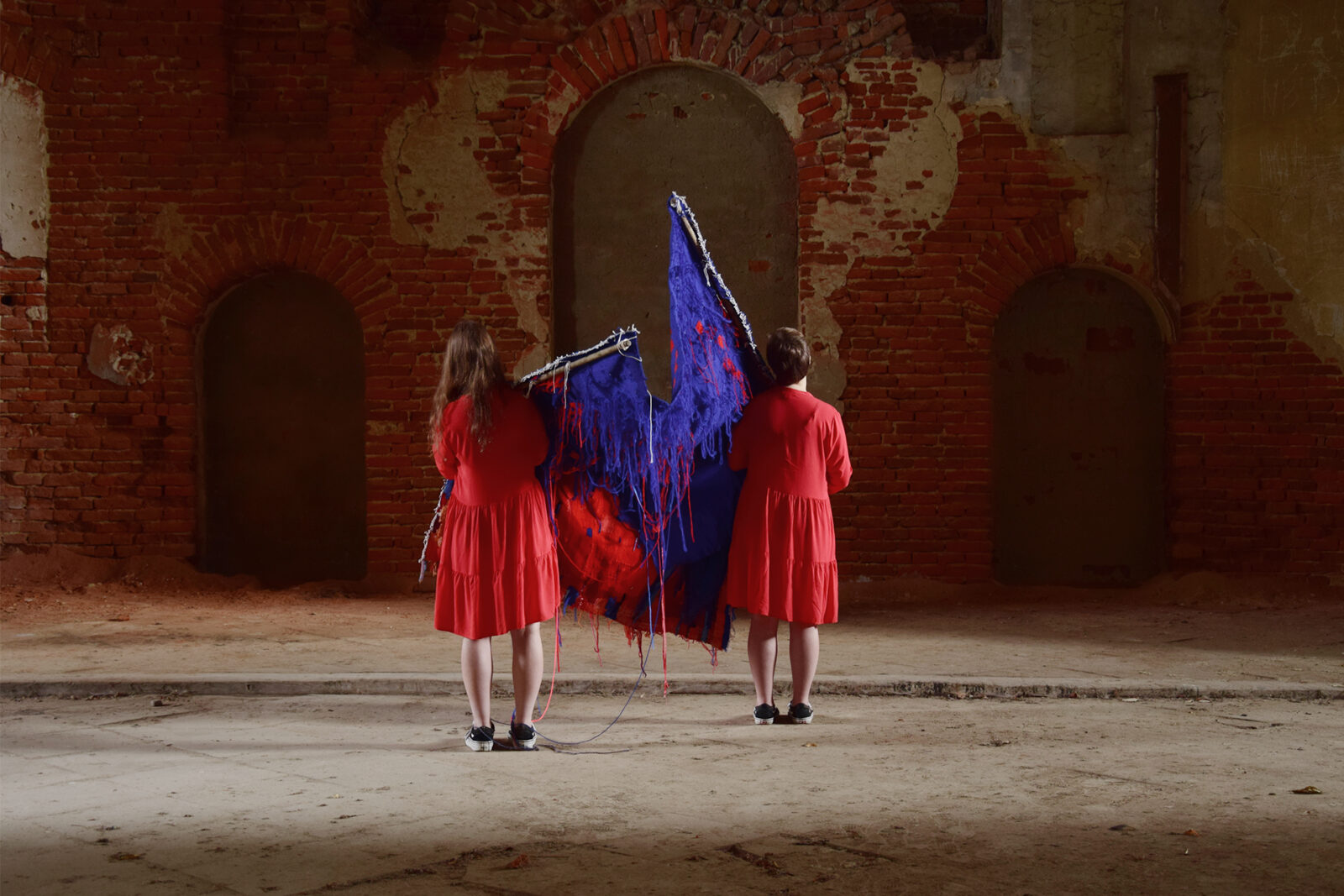
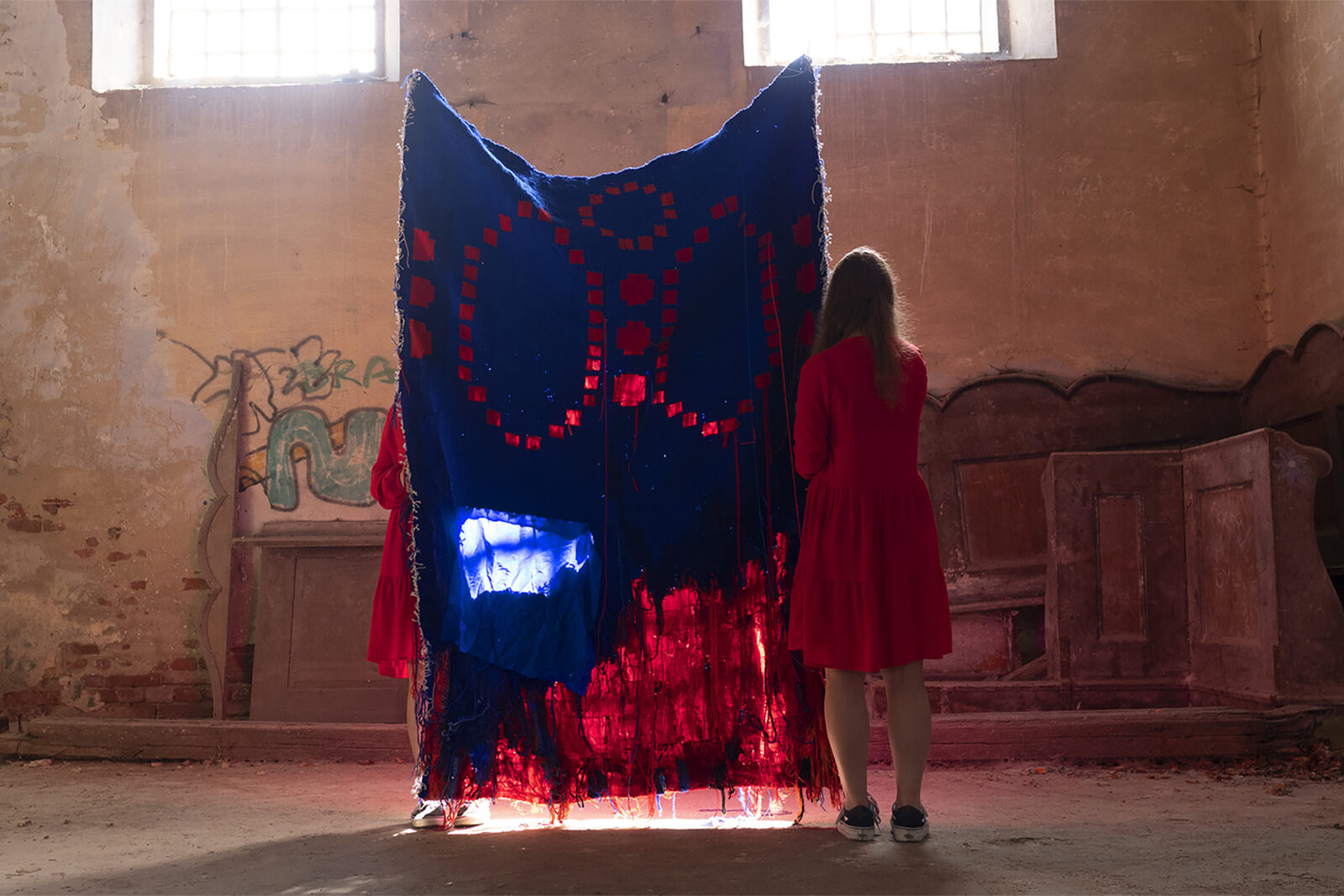
As a medium, textile carries deep associations with women’s labor and everyday life. The transfer of meaning from architectural polychrome to soft material emerged from my decision to tell these stories through the embodied quality of woven fabric. The work took the form of a flag, temporarily installed inside one of the decaying churches—returning to that space and briefly restoring the visibility of the multiethnic borderland’s history. The event was documented in the form of a video.
Camera: Anna&Paweł Okramus